

Do it Like the Greeks: The New EU Energy Hub?
18 February 2026

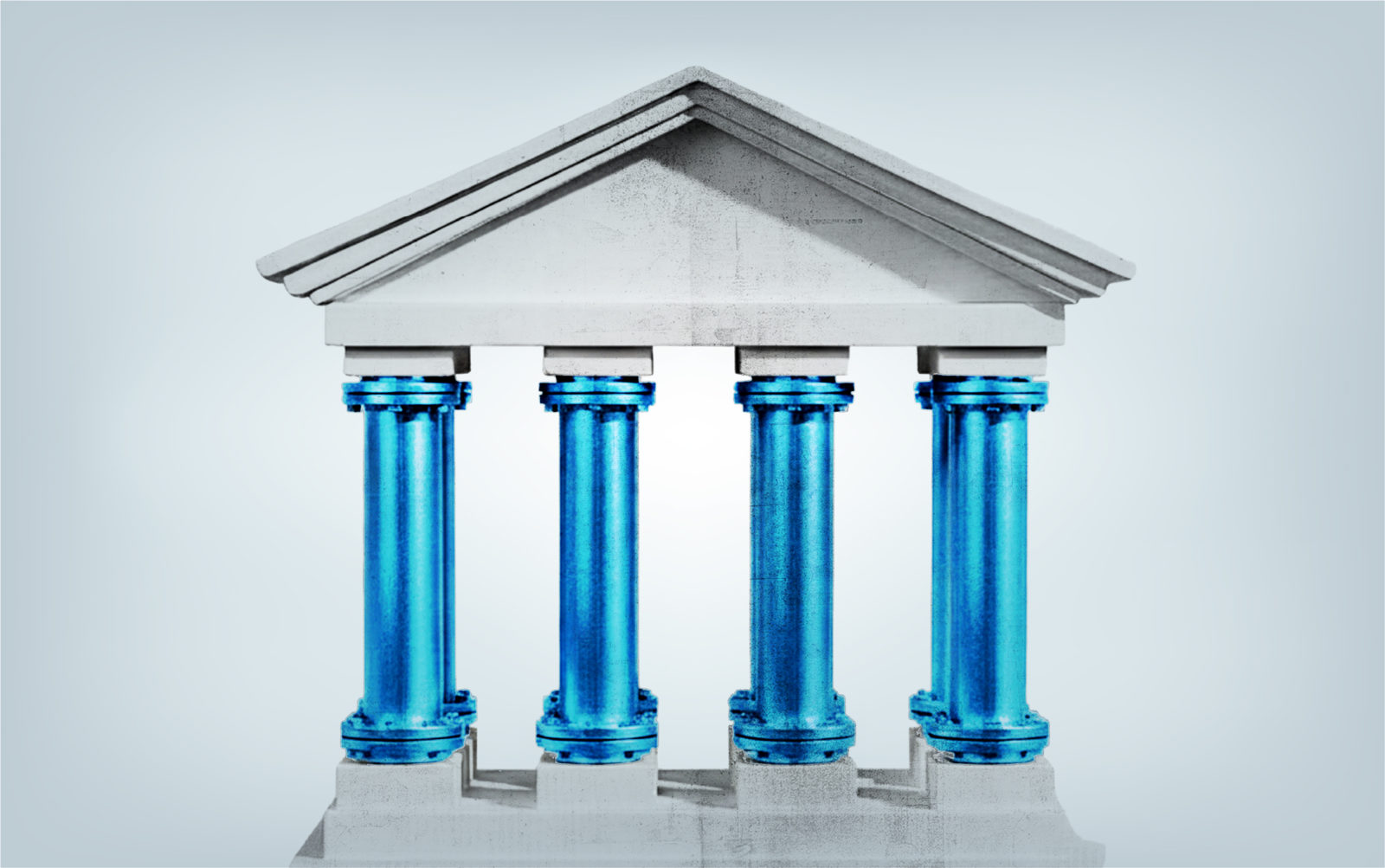
During the last decade, the discussion around the EU’s geopolitical awakening has included an important prerequisite: energy security. Russia’s invasion of Ukraine exposed an already known truth: energy dependence increases vulnerability to coercion. The diversification away from Russian gas should have been implemented long ago, and while the EU has desperately been trying to move away from Russian gas, Greece has been implementing its own national strategy with a clear ambition: to put a former energy consumer-country with limited influence on Europe’s energy agenda to the centre of the European energy map. Greece has quietly positioned itself as a major energy entry point and a transit hub for gas flows based on a four-pillars strategy.
The Pillars of the Transformation
The first pillar of Greece’s transformation has been the rapid expansion of its liquefied natural gas (LNG) capacity. The Greek government has invested heavily in energy infrastructure, building two key entry points: the Revithoussa LNG terminal and the Alexandroupoli floating storage and regasification unit (FSRU). As of late 2025, Greece’s LNG import capacity exceeds 12 billion cubic metres (bcm) annually, with plans to reach nearly 27.5 bcm by 2030. The objectives are clear: to secure domestic supply and to position Greece as a distribution point for the wider region.
The second pillar has been Greece’s integration into the so-called Vertical Corridor, the network of gas interconnectors linking Greece with Bulgaria, Romania, and markets further north. This infrastructure allows LNG entering Greece to flow beyond the national market, turning Greek import capacity into a regional asset and reinforcing the country’s relevance for European energy security.
The third pillar has been an ambitious agenda of enhanced regional cooperation. At the 6th Partnership for Transatlantic Energy Cooperation (P-TEC) Ministerial in Athens in November 2025, Greece and the United States reaffirmed a shared assessment that energy security is national security. In the presence of the US Secretary of Energy, this political alignment was followed by a landmark agreement with ExxonMobil for hydrocarbon exploration in the Ionian Sea. At the same time, advancing energy connectivity with Egypt, Cyprus and Israel has reinforced Greece’s role as the key connector between Eastern Mediterranean producers and the European mainland.
Finally, the fourth pillar has been the alignment with transatlantic energy flows and crisis responses. The provision of US LNG through Greek infrastructure, as well as supply arrangements that link Greek LNG capacity to Ukraine’s energy security, show how Athens is becoming embedded in a broader Euro-Atlantic energy network.
Why Now, and Why Greece?
As energy security has moved to the centre of the European political agenda, Greece used this moment to increase its weight inside the European Union by positioning itself at the heart of a critical portfolio for European autonomy. Acting as a transit country and regional hub strengthens Greece’s role in energy-related decision-making and reinforces its reputation as a predictable partner in periods of uncertainty.
In addition, the Greek government anchored the country firmly in transatlantic cooperation at a time of tension between Washington and Brussels. Energy security fits into a broader strategic approach linking defence, alliances and strategic positioning. The Greek example shows how a small state can use energy infrastructure and geopolitical alignment to gain influence in a more competitive international environment.
What is the catch?
Greece’s emerging role, however, also exposes a broader set of dilemmas that lies at the heart of the energy future of the EU. The urgent energy needs of the EU clash with its long-term objectives, particularly that of decarbonisation, as it bears the risk of locking the Union into new fossil infrastructure. The risk the EU runs is not only creating policy incoherence but investing in infrastructure made during times of increased geopolitical tensions that might prove unnecessary over time. For Greece specifically, this raises the difficult question of assessing its future energy investment by measuring only against its potential geopolitical value. Today’s infrastructure might one day constrain future flexibility.
Greece can counterbalance the side effects of increasing LNG consumption by continuing to upgrade its energy renewals sector. Greece ranks high among European countries for the growth rate of its renewable energy share. The European Energy Agency highlights the acceleration of Greek efforts on the green transition, with solar and wind energy driving this transition. At the political level, Prime Minister Kyriakos Mitsotakis has repeatedly underlined that the energy transition is a non-negotiable objective, while presenting LNG expansion as a bridge rather than a final solution.
The dilemmas are also geopolitical. Greece’s ambitions are closely monitored by other regional actors, particularly Turkey. The Turkish energy agenda (and the aspiration to become the region’s premier energy hub) seems to overlap with the growing role of Greece in a part of the world known for fragile balances and historic disputes. As the geopolitical environment in the Eastern Mediterranean remains volatile, regional competition for energy hubs and routes will only intensify.
Finally, Greece’s choice to invest in LNG (even as a bridge) comes with another haunting and structural dilemma: is the EU replacing one dependency with another? The rapid (and necessary) shift from Russian gas has reduced the danger of direct coercion but the vulnerability is still there. Reliance on global LNG markets exposes the EU to price volatility, long supply chains and geopolitical exposure beyond the Union’s control. While diversifying suppliers, particularly the recent EU-US tensions, is a prudent initial measure, it does not fully insulate against the weaponisation of energy dependencies.
These trade-offs will matter well beyond Greece, as the EU redefines its energy posture in an evermore contested environment.
ENJOYING THIS CONTENT?




-
Decarbonisation is no Panacea for the EU’s Energy Troubles
Blog
07 May 2026
-
Is UK’s cautious Iran’strategy paying off? I Bridge the Channel Ep.23
Bridge the Channel - Multimedia
30 Mar 2026
-

A Pipe Dream? Main Takeaways from the China-Russia Siberia 2 Pipeline ‘Deal’
Blog
22 Sep 2025
-
Libya: A Shifting Balance of Powers?
Blog
24 Jul 2025
-

COP28: Between Greenwashing and Modest Progress
Blog
21 Dec 2023
-
The Unique Characteristics of Chinese Energy Policy
Blog
30 May 2023
-
True Strategic Autonomy Requires Improved Domestic Supply
Blog
17 Mar 2023
-
Tapping Europe’s Offshore Energy Potential: A Way to Enhance Security of Supply
Blog
08 Dec 2022
-
Fixing Gas Prices Won’t Solve the EU’s Energy Crisis
Blog
18 Oct 2022
-
‘Russkiy Mir’ and ‘Mavi Vatan’: Two Sides of the Same Coin
Blog
22 Sep 2022