5 Messages That Stood out From the SOTEU
16 September 2026

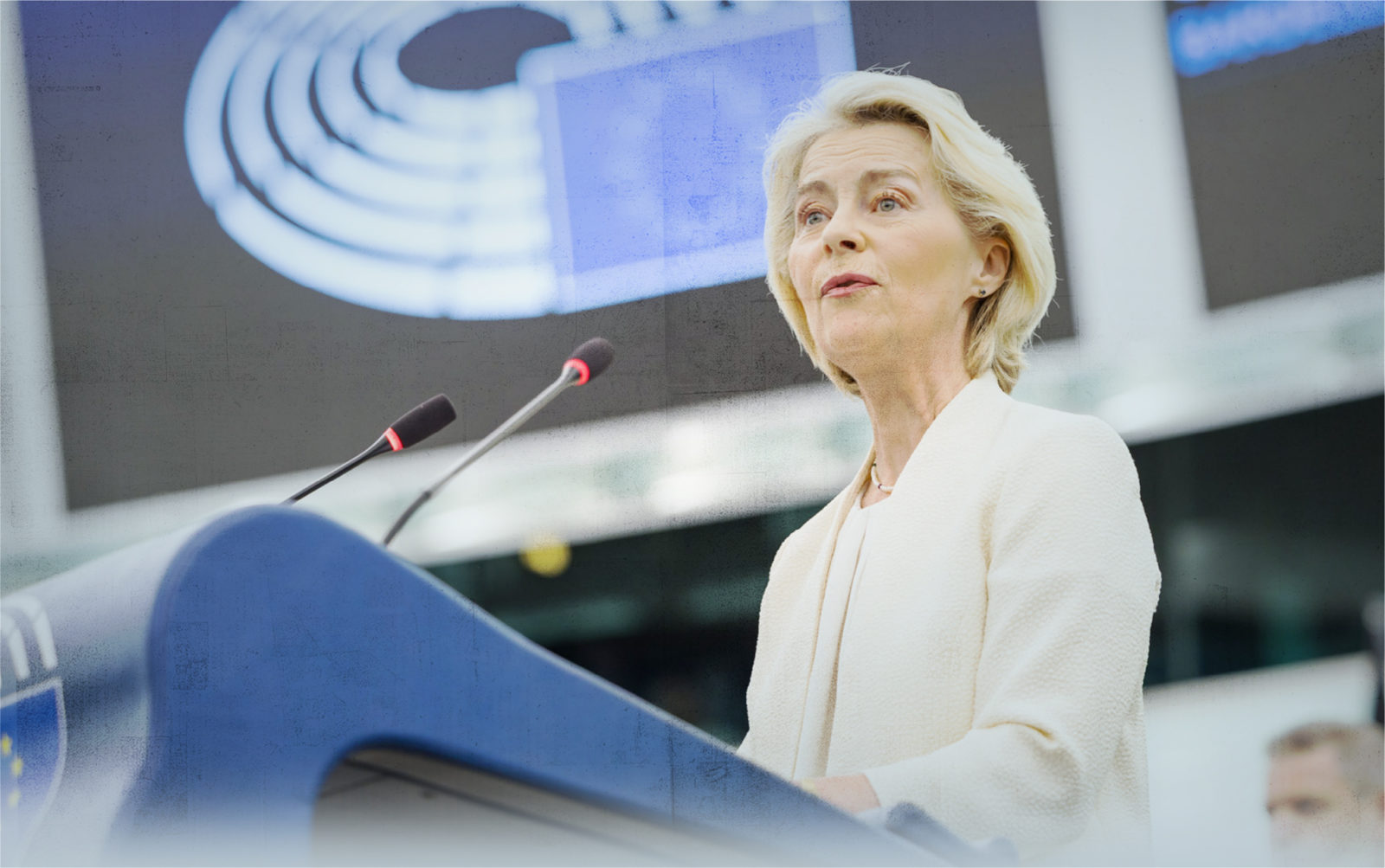
On the morning of Wednesday September 16th, European Commission President Ursula von der Leyen delivered her annual State of the European Union. At a time of heightened geopolitical uncertainty and societal upheaval, her address served as a reminder of the many issues facing the European Union, along with an outline of the paths available to the EU to respond to these various challenges.
Five elements in particular emerged from her speech:
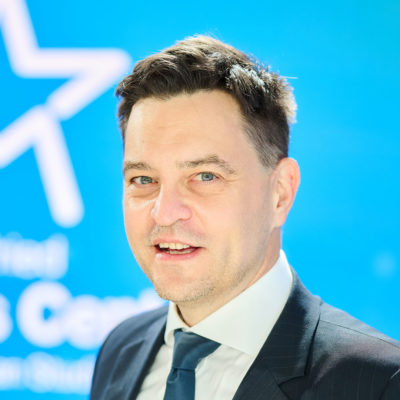
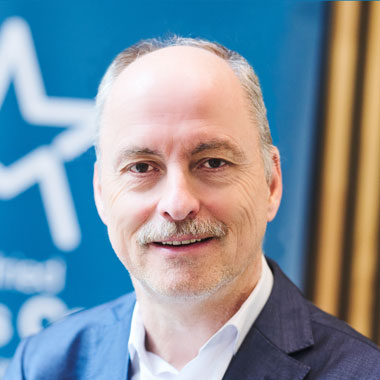
Europe’s Changing Priorities – Tomi Huhtanen, Executive Director:
The annual State of the European Union can be analysed as an update of the EU Commission’s priorities, but it is also very interesting to compare them to the speeches of previous years, reflecting a broader evolution in the European Union’s priorities and in the Commission’s narrative on how Europe is transforming.
In previous years, particularly during and immediately after the pandemic, the annual address was built around ambitious flagship projects such as the Green Deal, digital transformation and Europe’s social resilience. It also relied heavily on powerful personal narratives, often symbolised by invited guests whose stories embodied Europe’s values and solidarity. This year, the emotional tone was noticeably different. The focus shifted away from individual stories of courage and suffering towards a more sober assessment of Europe’s strategic environment. The message was less about inspiration and more about preparedness, resilience and the need to navigate an increasingly uncertain world.
Compared with last year’s speech, the shift is particularly visible in the areas of security, competitiveness, and economic policy, not surprisingly. Support for Ukraine remains unwavering, but the emphasis has moved from solidarity alone to Europe’s long-term capacity to sustain that support through stronger defence industries and greater strategic autonomy.
Equally significant is the treatment of economic policy. While previous State of the Union speeches often highlighted Europe’s role as a global regulatory pioneer, this year’s address placed far greater emphasis on simplifying rules, reducing administrative burdens and strengthening competitiveness, again reflecting the cumulative domestic economic challenges.
Climate policy remains important, but it is increasingly framed through the lens of industrial strength, affordable energy and energy security. The growing openness towards technological neutrality, including recognition of the role of nuclear energy alongside renewables, reflects a more pragmatic policy approach than in the early years of the current Commission.
These developments should be seen less as a change of direction than as an adaptation to a changing geopolitical and economic context. The underlying objectives remain largely consistent: a stronger Europe, continued support for Ukraine, a successful green transition and deeper European cooperation where necessary. What has changed is the balance between aspiration and implementation. The speech suggests a European Union that has become more conscious of the hard realities of power, competition and security. It reflects the need for power, speed and scale.
Rather than abandoning its ambitions, the Commission appears to be recalibrating them to ensure that Europe can remain both prosperous and secure in a more demanding international environment. This evolution is likely to resonate with many who have long argued that sustainability, competitiveness and security must advance together rather than be pursued as separate objectives.
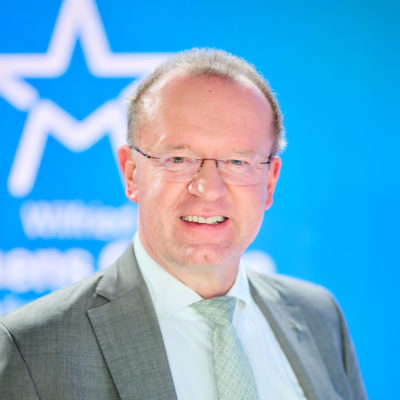
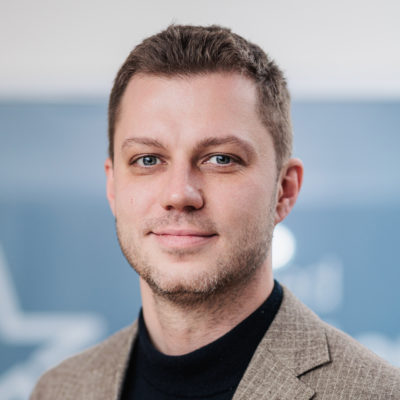
The EU Social Market Economy – Peter Hefele, Policy Director:
President Von der Leyen’s speech rightly emphasises the renewal of Europe’s social market economy. This is particularly relevant when digitalisation and demographic ageing interact. For example, technology can ease labour shortages, while longer lives require new ways of organising work, lifelong learning and care. Competition and entrepreneurship encourage productivity investment. But there is another part of the story. The idea of the social market economy gives people the security to retrain, change occupations or establish a business – creating the opportunity for the destruction and creation of new value. Higher productivity and wider participation, in turn, provide the fiscal basis for social commitments as societies age. These relationships should guide reform. This means rethinking the traditional sequence of education, employment and retirement. People need opportunities to learn throughout life, balance employment with caring responsibilities, and contribute to society beyond retirement age. Social insurance systems must be designed to follow people through these transitions, not only in one country, but across Europe. Unpaid care, mentoring and civic engagement also deserve much wider social recognition.
Social partnership, as in the German model, gives workers a voice in introducing AI. The new productivity gains must be shared with employees through wages, training, and better working conditions. Subsidiarity connects the ability and willingness to adapt to practical needs: firms, vocational institutions and local communities should have the resources and freedom to develop appropriate solutions, because there is no single way to cope with these transitions. Intergenerational solidarity is equally important, and the Commission rightly has put this on it agenda. Young people need fair entry routes into employment. Digital services should be open to people with different skills and capacities to avoid a digital divide. President von der Leyen’s jobs and care proposals should be assessed against these objectives. Renewing the European social market economy means creating institutions and incentives that make economic change socially manageable and acceptable for all European citizens.
Further Reading: The future of work: A centre–right perspective by Peter Hefele
A European Security Council – Klaus Welle, Chairman of the Academic Council:
We welcome President von der Leyen’s proposal for a European Security Council. It is a great and well-timed initiative in the times of geopolitical upheaval we are living. The European Security Council can be the strategic place driving the integration of European security and defence policies. It offers, at the level of our highest leaders, a common space for our partners (Ukraine, the UK, Canada, Norway and others) to contribute to the security of our continent in the broader sense: European defence, energy security, the suppy of raw materials, trade, and the development of artificial intelligence. Congratulations to all those who have contributed to the concept. We thank in particular our former colleague Niklas Nováky who started the Martens Centre’s long-term engagement on the topic as early as 2019, as well as our colleague Ionela Ciolan for developing it in our more recent publications. We recommend reading Commissioner Kubilius’s paper from January this year ‘On “Europeanization” of European Conventional Defence: The Case for a European Security Council’.
Further Reading: EU It Yourself: A Blueprint for a European Security Council by Niklas Nováky; The 7Ds – Defence Extended edited by Klaus Welle and Ionela Ciolan
A New EU–Canada Partnership – Gavin Synnott, Senior Project Officer:
As a sign of the geopolitical landscape and the retreat of US support for Europe, Canadian Prime Minister Mark Carney was invited to this year’s State of the Union address at the personal invitation of Commission President Ursula von der Leyen. In her speech, she argued the two sides work together to “open the door for Canada to be the first associate member of the EU”, a landmark proposal. In more immediate and practical terms, her speech included moving “CETA to an Alliance for the Future,” referencing manufacturing, a “tech alliance,” integrated defence industrial bases, a potential Arctic joint project, and working closely on energy, critical minerals, AI, quantum, cyber and economic security. As the first non-EU country in the Security Action for Europe (SAFE) programme, this existing framework could be used as a building block and roadmap for enhancing cooperation between the EU and Canada in these areas.
In Europe, we are regularly reminded that spending does not necessarily equate to more capability – it takes coordination and close alignment with allies, something that deeper partnership with Canada could give real momentum to. Tomorrow, Carney takes the podium himself, addressing the Plenary whilst Canada is reeling from its ongoing trade war with the US. But while both Europe and Canada are looking for friends in a world of growing risks and obstacles, they must turn pledges into concrete action to see dividends.
Further Reading: The Europe–Canada Schicksalsgemeinschaft: Transatlantic interdependency in the new North Atlantic triangle by Christian Leuprecht
Protecting Europe’s Children Online – Dimitar Lilkov, Senior Research Officer:
An additional highlight is the proposal for an EU Kids Act which would place age limits on European children’s access to social media, video platforms and AI agents. Up to the age of 15, only parents would be able to authorise kids’ access to limited features of these services, with a restriction on daily screen time. For years now, it has been evident that teenagers are the biggest victim of screen time with certified negative effects on their social life and mental health. A recent US federal lawsuit against Meta eventually settled out of court, which obliged the company to limit teenagers’ daily usage and limit certain features due to the deliberate addictive design of their apps.
The new EU rules need to rise up to the challenge and place effective restrictions on the digital equivalent of cigarettes and alcohol. Practical challenges remain, though, when it comes to implementing a functional age verification scheme. There are trade-offs when it comes to privacy design, cybersecurity and anonymity which must be considered and respected. Even though the majority of Europeans agree on the harm of certain online platforms, there must equally be high citizen support for the technical solutions put forward.
Further Reading: Time to Ban Social Media for Under‑Sixteens by Eoin Drea
ENJOYING THIS CONTENT?
Related events
-
Is Brexit going in reverse ? – Bridge the Channel Ep.28
Bridge the Channel
07 Oct 2026
-
Iceland’s No, and the Membership It Was Never Offered
Blog
16 Sep 2026
-
A South Korean Warning on the Perils of the AI Economy
Blog
01 Sep 2026
-
The European Parliament’s Quiet Advantage—and Its Strategic Test
Blog
28 Jul 2026
-
Reset or Restart? Andy Burnham’s EU Challenge – Bridge the Channel
Bridge the Channel
27 Jul 2026
-
10 years later: is Brexit working? I Bridge The Channel Ep.26
Bridge the Channel - Multimedia
23 Jun 2026
-
Why Europe Struggles to Scale Startups – Thinking Talks Ep 25 with Peter Vesterbacka
Multimedia - Thinking Talks
26 May 2026
-
Time to Ban Social Media for Under‑Sixteens I Op-ed ep.12
Multimedia - Video Op-Eds
19 May 2026
-
UK Local Elections: Europe is Watching
Bridge the Channel - Multimedia
06 May 2026
-
Simplifying Digital Rules & EU Tech Sovereignty – with Zach Meyers
Brussels Bytes - Podcasts
22 Apr 2026