The European Parliament’s Quiet Advantage—and Its Strategic Test
28 July 2026

Across Europe and the wider West, parliamentary democracy is under growing strain. What once appeared as the most stable and self-evident form of democratic governance is increasingly contested—not only from without, but from within.
The signs are varied but convergent: rising ideological polarisation, mounting dissatisfaction with representative institutions, and a growing fascination with direct or plebiscitary forms of democracy—perhaps most tragically embodied by a mob’s assault on the US Capitol on January 6, 2021. These developments unfold in a broader geopolitical and economic context that favours executive power: successive crises, geopolitical competition, rising protectionism and disruptive technologies all reward speed, centralisation and decisiveness over deliberation.
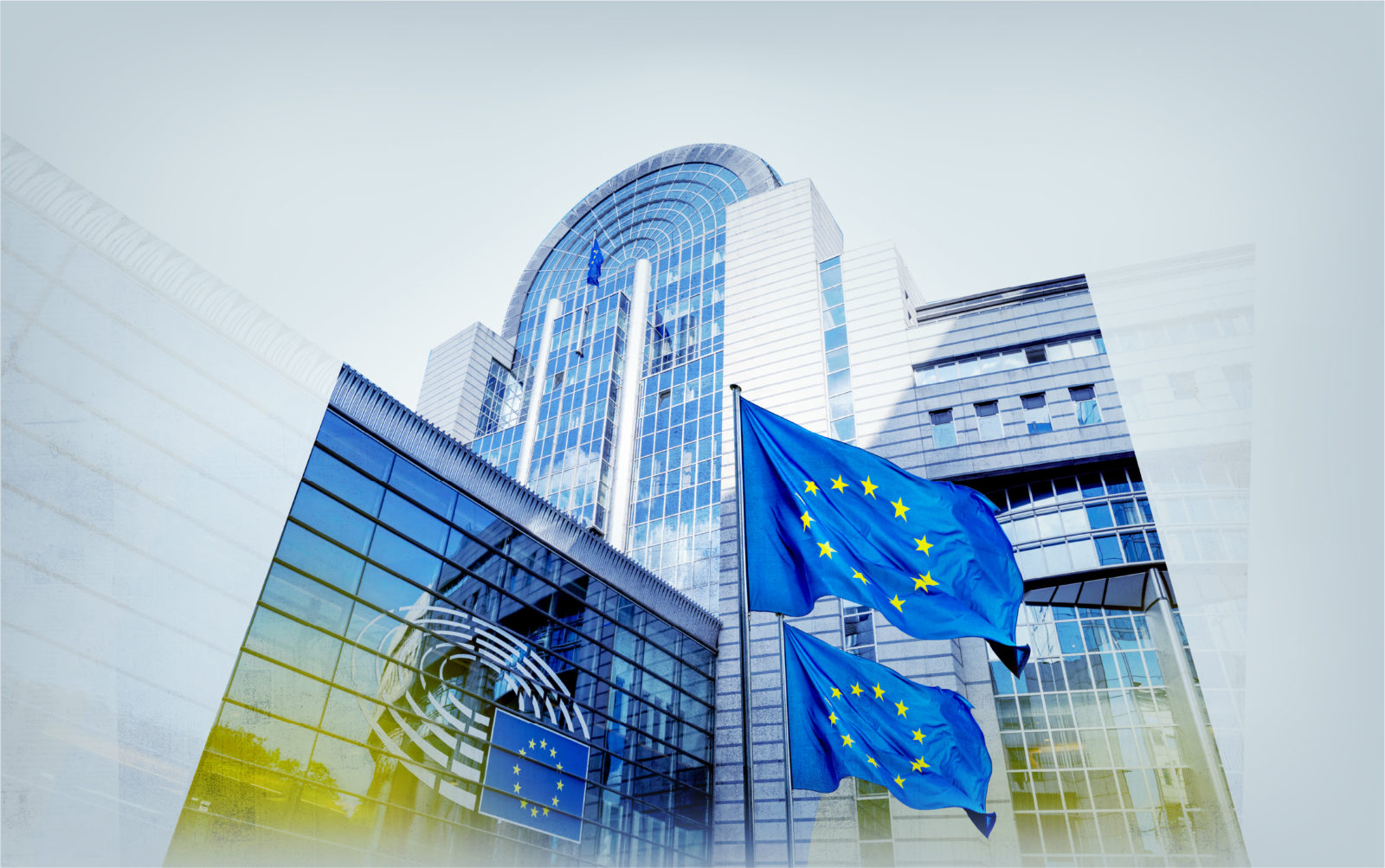
At first sight, the complexity of the EU’s multilevel polity should make these challenges even more intractable for the European Parliament than for national legislatures. Yet, somewhat unexpectedly, the opposite holds. On closer inspection, the European Parliament appears in several respects better placed than many national parliaments.
It enjoys significant political autonomy from the executive. Somewhat paradoxically, given its lack of a formal right of legislative initiative, it retains a genuine role as co-legislator—one increasingly constrained in many national systems. And despite growing fragmentation, it has preserved a remarkable capacity for cross-party cooperation and majority-building.
Yet the European Parliament is not insulated from the structural pressures reshaping parliamentary democracy across the West. In the decades ahead, its ability to thrive will depend on its capacity to contain three major risks that affect all parliaments, but may manifest themselves with particular intensity at the European level.
The first is executive dominance. Over the past decade, successive crises—from financial instability to pandemics and geopolitical shocks—have shifted decision-making towards executive actors at both national and European levels. Within the EU, emergency instruments and large-scale spending programmes—from the European Stability Mechanism to the European Peace Facility and the decisions taken under the so called ‘emergency clause’ of Art.122 TFEU—have often been designed and implemented with limited or no parliamentary involvement. These pressures are unlikely to recede. In a world of permanent urgency, deliberation risks giving way to ratification.
The second risk is technocratic policymaking. Owing to design features that can be traced back to the High Authority of the European Coal and Steel Community, a strong technocratic dimension has always characterised the EU. Ongoing transformations in areas such as digitalisation and climate policy, marked by increasingly complex regulatory regimes, are likely to reinforce this tendency. Over the past fifteen years, some of the most significant attempts to counterbalance it have come from the Parliament itself, notably through efforts such as the Spitzenkandidaten process, aimed at linking electoral outcomes more directly to the Commission’s political direction. Yet the underlying tension between technocracy and politicisation is likely to remain a structural feature of the coming decades.
The third risk is the combination of populist polarisation and cultural disembeddedness. Demographic change, migration and broader processes of fragmentation are reshaping the constituencies to which parliaments respond. Political competition is becoming more adversarial and performative, less oriented towards compromise.
The danger is the emergence of “performative parliaments”: institutions in which grievances are expressed but rarely translated into durable outcomes. Given the diversity it must represent and the growing presence of anti-system forces within it, the European Parliament may face this challenge even more acutely than many national parliaments.
Crucially, these risks are not separate, but mutually reinforcing. Complexity strengthens technocratic governance; technocracy shifts power towards executives; and both dynamics fuel political disaffection and populist mobilisation. It is no coincidence that many scholars now speak of “technopopulism”.
Taken together, these trends raise serious concerns about the future of the European Parliament—and of parliaments more broadly. There is a real risk that, while retaining formal powers, parliaments evolve into either performative arenas, where conflict is staged but not resolved, or into validators, where decisions taken elsewhere are simply endorsed.
If the European Parliament is to remain a strategic actor—capable not only of representing and deliberating, but also of shaping long-term direction—it will need to adapt.
Despite the progress of recent decades, it must further strengthen its institutional identity and administrative capacity. But institutional strength alone is not enough. It must be sustained through renewed cross-party cooperation willing, when necessary, to place institutional interests above narrow partisan considerations. This reflex has been central to the Parliament’s long evolution from consultative assembly to co-legislator.
Ultimately, however, parliaments stand and fall on the strength of political parties as transmission belts between citizens and institutions. Here lies perhaps the most underdeveloped aspect of the EU’s democratic architecture. European political parties remain comparatively weak and insufficiently rooted.
Strengthening them may yield the highest returns for European democracy. Otherwise, their weakness risks becoming the Achilles’ heel of the entire system.
The European Parliament’s relative strength today should not breed complacency. It should be seen as an opportunity—and a responsibility—to ensure that parliamentary democracy in Europe remains not only formally intact, but also substantively meaningful in the decades to come.
ENJOYING THIS CONTENT?

-
5 Messages That Stood out From the SOTEU
Blog
16 Sep 2026
-
Women leading Moldova’s EU journey – Interview with Cristina Gherasimov – Her&EU
Her and EU - Podcasts
30 Jun 2026
-

Time to Ban Social Media for Under‑Sixteens I Op-ed ep.12
Multimedia - Video Op-Eds
19 May 2026
-
Are young Europeans tired of the digital world? – The European View Podcast Ep.25
Podcasts - The European View Podcast
09 Apr 2026
-
Is UK’s cautious Iran’strategy paying off? I Bridge the Channel Ep.23
Bridge the Channel - Multimedia
30 Mar 2026
-
From Madrid to Brussels: Spain’s Emerging Rule of Law Challenge
Blog
28 Jan 2026
-
From Brussels to Brussels: What Belgium’s Capital Reveals About EU Governance
Blog
20 Jan 2026
-
Leadership beyond stereotypes – Interview with Mariya Gabriel – Her&EU
Her and EU - Podcasts
15 Jan 2026
-
Can 2026 reset EU-UK relation? – Bridge the Channel ep20
Bridge the Channel - Multimedia
15 Dec 2025
-

EU Enlargement 2025: Ambition vs Reality – Thinking Talks Ep 23 with Skander Nasra
Multimedia - Thinking Talks
20 Nov 2025