

Georgia’s Party Bans and Europe’s Strategic Responsibility
30 October 2026

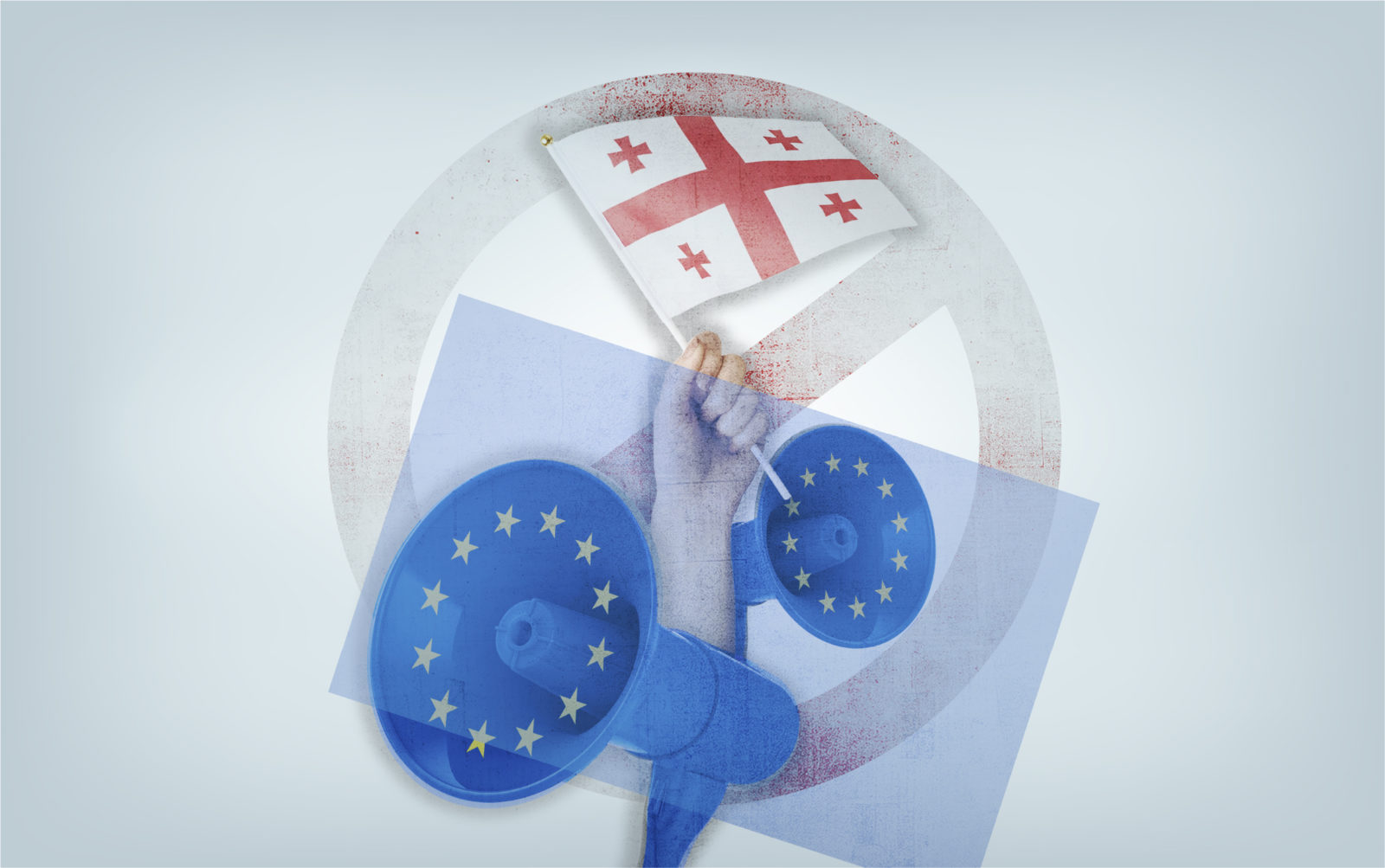
Since receiving EU candidate status in 2023, Georgia has moved in a direction few Europeans anticipated. Rather than undertaking the reforms necessary for accession, the country’s leadership has accelerated measures that undermine democratic institutions, weaken checks and balances, and shrink political space. Finally, it has announced a ‘postponement’ of any EU accession-related talks until after the 2028 elections. It now seems that by 2028, if it were up to its current government, Georgia might no longer have any opposition which could challenge the rule of the Russian-made oligarch, Bidzina Ivanishvili’s government, in power since 2012.
If the Constitutional Court approves the Georgian Dream party’s request to ban several of the country’s principal opposition forces, Georgia will cross an important threshold: from democratic backsliding to the systematic dismantling of political pluralism. The significance of this development extends far beyond Georgia’s domestic politics. The parties targeted by the proposed ban differ in their political orientations, electoral strategies, and leadership. What unites them is their commitment to Georgia’s integration into the European Union and the broader Euro-Atlantic community. The government’s effort to remove them from political life appears designed to eliminate the principal political forces supporting Georgia’s European and Euro-Atlantic integration.
The proposed restrictions form part of a broader legislative framework that has already attracted criticism from international democratic institutions. The legislation creates extensive barriers for running for office for all citizens who have received foreign funding and introduces mechanisms that could allow newly formed political organisations to be dissolved if they are deemed connected to previously banned parties. While presented as a legal measure, its political implications are unmistakable. The practical consequences could be profound. Thousands of Georgian citizens who have participated in political parties, civil society organisations, academic programmes, or internationally funded initiatives could find themselves effectively excluded from meaningful political engagement. Rather than addressing specific unlawful actions, the emerging framework risks restricting entire networks that have played a vital role in Georgia’s democratic development since independence.
Over the past two decades, Georgia’s European and Euro-Atlantic aspirations have been sustained by a diverse ecosystem of political parties, civil society organisations, independent media, researchers, and public servants. The current trajectory precisely threatens those actors that have anchored the country’s Western orientation. A political system in which pro-European forces are marginalised or excluded would inevitably make Georgia more vulnerable to external influence and diminish the prospects for future democratic reform. The issue is therefore not merely whether opposition parties will be prohibited. It is whether future political change to return the country to the EU path through democratic competition will remain possible. No country has successfully advanced toward European Union membership while simultaneously seeking to eliminate its principal political opposition.
For the European Union, this should not be viewed simply as a domestic Georgian issue. The EU might be facing a significant strategic loss in the South Caucasus. Georgia occupies a strategically critical position in the wider European neighbourhood. It serves as a critical link in emerging connectivity initiatives connecting Europe with Central Asia and beyond, including the Middle Corridor. Stability in Georgia is therefore a matter of direct European interest. Yet long-term stability cannot be achieved through democratic erosion. Political exclusion may strengthen a governing party in the short term, but it weakens institutions, fuels political polarisation, and generates uncertainty about the country’s future. History repeatedly demonstrates that systems built on diminishing political competition rarely produce durable stability.
The European Union’s current approach of limited engagement has yielded few tangible results. While intended to express concern over democratic backsliding without pushing the Georgian leadership further away, it has not altered the calculations of those in power. The assumption that stronger European pressure would inevitably drive Georgia closer to Russia is increasingly difficult to sustain. Democratic decline has continued despite a cautious European approach and despite the significant political incentive represented by EU candidate status. A more effective policy is needed. The European Union should move beyond passive observation and adopt a strategy that combines targeted pressure with robust support for democratic resilience. In addition to the assistance provided to democratic actors, restrictive measures against individuals responsible for undermining democratic institutions are both timely and necessary. The EU also needs to take a closer look at how Georgia’s economic infrastructure is used for undermining the Western interests-for example how it is used by entities and individuals from the heavily sanctioned countries; or for operating illegal ‘call centers,’ which rob the pensioners in the EU countries of their life-long savings. Targeting pressure points harmful to the regime with the limited economic resources to sustain its autocratic rule, will deliver a clear message, undercutting its power base. The EU also needs to find a way to make it clear to Ivanishvili’s government that it places strategic importance on restoration of democratic process in Georgia.
Some policymakers in Brussels increasingly speak of “Georgia fatigue.” Given the number of crises confronting the European Union, such sentiment is understandable. Yet fatigue cannot become a policy. Georgians remain deeply committed to their European future. They have repeatedly demonstrated their determination to defend democratic values and a European choice. But they also know they cannot weather this challenge alone. If political pluralism is dismantled and democratic competition becomes impossible, Georgia’s drift back to the Russian sphere of influence might be difficult to reverse. Europe still has a chance to prevent that outcome.

 ENJOYING THIS CONTENT?
Related publications
-
The Global Solidarity of Democrats: Turning the Tables in the Age of Autocracy and Empire
26 August 2026
-
Strengthening European Societal Resilience Under Russian Hybrid Pressure: Lessons from Ukraine
23 July 2026
-
EU Connectivity Under Pressure: The Iran War and the Geopolitical Reconfiguration of the South Caucasus
12 June 2026
Related events
-
19 February 2024

Cafe Kyiv: “Disinformation As A Destabilising Tool to Democratisation and EU’s Enlargement”
Colosseum, Gleimstraße 31, 10437 Berlin
Common Projects
-
06 December 2022

Resisting Russia’s False Narrative – EU-Ukraine Forum on Countering Disinformation
Stanhope Hotel, Rue du Commerce 9, 1000 Brussels
In-House Events
-
Why Putin Still Needs Elections – and What It Means for Europe
Blog
24 Sep 2026
-
Keys to Europe’s deregulation efforts – Global Perspectives Ep2 with Anu Bradford
Multimedia - Other News
03 Jul 2026
-
Women leading Moldova’s EU journey – Interview with Cristina Gherasimov – Her&EU
Her and EU - Podcasts
30 Jun 2026
-
10 years later: is Brexit working? I Bridge The Channel Ep.26
Bridge the Channel - Multimedia
23 Jun 2026
-

Armenia’s Elections: A Historic Turn Towards Europe?
Blog
08 Jun 2026
-

Can the European Political Community Define a Wider Europe?
Blog
28 May 2026
-

Can Pro‑Europe Ever Win in Britain? – Bridge the Channel
Bridge the Channel - Multimedia
26 May 2026
-

The Real Cost of Russia’s War – Thinking Talks Ep 24 with Vladimir Milov
Multimedia - Thinking Talks
27 Nov 2025
-

Moldova’s Elections: Resilience Under Fire, Lessons for Europe
Blog
06 Oct 2025
-

A Pipe Dream? Main Takeaways from the China-Russia Siberia 2 Pipeline ‘Deal’
Blog
22 Sep 2025