

Can the European Political Community Define a Wider Europe?
28 May 2026

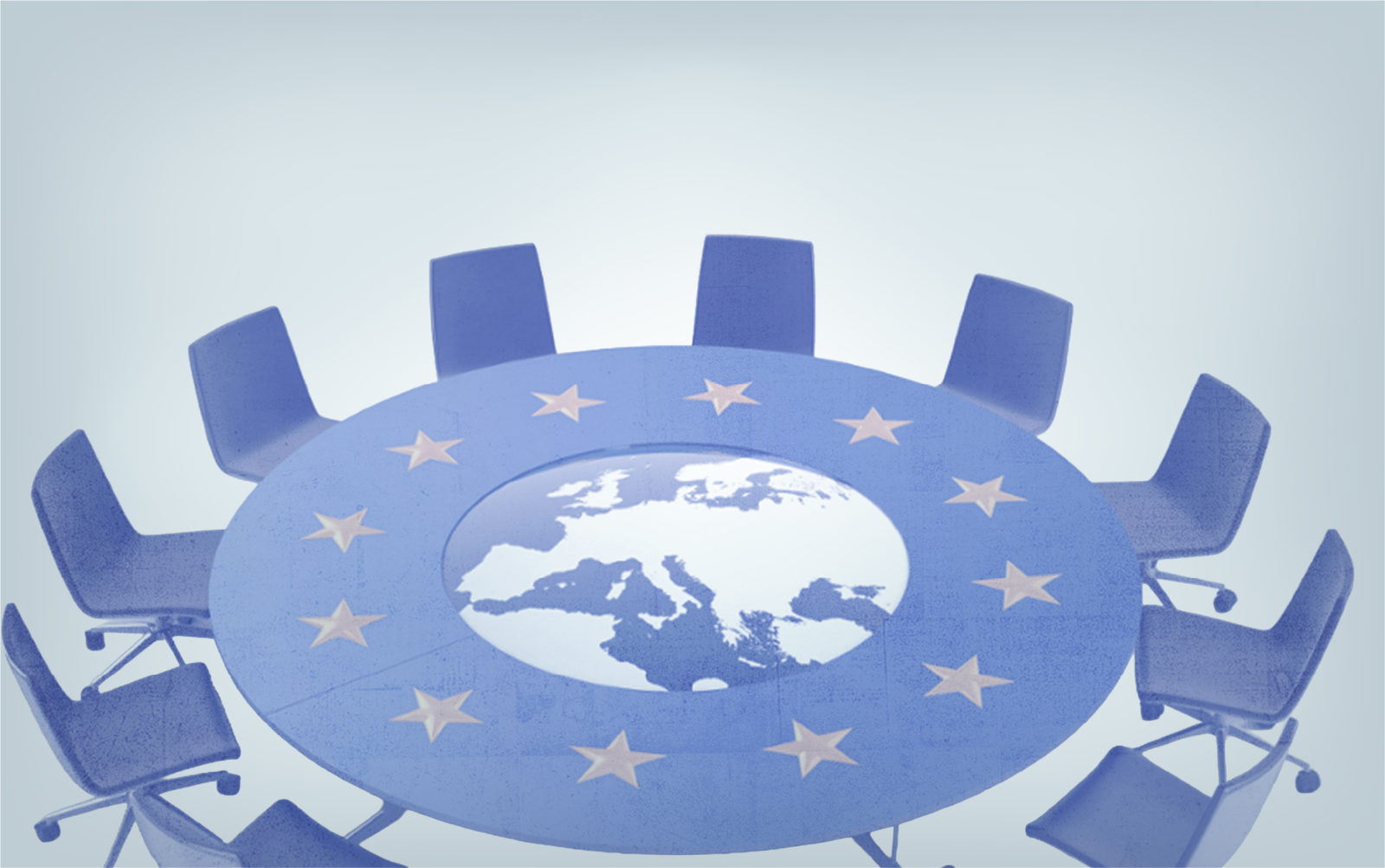
Three weeks after the Yerevan summit, the broader significance of the European Political Community is becoming clearer. What began in 2022 as an informal gathering of European leaders is gradually evolving into a flexible geopolitical framework for Europe’s wider neighbourhood.
The summit did not produce a dramatic institutional breakthrough. Its importance lies elsewhere. Yerevan showed that the EPC is increasingly serving as a platform for strategic coordination, gradual integration and differentiated engagement with countries that occupy an ambiguous space between partnership and accession.
Against the backdrop of Russia’s war against Ukraine, energy and supply-chain vulnerabilities, and instability in the South Caucasus and the Middle East, discussions focused on strategic resilience, connectivity, energy diversification, hybrid threats and critical infrastructure. Ukraine remained central, with President Zelenskyy calling for continued military support, pressure on Russia and progress on EU accession.
The summit’s strongest political signal, however, concerned Armenia. Hosting the EPC in Yerevan reflected Armenia’s growing strategic importance as it seeks closer ties with Europe and distances itself from Russia. Followed by the first EU-Armenia summit on 5 May 2026, the event reinforced Prime Minister Pashinyan’s narrative of a European turn ahead of parliamentary elections, while also fuelling opposition claims of growing Western influence in Armenia’s domestic politics.
The EPC as a Tool of Gradual Integration?
More importantly, the Yerevan summit showed how the EPC is contributing to the gradual institutionalisation of Armenia’s European orientation. Earlier EPC meetings had already produced concrete EU engagement with Armenia. The Prague summit paved the way for the EU civilian monitoring mission, later followed by the establishment of the EU Partnership Mission in Armenia. Yerevan consolidated and expanded this trajectory.
The EU and Armenia launched a Connectivity Partnership, established a High-Level Connectivity Dialogue and a High-Level Transport Dialogue, and deepened cooperation in areas ranging from border management and cybersecurity to infrastructure and digital integration. The joint declaration also explicitly acknowledged the “European aspirations of the Armenian people” and referred to Armenia’s 2025 law launching the country’s EU accession process.
The significance of this process lies precisely in its ambiguity. The EPC is not opening an enlargement track through the traditional acquis-based accession process. Instead, it is enabling a form of gradual integration through sectoral cooperation, political dialogue, security arrangements and infrastructure connectivity. Armenia is becoming more closely embedded in European governance structures without formally entering the accession path.
This points to one of the EPC’s broader strategic functions. It gives the EU a way to deepen political and geopolitical engagement with neighbouring countries while avoiding, at least for now, the more sensitive institutional and political debates surrounding enlargement.
What Is the EPC Actually Becoming?
At the same time, however, the Yerevan summit exposed growing tensions surrounding the EPC itself. The first concerns the widening divergence between the European Parliament and the EU executive regarding relations with strategically important – but politically difficult – partners.
This divergence was particularly visible regarding Azerbaijan. Over recent years, the European Parliament has adopted an increasingly critical tone towards Baku, especially following developments linked to Nagorno-Karabakh, democratic governance and human rights. Ahead of the summit, Azerbaijan sharply criticised recent parliamentary resolutions and suspended several parliamentary cooperation channels, including within the Euronest Parliamentary Assembly.
Yet the EPC summit demonstrated a very different logic at the level of European leaders and executive institutions. Azerbaijan remained fully integrated into the EPC framework, and European leaders continued direct engagement with President Ilham Aliyev. For many EU governments and executive actors, Azerbaijan remains strategically important for regional stability, connectivity and energy diversification.
A similar contradiction is increasingly visible in Georgia. While the European Parliament has condemned the 2024 elections as neither free nor fair, warned of an authoritarian turn, and the Commission has suspended visa-free travel for Georgian diplomats and senior officials, Georgia’s leadership remains invited to high-level formats such as the EPC. The contrast was especially striking as the summit coincided with another critical AFET report on Georgia’s democratic trajectory. In practice, the EPC remains one of the few high-level platforms where Georgian authorities can still engage directly with EU leaders despite tensions with Brussels.
This exposes a broader structural dilemma for EU external action: can the Union maintain a credible value-based approach while also keeping strategically important partners inside a wider European diplomatic framework?
A Flexible Format with an Evolving Purpose
The second tension concerns the absence of a clearly defined conceptual framework for the EPC itself. So far, this ambiguity has partly been the format’s strength. The EPC’s informality gives leaders room for manoeuvre, allowing them to respond rapidly to geopolitical developments without being constrained by accession rules or heavy institutional procedures. In an increasingly fragmented security environment, such flexibility has clear value. Yet four years after its creation, fundamental questions remain unresolved. Is the EPC a preparatory framework for enlargement? A substitute for countries unlikely to become EU members? Or is it evolving into a permanent geopolitical architecture for a wider Europe?
The Yerevan summit illustrated this ambiguity particularly clearly. The EPC now includes EU member states, accession candidates, Eastern Partnership countries, the United Kingdom, Türkiye and, for the first time, Canada. These actors have very different relationships with the EU and very different expectations from the format. Armenia increasingly uses the EPC as a pathway towards deeper integration with European structures. Türkiye treats it as a geopolitical platform despite frozen accession negotiations. The United Kingdom uses it as a post-Brexit coordination space, while Canada’s participation suggests the EPC may already be moving beyond a strictly pan-European framework.
This diversity is precisely what makes the EPC useful, but also what makes it conceptually fragile. Its openness allows adaptation to geopolitical change, yet its long-term purpose remains unclear. Sooner or later, the EPC will need to define its political role more clearly: whether it is primarily an enlargement-related framework, a wider European security forum, or a flexible geopolitical coalition around the EU.
ENJOYING THIS CONTENT?

Related events

-
Iceland’s No, and the Membership It Was Never Offered
Blog
16 Sep 2026
-

Keys to Europe’s deregulation efforts – Global Perspectives Ep2 with Anu Bradford
Multimedia - Other News
03 Jul 2026
-
10 years later: is Brexit working? I Bridge The Channel Ep.26
Bridge the Channel - Multimedia
23 Jun 2026
-

Armenia’s Elections: A Historic Turn Towards Europe?
Blog
08 Jun 2026
-
Are young Europeans tired of the digital world? – The European View Podcast Ep.25
Podcasts - The European View Podcast
09 Apr 2026
-

EU Enlargement 2025: Ambition vs Reality – Thinking Talks Ep 23 with Skander Nasra
Multimedia - Thinking Talks
20 Nov 2025
-

Moldova’s Elections: Resilience Under Fire, Lessons for Europe
Blog
06 Oct 2025
-

From Washington to the Caucasus: The Ripple Effects of Trump’s Peace Push
Blog
05 Sep 2025
-

It’s Official, Georgia Closes the Door to the EU: The EU Needs a Strategy
Blog
29 Nov 2024
-
A Quiet Victory: Key Takeaways from Moldova’s EU Membership Referendum
Blog
23 Oct 2024