
At the Table or on the Menu: Europe’s Make-or-Break Moment
17 November 2026
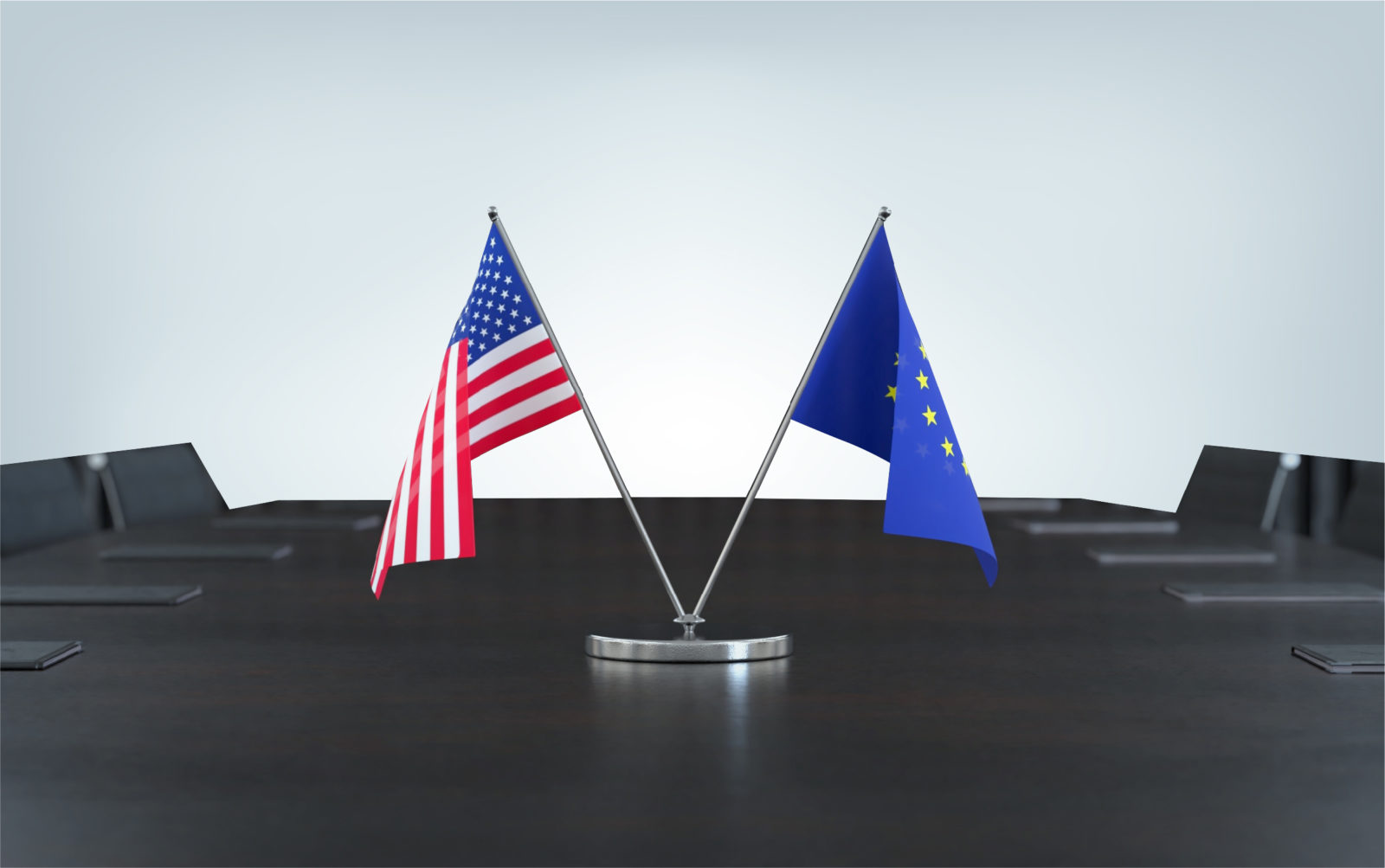
Over the past two decades, the world has confronted a series of global crises: financial, migratory, pandemic, and insecurity-driven. More recently, a profound political crisis has also emerged. This political crisis is defined by the erosion of multilateralism and a growing disregard for international law, established rules, and democratic institutions. As well as a struggle for global dominance, both economic and military.
The main players in this arena are the global superpowers China and the US. However, Russia, once viewed as merely a regional power, now stands nearly alongside them. Its alliance with China, influence across India and the Global South, and its brutal war in Ukraine, which preoccupies the entire democratic world, have elevated it to a major global player.
Rich, Yet Weak: Europe’s Identity Crisis
The question of the day for us, EU citizens, is this: Where do Europe and its Union stand in this space? What are our goals? What is our future?
As a passionate European, I must admit that the image of Europe is not very captivating these times. Our dominant traits are disunity and internal fragmentation. We make decisions with great difficulty, or fail to make them at all. And even when we do manage to adopt strategies, we fail to implement them.
The authority and respect of the EU in the world are waning. This is because we are rich, but weak. We manage to deal with illegal immigration more or less only by purchasing the commitment of other countries to detain or accept immigrants on their territories. Russia is currently threatening us only with hybrid attacks thanks to Ukraine, which is holding it back with its courage, heroism, sacrifices, resilience, and our money. The US imposes tariffs on our goods as it pleases. We also don’t know how to curb China.
Rather than solidarity and collective effort, the EU is increasingly splintered by various sub-coalitions like the E3, E5, NB8, and ‘Coalition of the Willing.’ Diverging interests and fading mutual trust mean this trajectory is unsustainable, especially now that the going gets tough.
A Make-or-Break Imperative: Becoming a Superpower
To halt its fading influence and turn the tide, the EU has a single recourse: it must become a global power. This means building a superpower, not to exert dominance over others, but to resolutely protect the vital interests of its own citizens. For the European Union, this is a make-or-break challenge.
It is both evident and encouraging that the leader expected to guide Europe, German Chancellor Friedrich Merz, recognises this challenge. The proposal backed by eleven prime ministers, to move from unanimity to qualified majority voting in CFSP is a step in the right direction. It is a decisive move that will streamline decision-making and accelerate the buildout of a true European Defence Union.
I’m glad the Coalition of the Willing held its first military exercise in Poland recently, even though it only featured nine EU nations (plus the UK and Turkey) and 2,800 soldiers. Anyway, every initiative has to begin somewhere before it can expand.
In her State of the Union address, European Commission President Ursula von der Leyen announced the establishment of a European Security Council, a joint political body dedicated to overseeing the development of European defence capabilities. This Security Council must be established without delay.
Standing Firm with Ukraine
Above all, we must continue to support Ukraine so that Putin cannot break her. This support must be both financial and practical, consisting of active steps that will help Ukraine survive another harsh winter. If European reconstruction teams are willing to enter Ukraine voluntarily to help Ukrainian cities and towns restore their destroyed energy infrastructure, we must enable them to do so. Similarly, if European soldiers wish to enter Ukraine voluntarily to protect these reconstruction teams, they must be allowed to do so as well. Putin must see and feel that we are not afraid of him and that he will not break us.
At the end of the day, Europe can no longer afford to stay on the diplomatic sidelines. What unfolded in Abu Dhabi was a sobering and embarrassing spectacle for Europeans. Even after halting financial aid to Ukraine, Washington allowed Trump’s son-in-law to sketch out a new European security architecture alongside Moscow. Inside, Russia reinforced his position while Ukraine watched, outside, Europeans were reduced to listening at the door. Europe must ensure it is never sidelined like that again.
The EU needs a special envoy and quiet, intensive diplomacy to explain to the Kremlin that it is far better for Russia to have good neighborly relations with the EU than to become a province of China, which is precisely where Putin is leading the country. The EU must have a seat at the table where the future of Ukraine is decided, because that table also determines the future of Europe. And if the Americans do not want us at that table, we must set up our own.
Hard Power or Collapse
We have no choice. Either we manage to complement our soft power and wealth with hard power, like a European army, that would lead to becoming a superpower, or the EU will fall apart. I firmly believe we will choose the first path. I strongly support the bold decision of the German Chancellor to approve the multi-year European budget conditional on a firm, unified commitment from all 27 member states to support Ukraine for as long as it takes. This is the right path: a path toward unity, strength, operational readiness, responsibility, authority, and respect from others. We all know it, and so do those who wish to undermine us: we want a Europe that will neither threaten nor fear anyone.
 ENJOYING THIS CONTENT?

-
Is Brexit going in reverse ? – Bridge the Channel Ep.28
Bridge the Channel
07 Oct 2026
-
5 Messages That Stood out From the SOTEU
Blog
16 Sep 2026
-
Iceland’s No, and the Membership It Was Never Offered
Blog
16 Sep 2026
-
Reset or Restart? Andy Burnham’s EU Challenge – Bridge the Channel
Bridge the Channel
27 Jul 2026
-
Decoding Sovereignty, Defence, Competitiveness: Democratic Resilience as the Key to Success
Blog
27 Jul 2026
-
“The Iran Knot”: How the War Exposed Italy’s Middle Power Dilemma
Blog
06 Jul 2026
-
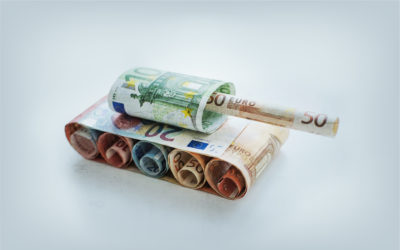
Defence Readiness 2030 Requires More Than Higher Defence Spending
Blog
23 Jun 2026
-
10 years later: is Brexit working? I Bridge The Channel Ep.26
Bridge the Channel - Multimedia
23 Jun 2026
-
Time to Ban Social Media for Under‑Sixteens I Op-ed ep.12
Multimedia - Video Op-Eds
19 May 2026
-
Simplifying Digital Rules & EU Tech Sovereignty – with Zach Meyers
Brussels Bytes - Podcasts
22 Apr 2026