

Defence Readiness 2030 Requires More Than Higher Defence Spending
23 June 2026

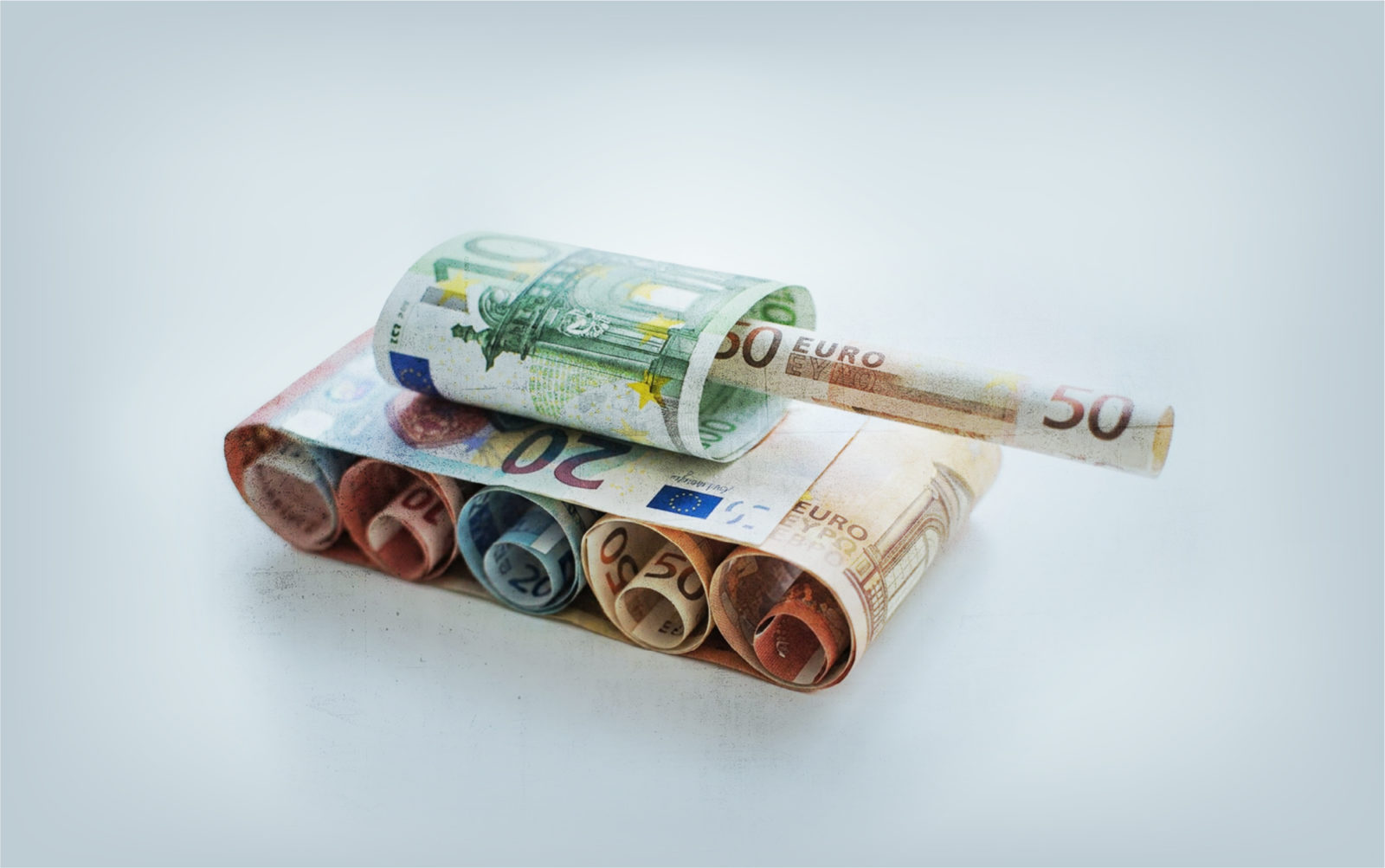
Europe is finally taking defence seriously again, even if Russian revisionism has forced its hand. After decades of underinvestment, governments across the continent are increasing military spending, launching new defence initiatives, and abandoning long-standing taboos in order to speak openly about the need to rearm in an increasingly threatening world. Under the banner of Defence Readiness 2030, the European Union has set itself an ambitious goal: to ensure that Europe can credibly deter military aggression by the end of this decade.
Higher defence budgets are the conditio sine qua non for achieving this goal. However, defence expenditure is a means, not an end. The central question is not only how much Europe spends on defence, but whether those resources are being translated into the military capabilities, industrial capacity and strategic coherence necessary to deter and, if required, defeat potential adversaries.
Russia’s full-scale invasion of Ukraine exposed a dangerous complacency and strategic naivety that had been taking root for decades. Following the end of the Cold War, European countries steadily reduced defence expenditure and reaped the benefits of the so-called peace dividend. Defence industries adapted accordingly. Production lines were downsized, stockpiles shrank, supply chains became increasingly optimised for efficiency rather than resilience, and military production shifted from large-scale manufacturing to relatively small and specialised orders. The result was a minute industrial base that proved sufficient in times of peace, yet lacked the scale, capacity, accumulated know-how and political support needed to expand rapidly if and when circumstances demanded it.
When suddenly confronted with the need to arm Ukraine, replenish their own depleted arsenals and reinforce deterrence against Russia, European governments discovered that defence production cannot be expanded at the stroke of a pen. Factories cannot appear overnight. Supply chains cannot be rebuilt in a matter of weeks. Skilled workers, specialised machinery and critical components all require time to develop and mobilise. Above all, they depend upon a culture of preparedness, resilience and deterrence; one that Europe had steadily neglected under the illusion that war in Europe was somehow a thing of the past.
To Europe’s credit, recent progress has been substantial. Defence spending has increased sharply since 2022, while many European defence companies have significantly expanded production. Output of ammunition, air-defence systems and other critical equipment has risen considerably. Yet the scale of the challenge is immense, and Europe is still far from producing the military capabilities and industrial output required to achieve genuine defence readiness by 2030.
The challenge is further intensified by a series of profound geopolitical and technological shifts. The United States has made it crystal-clear that Europe can no longer rely indefinitely on American security guarantees and must shoulder a far greater share of its own defence burden. Simultaneously, global supply chains are becoming more fragile as strategic competition and geopolitical fragmentation deepen. European defence industries are still dependent on American technologies in key areas, while China maintains a commanding position in many of the critical raw materials and industrial inputs upon which modern defence production depends. At the same time, artificial intelligence, autonomous systems and software-driven warfare are reshaping the battlefield at a pace that no military can afford to ignore.
Europe’s defence industrial base therefore faces a triple challenge: it must increase production, reduce strategic dependencies and maintain technological competitiveness simultaneously. Meeting this challenge requires more than additional funding. It requires structural reform.
First, procurement processes must become faster and more predictable. Defence companies are unlikely to make major investments in new production facilities without confidence that long-term demand exists. Governments should therefore move towards longer procurement cycles and explore innovative arrangements such as capacity contracts, which guarantee industrial production capacity rather than merely purchasing specific quantities of equipment.
Second, Europe must address the fragmentation that continues to undermine its defence industrial base. Twenty-seven separate procurement systems inevitably generate duplication, inefficiency and higher costs. Greater coordination is urgently needed to not only reduce waste of financial resources but also allow industry to benefit from economies of scale and more predictable demand.
Third, Europe must invest strategically in the capabilities that matter most. The continent remains heavily dependent on the United States in areas such as command and control, strategic airlift, satellite communications, advanced intelligence systems and military software. Reducing these dependencies should become a central objective of European defence policy over the coming decade. The same logic applies to research and development. While immediate capability gaps understandably dominate political and financial attention, Europe cannot afford to neglect long-term technological competition. Military superiority increasingly depends on innovation, and Europe’s investment in defence research remains significantly below that of the United States. The goal should therefore be to rapidly raise Europe’s R&D share to around 10% of total defence spending.
In conclusion, the debate surrounding Defence Readiness 2030 should not be reduced to headline spending figures or ever-higher budgetary commitments. The fundamental question is whether Europe can build, within the narrow window remaining before the end of the decade, the industrial foundations necessary to sustain military power, strategic autonomy and credible deterrence in a now undeniably unstable world.
Defence industries are too often treated as merely another economic sector. In reality, they constitute a strategic capability in their own right. Without the capacity to produce at scale, innovate at speed and sustain military operations over time, no amount of political ambition, strategic rhetoric or financial investment will be sufficient. If Europe is serious about deterrence, it must become equally serious about the industrial base that underpins it. For deterrence ultimately rests not only on what Europe possesses today, but on what it can build, replace and sustain tomorrow. After all, wars are won not only on the battlefield, but also in factories, laboratories and supply chains.
ENJOYING THIS CONTENT?



-

Reset or Restart? Andy Burnham’s EU Challenge – Bridge the Channel
Bridge the Channel
27 Jul 2026
-

Decoding Sovereignty, Defence, Competitiveness: Democratic Resilience as the Key to Success
Blog
27 Jul 2026
-

“The Iran Knot”: How the War Exposed Italy’s Middle Power Dilemma
Blog
06 Jul 2026
-

Simplifying Digital Rules & EU Tech Sovereignty – with Zach Meyers
Brussels Bytes - Podcasts
22 Apr 2026
-

Is UK’s cautious Iran’strategy paying off? I Bridge the Channel Ep.23
Bridge the Channel - Multimedia
30 Mar 2026
-
Iran’s Attacks on the GCC: A Strategic Opening for Europe
Blog
13 Mar 2026
-

Europe’s Security Future Hinges on Ukraine’s Innovation
Blog - Ukraine
05 Feb 2026
-

From Partner to Problem – How Trump’s Foreign Policy is Reshaping the World Order
Blog
22 Jan 2026
-
Economic Growth is Europe’s Best Defence
Blog
14 Jan 2026
-

New social contract for European defence – Interview with Homańska & Przybylski
The European View Podcast
19 Dec 2025