
“The Iran Knot”: How the War Exposed Italy’s Middle Power Dilemma
06 July 2026

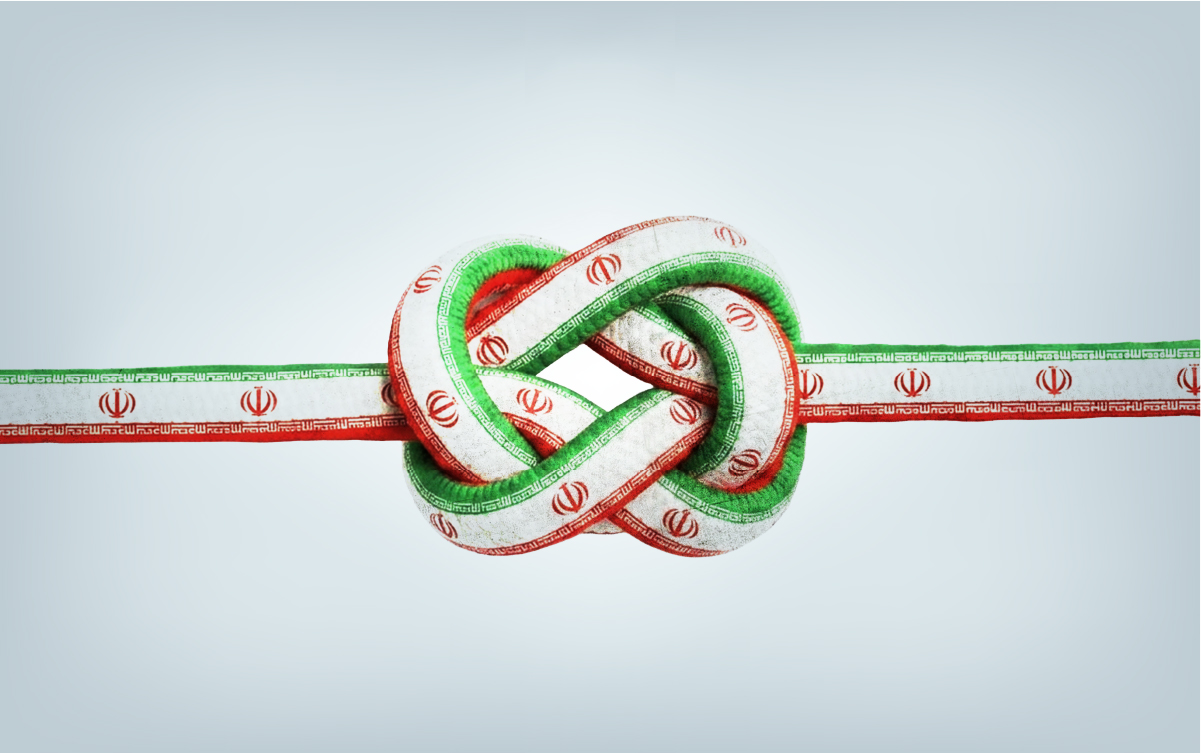
In recent months, tensions across the transatlantic space have become increasingly visible, extending beyond trade and defence to questions of political alignment and strategic loyalty. For Italy, these frictions are particularly significant: they touch the core of a foreign policy traditionally built on Atlanticism, Europeanism and Mediterranean projection. Now, the “Iranian knot” offers a useful stress test for two overlapping dynamics: the resilience of the Italy-US relationship and the credibility of Italy’s claim to act as a middle power. The timing is not incidental. The renewed US diplomatic engagement with Rome – framed around the visits of Secretary of State Marco Rubio to Pope Leo XIV and Giorgia Meloni on 6-8 May to Italy and a broader effort to re-establishcoordination on key dossiers – places Italy at the centre of a transatlantic recalibration that explicitly links security, energy, and its role as a diplomatic bridge. In this context, Italy’s cautious positioning on the Iran dossier becomes more than a simple alignment choice: it reveals how far Rome can translate ambition into agency under structural constraint.
Traditionally, Italy operates within a system of external anchors, often conceptualised as the “three concentric circles”: the European Union, the Mediterranean projection, and the transatlantic relationship with the US. These define both its strategic orientation and its room for manoeuvre. Within this framework, the transatlantic relationship remains decisive when security stakes are high. As instability in the Middle East and the Gulf evolves, Italy’s positioning is shaped by Washington’s strategic framing.
Recent development, however, suggests a more nuanced dynamic. The Italian Prime Minister has signalled a calibrated distancing from Washington, noting in Parliament that the US and Israeli actions were taking place outside international law, as an implicit signal of Italy’s constitutional commitment to legality. This marked a departure from a previously more pro-US posture and was reinforced by Italy’s decision to refuse participation in a US-requested military deployment in the Strait of Hormuz.
These signals must be read against a sensitive domestic context. The March 2026 justice referendum – lost by the government – and the participation in initiatives such as the “Board of Peace” have affected coalition cohesion and exposed the executive to greater internal pressure. Then, Meloni criticised Trump’s attacks against the Pope, while Trump publicly questioned Italy’s stance on Iran and hinted at possible troop reductions and renewed tariffs on EU exports. These frictions complicate an already dense bilateral agenda.
Iran is precisely the dossier where these tensions converge. The current US outreach – covering security, industrial cooperation, and energy stability – reinforces Italy’s embeddedness within the transatlantic security framework, limiting Rome’s autonomous standing on sensitive dossiers such as Iran. As tensions fluctuate, Rome’s margin for independent positioning narrows, although Meloni, during her recent visit to Armenia and Azerbaijan, expressed rare criticism against Trump’s declarations regarding Italy’s alignment within the Western camp. The Iranian file, therefore,exposes a core reaction: Italy’s aspiration to strategic relevance coexists with a dependence on Washington’s framing of the issue.
This tension is particularly visible under the Meloni government: she has articulated more explicitly than several predecessors the ambition for Italy to act as a middle power. Yet this ambition is not matched by consistent strategic initiatives. On Iran, Italy remains largely reactive – supporting de-escalation, avoiding open divergence and calibrating its moves in line with broader US and NATO expectations. The gap between narrative and practice is therefore structural: Italy seeks recognition as a strategic actor but prioritises alliance credibility over autonomous initiative.
A second constraint is Italy’s energy vulnerability. Despite diversification efforts after the war in Ukraine, Italy remains exposed to Gulf dynamics. Any escalation involving Iran affects energy markets, with direct consequences for domestic costs. Rising prices translate into political pressure, narrowing the government’s room for manoeuvre. Iran thus becomes both a geopolitical anddomestic variable. Others domestic political dynamics amplify this pattern. With the 2027 elections approaching, foreign policy choices are increasingly filtered through internal considerations. Risk-sensitive decision-making prevails, limiting Italy’s willingness to pursue more assertive diplomatic roles. The result is a posture that aims to preserve stability rather than shape it.
The European dimension adds a further layer of constraints. Italy operates within an EU framework that broadly favours diplomatic engagement and regional de-escalation vis-à-vis Iran, although important differences persist among member states. Italy occupies an intermediate position between Germany’s stronger security-oriented approach and Spain’s emphasis on humanitarian and legal concerns. While Meloni has aligned with the US and the G7 on sanctions and regional security, Italy has simultaneously drawn a hard red line against direct military involvement, moving Rome toward a more cautious, diplomatic posture. Italy still struggles to shape broader European positioning or to fully leverage its potential role as a bridge between Brussels and Washington.
Taken together, these elements show how Italy navigates the intersection of transatlantic alignment, domestic vulnerability and middle-power ambition. The current phase of intensified US-Italy engagement could provide Rome with an opportunity to redefine its role more coherently, particularly by linking energy and maritime security and its bridging position between Washingtonand more cautious EU partners. However, this would require Italy to move beyond its intermediate position, using its balancing role to strengthen its diplomatic relevance on regional de-escalation. Absent such a shift, the Iranian knot will continue to confirm a familiar conclusion: Italy remains a relevant interlocutor within the transatlantic system, but not yet a decisive actor in shaping its direction.
ENJOYING THIS CONTENT?


-
Reset or Restart? Andy Burnham’s EU Challenge – Bridge the Channel
Bridge the Channel
27 Jul 2026
-
Decoding Sovereignty, Defence, Competitiveness: Democratic Resilience as the Key to Success
Blog
27 Jul 2026
-
Defence Readiness 2030 Requires More Than Higher Defence Spending
Blog
23 Jun 2026
-
What is Europe’s Role in the Middle East Crisis – Global Perspectives Ep1 with Marwan Abdallah
Multimedia - Podcasts
27 May 2026
-

Europe Cannot Afford Irrelevance and Must Facilitate Dialogue with Iran
Blog
15 Apr 2026
-
Is UK’s cautious Iran’strategy paying off? I Bridge the Channel Ep.23
Bridge the Channel - Multimedia
30 Mar 2026
-
Iran’s Attacks on the GCC: A Strategic Opening for Europe
Blog
13 Mar 2026
-
China, the EU… and Starmer’s Future I Bridge the Channel Ep.22
Bridge the Channel - Multimedia
25 Feb 2026
-
Values-Based Realism and Its Enemies: How to Tackle the new Geopolitical ‘Realism’ from Left and Right
Blog
24 Feb 2026
-
Elections in Japan: What Takaichi’s Supermajority Means for Strategic Realities in the Indo-Pacific
Blog
10 Feb 2026