

Serbia After Vučić: A Democratic Breakthrough, but Not Yet a Geopolitical Turn?
27 October 2026

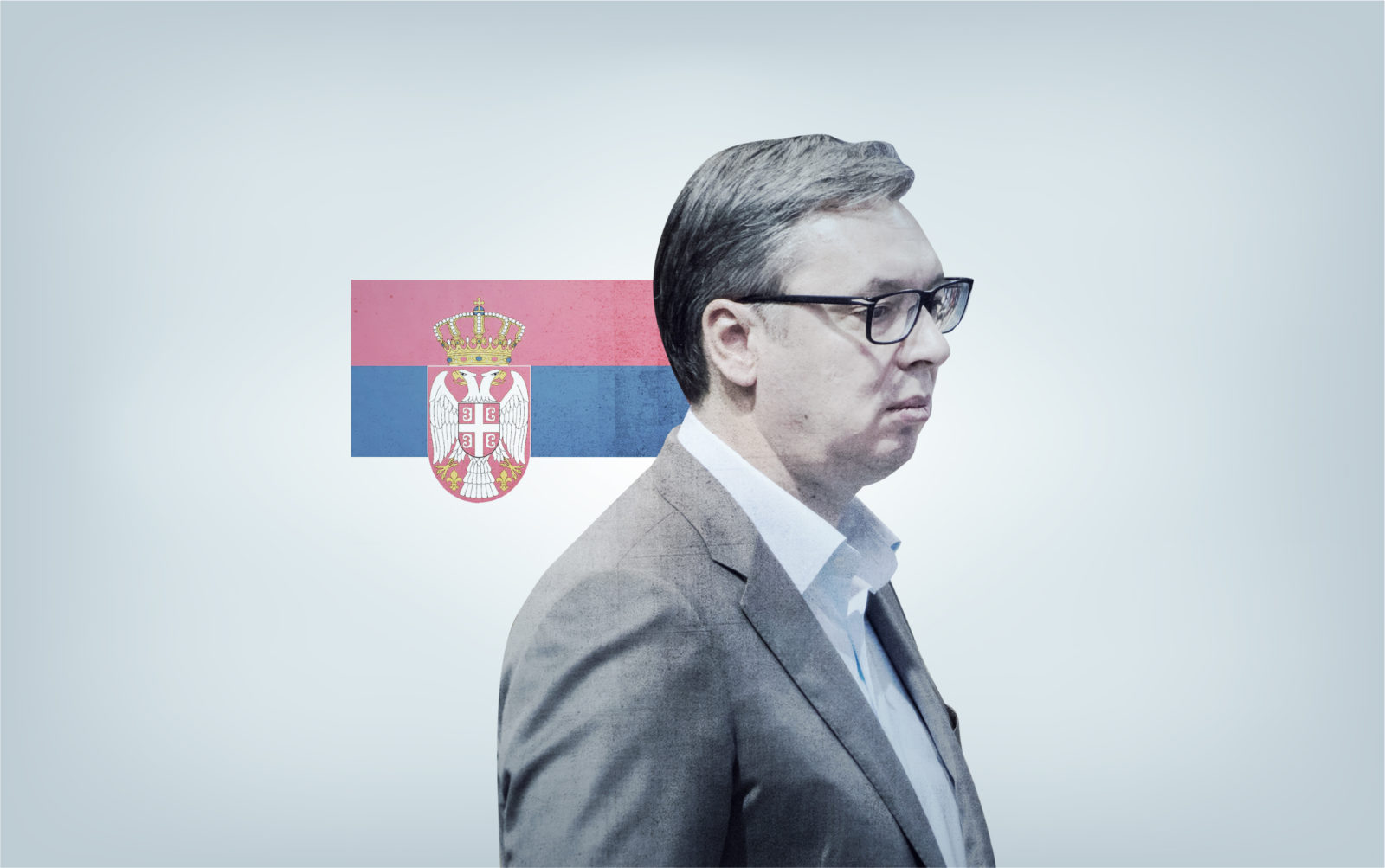
Serbia’s parliamentary elections on 25 October have delivered a remarkable political breakthrough. After nearly two years of student-led mobilisation, Aleksandar Vučić acknowledged the defeat of his Serbian Progressive Party (SNS)-led coalition. Preliminary projections suggest that the Student List has secured approximately 141 seats in the 250-member parliament, potentially ending more than a decade of SNS-dominated government.
Yet this election’s significance goes beyond a change in political leadership. As in Hungary, where the emergence of TISZA challenged not only the incumbent government but also the established opposition, Serbia’s election raises broader questions about the credibility of traditional political elites, the capacity of new political movements to govern and the future of democratic representation. For the EU, the democratic opening presents an opportunity to revitalise Serbia’s accession process, although it should not automatically be interpreted as a fundamental shift in the country’s foreign-policy orientation.
Why did students succeed where political parties struggled?
Perhaps the most revealing aspect of Serbia’s election is that the decisive challenge to Vučić came not from established opposition parties, but from a student-led movement.
For years, Serbia’s opposition struggled with fragmentation, leadership disputes and difficulties in building a convincing alternative. These weaknesses were compounded by an unequal political environment, including concerns over media freedom, electoral integrity and the politicisation of public institutions.
The student movement emerged from a different source of legitimacy. Following the November 2024 collapse of the railway station canopy in Novi Sad, which killed 16 people, demands for accountability evolved into a nationwide challenge to corruption and institutional capture.
Rather than organising around traditional ideological divisions, students mobilised around a common demand: institutions should serve citizens, not political parties.
This approach brought together people with different political convictions, including those who disagree fundamentally on Kosovo, Russia and Serbia’s geopolitical orientation.
The movement’s success therefore exposes a deeper crisis of political representation. The problem was not simply dissatisfaction with the governing party, but also declining confidence in the capacity of established political elites to deliver meaningful change.
However, the ability to mobilise against a political establishment does not necessarily translate into the ability to govern.
From civic legitimacy to governing capacity
The composition of the Student List illustrates both the promise and the challenges of this transition.
Rather than presenting student activists as parliamentary candidates, the movement selected established professionals, including cardiologist and university professor Ilija Srdanović, former National Bank of Serbia governor Dejan Šoškić, and University of Arts rector Mirjana Nikolić. Their backgrounds reflect an attempt to combine civic legitimacy with professional expertise and institutional experience.
The Student List’s programme reinforces this approach. Its eleven priorities include strengthening anti-corruption enforcement, reviewing public procurement, reforming media regulation and replacing politically appointed managers in public enterprises through merit-based recruitment. These proposals reflect an ambition to go beyond political alternation and address the institutional practices that have enabled party control over public administration. Their implementation, however, will require more than professional expertise: effective political leadership, administrative coordination and the capacity to translate reform commitments into lasting institutional change.
The movement’s decentralised decision-making, an important source of legitimacy during the protests, will also face the demands of executive responsibility. Translating this participatory model into effective governance will require clear lines of political accountability, transparent and merit-based appointments, and stronger parliamentary and independent institutional oversight. These mechanisms will be essential not only for implementing the movement’s reform agenda, but also for ensuring that political alternation leads to a more accountable exercise of power rather than a new concentration of authority.
Democratic renewal without geopolitical realignment?
For Brussels, Serbia’s election creates an important opportunity, but also a risk of premature expectations. The Student List’s commitment to accountability, institutional independence and the rule of law is compatible with the fundamental principles underpinning EU accession. Indeed, its domestic reform agenda could help address longstanding weaknesses identified in Serbia’s European integration process.
However, democratic renewal should not be confused with its regional and geopolitical alignment. The Student List’s foreign-policy positions illustrate the limits of interpreting democratic change as an immediate European realignment. While the movement supports institutional reforms consistent with EU accession requirements, it has explicitly rejected imposing sanctions on Russia, reaffirmed Serbia’s opposition to Kosovo’s independence and membership of international organisations, and advocated continued economic cooperation with China. At the same time, it recognises Ukraine’s territorial integrity and supports closer relations with the EU. This combination suggests that Serbia’s democratic opening may initially advance European integration through domestic institutional reform rather than a fundamental change in its foreign-policy orientation.
The movement’s broad coalition encompasses different perspectives on Serbia’s international orientation. Questions concerning Kosovo, sanctions against Russia and relations with China remain politically sensitive. A democratic mandate for institutional reform, therefore, does not automatically constitute a mandate for immediate foreign-policy realignment.
This distinction is particularly important for the EU. Serbia could make meaningful progress towards European integration through judicial reform, media freedom and anti-corruption measures, even as important accession-related challenges remain unresolved, notably the normalisation of relations with Kosovo and alignment with the EU’s Common Foreign and Security Policy, particularly sanctions against Russia.
Nevertheless, foreign-policy alignment and the normalisation of relations with Kosovo remain important elements of the accession process. The EU should therefore distinguish between recognising democratic progress and assuming that a change of government resolves Serbia’s outstanding membership obligations.
An opportunity to rethink EU engagement
Serbia’s political transition also presents a test for the credibility of the EU’s enlargement policy. For years, Brussels’ engagement with Belgrade reflected a difficult balance between democratic conditionality and cooperation on regional stability, Kosovo, migration and economic interests.The result was an increasingly visible tension between the EU’s strategic priorities and its commitment to democratic transformation.
The election offers an opportunity to reconsider this approach.
Rather than expecting an immediate foreign-policy realignment, the EU should respond to verifiable institutional reforms with concrete, conditional incentives. These could include the release of reform-linked funding under the Western Balkans Reform and Growth Facility, gradual access to selected areas of the Single Market, and practical benefits for citizens, such as progress towards EU–Western Balkans roaming arrangements. Targeted technical assistance and closer cooperation with EU agencies could also strengthen Serbia’s administrative capacity. Such incentives should be linked to measurable progress on judicial independence, public administration reform and anti-corruption, without weakening existing requirements concerning Kosovo normalisation and alignment with the EU’s Common Foreign and Security Policy.
Judicial independence, transparent public procurement, electoral integrity and media pluralism should become central benchmarks for renewed accession momentum.
This would not mean relaxing accession conditionality. On the contrary, it would strengthen its credibility by linking concrete democratic achievements to concrete European opportunities.
Ultimately, Serbia’s experience demonstrates that democratic change can emerge outside conventional party structures. But democratic consolidation still requires credible political representation, effective institutions and accountable leadership.
The students have succeeded in challenging an entrenched political order. Their next task is considerably more difficult: translating civic mobilisation into sustainable democratic governance.
For the EU, the challenge is to support that transformation without claiming ownership of it or confusing democratic renewal with immediate geopolitical alignment.


 ENJOYING THIS CONTENT?
Related events


-

Why Putin Still Needs Elections – and What It Means for Europe
Blog
24 Sep 2026
-
Armenia’s Elections: A Historic Turn Towards Europe?
Blog
08 Jun 2026
-

Migration Update May 2026
Migration Update
30 May 2026
-
Migration Update March 2026
Migration Update
30 Mar 2026
-
Elections in Japan: What Takaichi’s Supermajority Means for Strategic Realities in the Indo-Pacific
Blog
10 Feb 2026
-
Migration Update October 2025
Migration Update
31 Oct 2025
-

Moldova’s Elections: Resilience Under Fire, Lessons for Europe
Blog
06 Oct 2025
-
Migration Update August-September 2025
Migration Update
30 Sep 2025
-

What MAGA 2.0 Means for America
Blog
06 Nov 2024
-

The US Elections Change Everything and Nothing for Europe
Blog
06 Nov 2024