

Recharging Europe’s Competitiveness: Why the EU Needs a European Productivity Board
21 January 2026


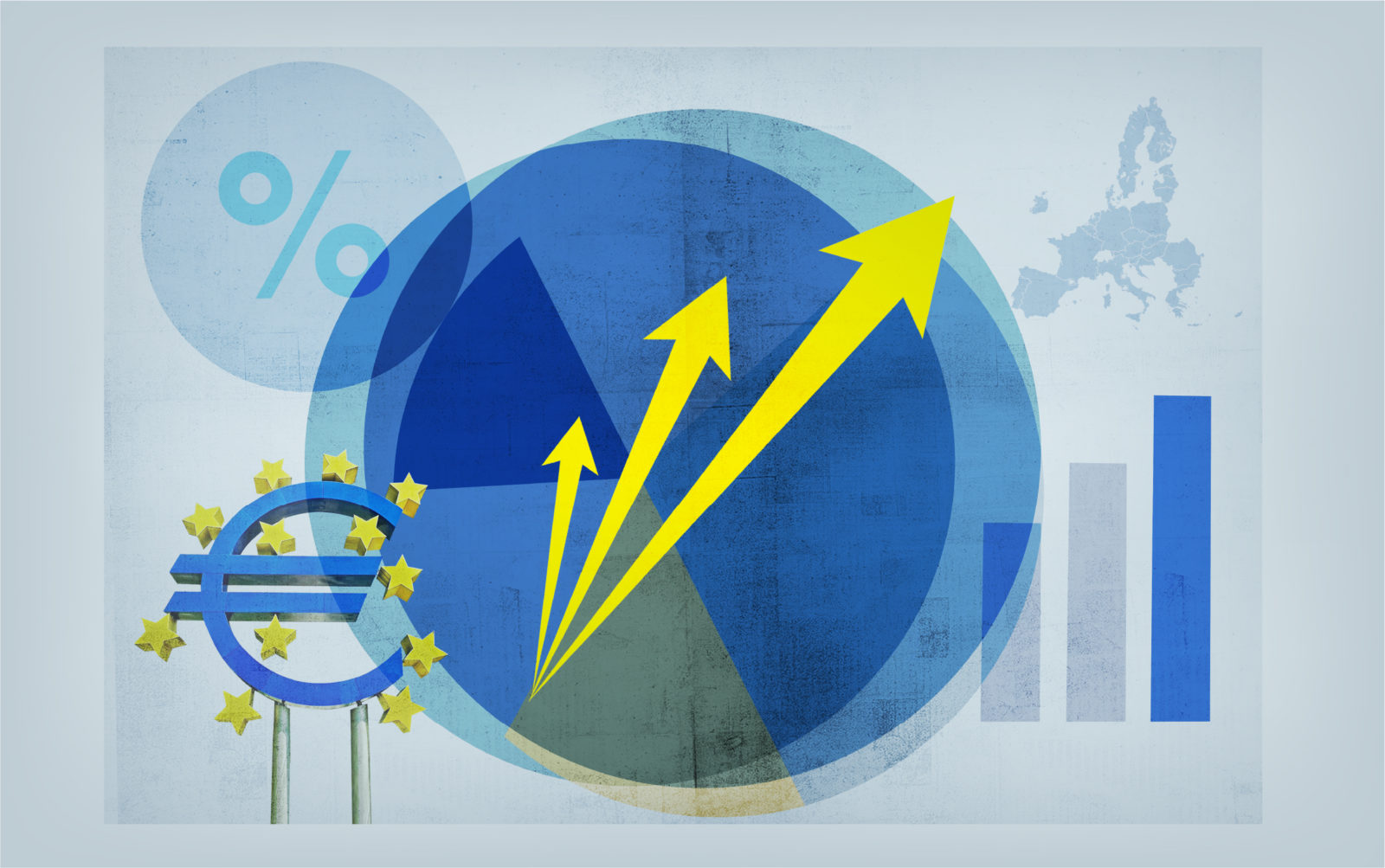
Europe’s declining productivity growth has become a central constraint on long-term prosperity. For over two decades, productivity gains have weakened across most EU Member States, while the gap vis-à-vis the US and leading Asian economies has widened. Recent flagship reports—the Letta Report on the Single Market and the Draghi Report on Competitiveness—show that Europe’s competitiveness challenge is structural, persistent, and urgent.
While low investment, fragmented markets, and slow innovation diffusion are well known, one part of the problem lies in Europe’s missing independent scientific advisory capacity on productivity and competitiveness as the basis for evidence-based policymaking. Structural reforms often require long time horizons, cross-policy coordination, and political resolve beyond electoral cycles. Yet EU and national policymaking often remain biased toward short-term measures and legislative output rather than economic outcomes. Addressing Europe’s productivity challenge requires better policies and corresponding policy advice institutions at the European level.
Why independent scientific economic policy advice matters
Research shows that independent, scientifically grounded advice improves policymaking. Advisory institutions diagnose trends early, develop long-term reform frameworks, filter flawed proposals, and translate evidence into actionable policy. They also inform public debate and strengthen accountability by making trade-offs transparent.
Politically, such institutions can make a difference: policymakers often postpone reforms with long-term benefits while prioritising visible short-term measures. Independent bodies embed long-term economic reasoning and highlight the economic costs of inaction. Effectiveness increases when advice combines independence with visibility through clear communication and public engagement.
National Productivity Boards without a sister institution at the EU level
National Productivity Boards (NPBs), established following the 2016 Council Recommendation, have improved evidence-based policymaking by analysing productivity trends, competitiveness drivers, and reform needs.
However, no EU-level institution currently aggregates NPB findings or translates them into coherent EU guidance. This limits the value of the NPBs, as many of the challenges they identify are European rather than national: energy market fragmentation, incomplete capital and digital markets, missing cross-border infrastructure, and uncoordinated innovation funding cannot be solved by Member States alone.
In addition, stronger coordination and harmonisation of the NPBs as independent scientific advisory bodies could pay off in terms of comparability and impact at the national level. Currently, their institutional designs differ in independence, resources, data access, and visibility; weak legal anchoring and unstable funding further constrain effectiveness.
Draghi’s warning: Europe is losing speed
Mario Draghi has highlighted Europe’s investment and innovation gaps and criticised slow policymaking, regulatory uncertainty, and a lack of strategic prioritisation. Legislative activity is rewarded, while policy effectiveness and learning from failure receive little recognition. Weak evaluation mechanisms and limited independent scrutiny allow ineffective policies to accumulate raising costs and undermining competitiveness.
A European Productivity Board: strengthening independent scientific advice at the EU level
A European Productivity Board (EPB) would complement national boards and establish independent scientific policy advice at the EU level by aggregating NPB analyses, producing EU-wide assessments of productivity trends and competitiveness, identifying structural bottlenecks and reform priorities, and contributing to the harmonisation of NPB methodologies and data.
The EPB should be independent, composed of a rotating committee of European experts supported by a permanent analytical secretariat, with transparent appointment procedures, financial autonomy, and full publication rights. It should advise the European Commission while reporting to the European Parliament, reinforcing accountability and remaining outside day-to-day policymaking in order to provide unbiased ex ante advice, rigorous ex post evaluations, and monitor of the implementation.
A pragmatic step towards a more competitive Europe
Europe’s productivity challenge is no longer a question of diagnosis but of action. National Productivity Boards have contributed to improving evidence-based debate at the Member State level, yet many of the binding constraints on productivity—such as market fragmentation, weak diffusion of innovation, energy market inefficiencies, and regulatory complexity—are fundamentally European in nature. A European Productivity Board (EPB) would add clear value by aggregating national evidence, harmonising methodologies, and translating fragmented diagnoses into coherent, EU-wide policy guidance.
Crucially, the EPB would embody a qualitatively different mode of policymaking: insulated from day-to-day political bargaining, institutionally anchored, and explicitly mandated to adopt a long-term perspective that electoral cycles and administrative incentives routinely undermine. Experience shows that structural reforms are often delayed, weakened, or abandoned as a result of vested interests and entrenched status-quo biases. Ultimately, productivity-enhancing reform hinges on political will. However, such will rarely materialises spontaneously. Sustained, evidence-based awareness generated by an independent scientific body that delivers credible, transparent, and comparable analysis of Europe’s structural bottlenecks—while clearly identifying actionable policy pathways at the EU level—can reshape public debate, empower reform-oriented policymakers, and increase the political cost of inaction or purely symbolic policies. By reporting publicly and to the European Parliament, an EPB would not supplant democratic decision-making; it would reinforce it by providing policymakers and citizens with a robust analytical foundation to challenge entrenched interests and translate long-recognised reform priorities into effective, implemented policy.
Hence, establishing a European Productivity Board represents a pragmatic and timely institutional innovation, aligned with a reform-oriented and competitiveness-focused vision for Europe’s future.
A longer version of this article will be published in European View soon.
ENJOYING THIS CONTENT?






-

Is demographic decline really a crisis for Europe today? I Op-Ed Ep 11
Video Op-Eds
24 Mar 2026
-

Young People & Pensions – The European View Podcast – Interview with A. Siegmann – Ep.23
Multimedia - Podcasts - The European View Podcast
10 Feb 2026
-

Europe’s Single Market: Why Aviation Shows the Way | Op-ed Ep.9
Video Op-Eds
20 Jan 2026
-
Economic Growth is Europe’s Best Defence
Blog
14 Jan 2026
-

Venezuela Post-Maduro: Meeting the Challenge of Reconstruction
Blog
12 Jan 2026
-

Can 2026 reset EU-UK relation? – Bridge the Channel ep20
Bridge the Channel - Multimedia
15 Dec 2025
-

France and the Sick Men of Europe
Blog
10 Sep 2025
-

Europe’s Competitiveness Compass is Pointing in the Right Direction – But it Overlooks the Workforce Crisis
Blog
04 Feb 2025
-

Friend or Foe? An Economic War With the U.S. Should Inspire Greater Canadian Autonomy
Blog
30 Jan 2025
-
It’s the Economy or Bust for Europe’s Centre Right in 2025
Blog
07 Jan 2025