

Why Putin Still Needs Elections – and What It Means for Europe
24 September 2026

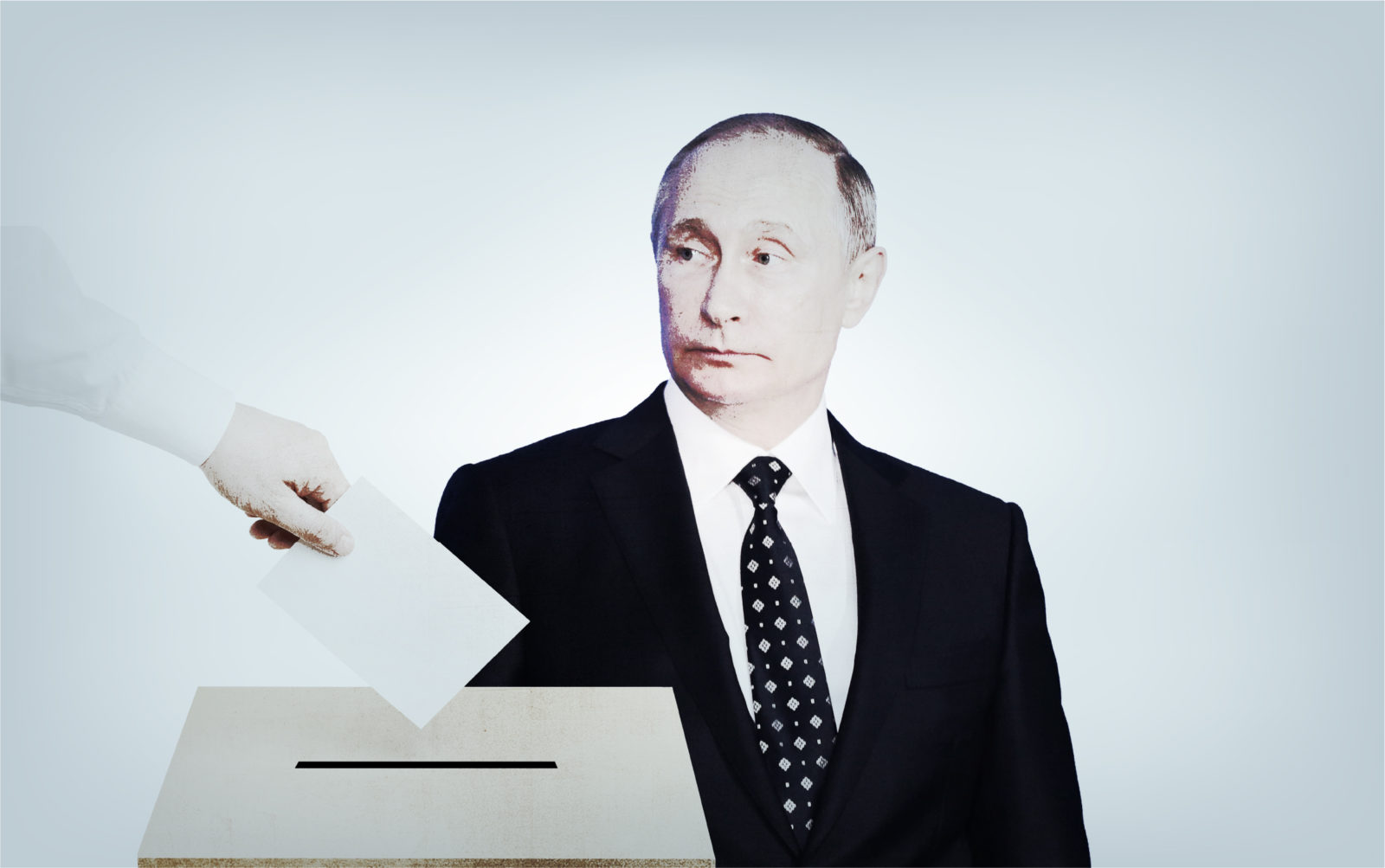
Russia’s parliamentary elections produced few surprises. United Russia won 57.83 per cent of the party-list vote and secured 355 of the State Duma’s 450 seats, comfortably preserving its constitutional majority. But the result may be less interesting than a question that arose before voting even began: why hold elections at all?
That question was debated inside the Kremlin establishment. The Russian leadership supposedly debated postponing the State Duma elections. In June, Meduza, citing sources close to the presidential administration, reported that senior security officials had urged Vladimir Putin to delay the vote. They pointed to mounting budgetary pressures, inflation, layoffs and fuel shortages, declining support for United Russia, war fatigue, and the political impact of Ukrainian drone attacks on Moscow. The Kremlin publicly denied that it was discussing a postponement.
What makes the episode revealing is Putin’s position. Putin saw political value in holding the election itself: Ukraine was not holding elections, while Russia was; cancelling the vote would amount to acknowledging that circumstances had disrupted the Kremlin’s plans.
This suggests a more interesting way of understanding Russian elections. They matter not only because authoritarian elections can legitimise regimes or discipline elites. They may also matter because Putin sees the continuation of electoral rituals as evidence that the political order remains intact.
An Older Tradition
There is also a historical dimension. The Soviet Union regularly held elections despite the absence of meaningful competition. In the 1937 elections to the Supreme Soviet, for example, voters were formally granted universal and secret suffrage, but in practice they were presented with uncontested candidates selected by the Communist Party. Later Soviet elections followed a similar pattern: a single approved slate was presented to voters, while local authorities competed to demonstrate exceptionally high turnout. These elections were not intended to determine which party governed, but they were not politically purposeless. Soviet elections helped affirm regime legitimacy, mobilise citizens in supportive political activity, and demonstrate that the system of control continued to function.
Contemporary Russia is not the Soviet Union, and the comparison should not be overstated. Russia retains parties, campaigns and limited forms of electoral competition. But the historical inheritance is relevant. Putin and much of Russia’s governing elite were politically socialised in a system in which elections could perform important functions without deciding who exercised power.
From this perspective, there is nothing contradictory about investing heavily in an election whose winner is not seriously in doubt. An election does not have to change power in order to reaffirm it.
Legitimacy and Wartime Normality
That function matters especially during war. Putin explicitly presented the 2026 vote as an indicator of national unity and support for Russia’s wartime course. Holding elections on schedule also allows Moscow to contrast Russian institutional continuity with Ukraine, where national elections have been postponed under martial law.
The political and legal circumstances are fundamentally different. But the comparison is useful to the Kremlin because it turns the act of voting into evidence of normality: despite war, sanctions, economic pressure, and attacks on Russian territory, parliament is renewed and institutions continue operating according to schedule. Cancelling the election would have sent a different signal.
Testing the Political Machine
Elections also tell Moscow something about the state itself. Governors, regional administrations and United Russia organisations are expected to mobilise voters and deliver results. The campaign therefore functions partly as an examination of the “power vertical”: which governors can mobilise their regions, which bureaucratic machines remain effective and which elites can deliver what the centre expects.
This requires an important distinction. Outside observers often ask whether Russian elections accurately measure what citizens think. Kremlin political managers may be extracting different information: which parts of the state apparatus can still organise and mobilise society?
The more managed the result becomes, the less useful the election is for measuring genuine public preferences. But it can still reveal bureaucratic capacity and elite loyalty.
Elections as Territorial Politics
The 2026 election also demonstrates that the function of Russian elections is no longer exclusively domestic. Moscow organised voting in occupied Crimea, Donetsk, Luhansk, Zaporizhzhia and Kherson. The EU has rejected these votes as violations of Ukraine’s sovereignty and territorial integrity.
Similar disputes arose elsewhere. Moldova objected to Russia opening 15 polling stations in Transnistria, despite Chișinău permitting voting only at the Russian embassy. Georgia also condemned Russian parliamentary voting in Abkhazia and South Ossetia without its consent.
These situations are legally different, but the administrative logic is similar. Electoral districts, polling stations, voter registers and representatives can turn territorial claims into routine acts of governance. Elections become one mechanism through which Moscow projects jurisdiction beyond Russia’s internationally recognised borders.
What Follows for Europe?
The EU’s immediate position is unequivocal. In a 21 September statement, it said it would “never recognise” Russian-organised elections in Ukraine’s temporarily occupied territories or their results. It also announced sanctions against organisers, candidates in occupied territory, and those responsible for undermining free and fair elections inside Russia.
But non-recognition is only the start. Europe must also consider how Russia uses elections beyond its recognised borders. Ukraine, Transnistria, Abkhazia and South Ossetia are different cases, yet together they suggest that electoral procedures have become part of Russian territorial policy: a means of normalising control and projecting legal and political order in contested spaces.
The election also underlines an information problem. This was the third consecutive nationwide election where Russia refused to invite OSCE international observers. European assessments will therefore depend increasingly on independent journalists, researchers, electoral data analysis, and civil-society networks.
Crucially, Russian elections are not meant to decide who governs. They allow the regime to manage elites, mobilise society, and demonstrate continuity. The most revealing fact about the 2026 vote may not be United Russia’s 355 seats, but that despite the challenges, Putin still considered holding an election necessary. Contemporary Russian elections combine modern functions – elite management, wartime legitimation, information control and territorial politics – with a Soviet-style view of the ballot: less a means of choosing rulers than a ritual of continuity, unity, and state control.
ENJOYING THIS CONTENT?
Related publications
-
Strengthening European Societal Resilience Under Russian Hybrid Pressure: Lessons from Ukraine
23 July 2026
-
EU Connectivity Under Pressure: The Iran War and the Geopolitical Reconfiguration of the South Caucasus
12 June 2026
-
Dark Mirror: Transnational Populist Networks and the Construction of a Parallel International Order
25 May 2026
Related events

-

Keys to Europe’s deregulation efforts – Global Perspectives Ep2 with Anu Bradford
Multimedia - Other News
03 Jul 2026
-
Women leading Moldova’s EU journey – Interview with Cristina Gherasimov – Her&EU
Her and EU - Podcasts
30 Jun 2026
-
Armenia’s Elections: A Historic Turn Towards Europe?
Blog
08 Jun 2026
-

Migration Update May 2026
Migration Update
30 May 2026
-
Migration Update March 2026
Migration Update
30 Mar 2026
-
Elections in Japan: What Takaichi’s Supermajority Means for Strategic Realities in the Indo-Pacific
Blog
10 Feb 2026
-

The Real Cost of Russia’s War – Thinking Talks Ep 24 with Vladimir Milov
Multimedia - Thinking Talks
27 Nov 2025
-
Migration Update October 2025
Migration Update
31 Oct 2025
-
Moldova’s Elections: Resilience Under Fire, Lessons for Europe
Blog
06 Oct 2025
-
Migration Update August-September 2025
Migration Update
30 Sep 2025