

From Washington to the Caucasus: The Ripple Effects of Trump’s Peace Push
05 September 2025

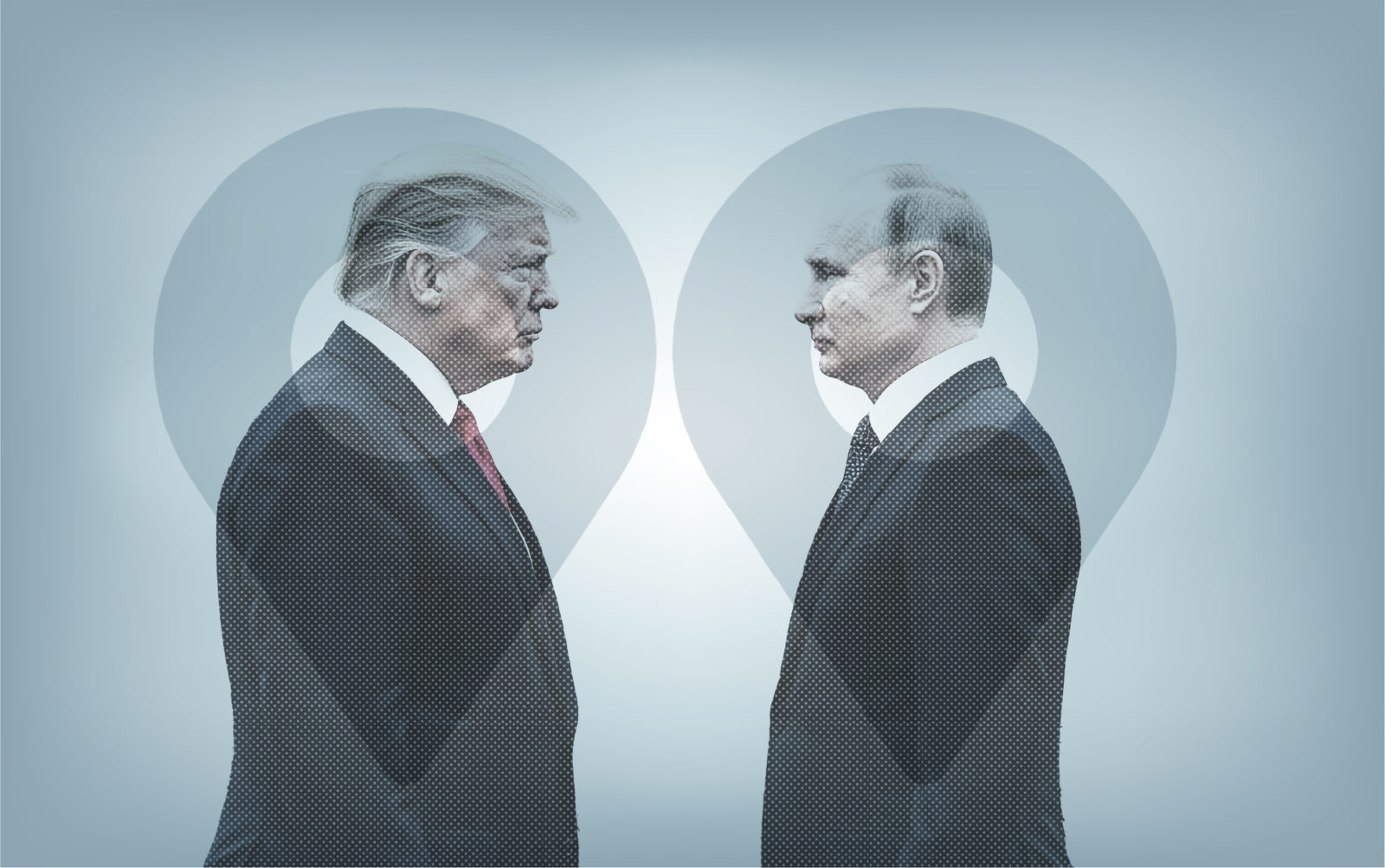
Donald Trump’s renewed push for a peace deal with Vladimir Putin is sending shockwaves far beyond Ukraine. While the talks focus on a possible settlement of the war, their ripple effects are already being felt in other contested regions – most notably the South Caucasus. Armenia, Azerbaijan, and Georgia sit at the crossroads of Russian, Western, Turkish, and, increasingly, Chinese influence. By signalling a willingness to compromise with Moscow, Trump’s diplomacy risks recalibrating this fragile balance of power, with consequences the region cannot ignore.
As a corridor for energy, trade, and connectivity between Europe, the Middle East, and Central Asia, the South Caucasus is highly sensitive to changes in US-Russia relations. Any recalibration between Washington and Moscow affects external support, regional alliances, and even domestic stability. For leaders in Yerevan, Baku, and Tbilisi, it is not only the outcome but also the conduct of negotiations that is already reshaping their strategic calculations.
Russia’s Enduring Leverage – But No Longer Absolute
For Moscow, the South Caucasus has always been a “traditional sphere of influence,” exercised through three levers: military presence, energy dependency, and security arrangements.
Yet in the episode of the Armenia-Azerbaijan peace agreement over Nagorno-Karabakh, Russia’s grip has weakened. The withdrawal of Russian peacekeepers reshaped Moscow’s role as mediator and security guarantor. Russian dominance over energy and transport corridors has also eroded as Baku expanded gas exports to Europe and developed new infrastructure that bypasses Russian-controlled routes.
Still, Russia retains substantial influence. In Armenia, Moscow operates its military base in Gyumri and stations FSB Border Guards along the country’s frontiers. Armenia’s energy sector is entirely dominated by Russia: Gazprom owns 100% of Armgazprom, while the Metsamor nuclear plant remains reliant on Russian technology and expertise.
In Georgia, Russia exerts even more direct leverage through its occupation of Abkhazia and South Ossetia, where some 10,000 troops, supported by naval and air assets, serve as a constant reminder of Kremlin power. Adding to this, Tbilisi’s increasingly pro-Russian orientation under the Georgian Dream government – marked by its retreat from Euro-Atlantic aspirations, curbing of Western integration, and growing economic and diplomatic alignment with Moscow – has deepened Russia’s political influence over Georgia.
America Steps In
The erosion of Russia’s monopoly has created space for the United States. Under President Trump, Washington brokered a historic peace declaration between Armenia and Azerbaijan in August 2025, marking a breakthrough after decades of conflict. The agreement unlocked strategic transit routes – most notably the Zangezur corridor – and granted exclusive American development rights for 99 years. For the first time in years, Washington could re-emerge as a key player in the South Caucasus, also by supporting economic diversification through the Middle Corridor, which bypasses Russia and Iran while advancing US and European energy interests. Yet such a role requires sustained commitment, while Trump’s engagement remains transactional rather than strategic, casting doubt on the durability of US involvement.
Regional leaders interpret this shift differently. Armenia sees US mediation as a potential counterweight to Moscow but knows Russia’s military presence still constrains its autonomy. Georgia’s ruling elite view Trump’s pragmatism as a green light to entrench their Russia-friendly trajectory. Azerbaijan, meanwhile, uses US involvement to boost its leverage, while continuing to cultivate ties with Turkey, Israel, NATO, and the EU.
China’s Advance
The South Caucasus is no longer just a chessboard for Washington and Moscow. China has steadily expanded its role through the Belt and Road Initiative, focusing on the “Middle Corridor” that links Asia and Europe while bypassing Russia and Iran. Beijing has invested in transit and energy projects across Georgia and Azerbaijan, seeking access to Black Sea and Caspian routes.
At the 2025 Shanghai Cooperation Organization (SCO) summit in Tianjin, held on 31 August, China showcased its ambition by convening leaders including Vladimir Putin and Armenian Prime Minister Nikol Pashinyan. For Armenia, this raises difficult questions: remain tied to Russian-led structures like the Eurasian Economic Union (EAEU), or explore alternatives with the EU and China? Beijing’s appeal lies in its image as a pragmatic partner, free of ideological baggage.
For now, China’s role remains secondary, but its gradual expansion risks further diluting EU influence in the region.
Regional Perspectives: Hedging and Its Risks
Trump’s negotiations with Putin sharpen the central dilemma facing the South Caucasus: stability versus autonomy. If the talks produce a deal that re-legitimises Russia, Moscow will be emboldened to exert renewed pressure on Armenia, Georgia, and Azerbaijan to accommodate Kremlin interests. If, on the other hand, Russia emerges weakened or constrained, its ability to dominate the region will diminish – but instability could persist, creating new openings for other actors.
From the perspective of South Caucasus leaders, this uncertainty leaves little room to rely on a single great power. The shifting US stance is seen as proof that alliances are never permanent, reinforcing the perceived need for multivectoral diplomacy – maintaining channels with Washington, Brussels, Moscow, Beijing, and Ankara alike. For some, this creates space to hedge and balance; for others, it can be a convenient way to re-engage with Russia under the cover of diversification.
The dangers of renewed dependence on Russia are stark. Moscow has a long record of weaponising energy prices, military deployments, and unresolved conflicts to bend its neighbours to its will. What is presented as “stability” often masks coercion: discounted gas in exchange for political loyalty, security guarantees that vanish in moments of crisis, and frozen conflicts deliberately kept alive to limit sovereignty. For the South Caucasus, reliance on Russia has never meant protection – it has meant vulnerability, paralysis, and the erosion of genuine independence.
This is precisely why the EU must act. It should anchor itself as a long-term actor in the South Caucasus. This requires more than funding or monitoring missions: it means reinforcing its mediation role in the aftermath of the Armenia–Azerbaijan deal, helping to secure border demarcation, normalisation, and reconciliation so that peace is not left to Moscow or Washington alone. At the same time, Brussels must embed itself in the region’s future through connectivity and energy projects that link the South Caucasus more closely to Europe. Coordinating with Turkey on transit and security, and advancing joint initiatives with the South Caucasus countries on the Middle Corridor, would extend Europe’s reach into Central Asia while reducing the leverage of Russia and Iran. Dedicated instruments for infrastructure, renewables, and digital connectivity would give the EU tangible weight, while conditional and progress-linked support could encourage reforms in Armenia and Georgia. Ultimately, only by combining mediation, economic investment, and strategic partnerships can the EU prevent “multivectoral diplomacy” from sliding back into renewed dependence on Moscow and instead turn it into genuine diversification and resilience.
ENJOYING THIS CONTENT?



-

Elections in Japan: What Takaichi’s Supermajority Means for Strategic Realities in the Indo-Pacific
Blog
10 Feb 2026
-

Europe’s Security Future Hinges on Ukraine’s Innovation
Blog - Ukraine
05 Feb 2026
-

From Partner to Problem – How Trump’s Foreign Policy is Reshaping the World Order
Blog
22 Jan 2026
-

Flight 93, the Donroe Doctrine, and Gunboat Diplomacy
Blog
15 Jan 2026
-

What the 2025 National Security Strategy Means for the Indo-Pacific And Why This Matters to Europe
Blog
13 Jan 2026
-

Venezuela Post-Maduro: Meeting the Challenge of Reconstruction
Blog
12 Jan 2026
-

From Crisis to Transition: Why Venezuela Matters for Europe
Blog
17 Dec 2025
-

Can 2026 reset EU-UK relation? – Bridge the Channel ep20
Bridge the Channel - Multimedia
15 Dec 2025
-

The Real Cost of Russia’s War – Thinking Talks Ep 24 with Vladimir Milov
Multimedia - Thinking Talks
27 Nov 2025
-

Europe Watches as Trump Turns on the BBC – Bridge the Channel
Bridge the Channel - Multimedia
17 Nov 2025