
From Grant-Pires to Grant-Preneurs: Closing Europe’s Innovation Gap
24 July 2026


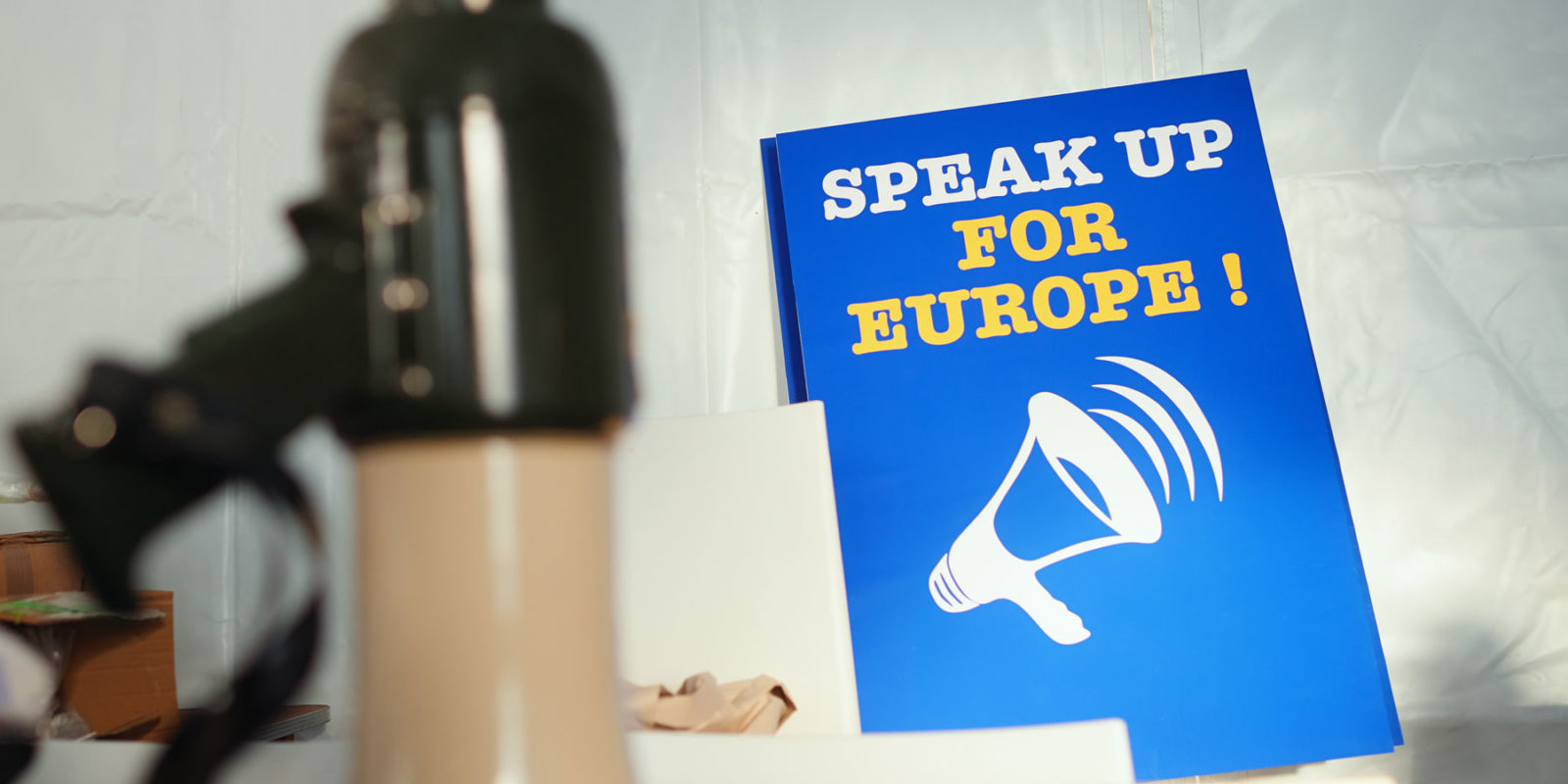
Near the Berlaymont in Brussels, a mural used to read: “The Future is Europe”. Present tense, not a qualifier. I kept returning to that confidence during my time in Silicon Valley, because if Europe is the future, it has a strange way of showing it.
A friend at UC Berkeley once asked the Valley’s greatest innovation. I said: “The Chinese fortune cookie.” He laughed, but I meant it. Invented in the United States, not China, it captures how easily we misread global dynamics, embodying the creativity, adaptation, and irony that define innovation itself. “The mindset,” he said. He was right.
Can a mindset unlock Europe’s innovation gap more than better tax regimes, mobility schemes, or larger research budgets? It is not the chicken-and-egg problem it sounds like.
Today, the word “innovation” means different things to different people, hollowed out by marketing narratives and shallow policy discourse, which is precisely why definition matters. Innovation is not invention. Invention creates something new; innovation makes something work in the world. New ideas alone are not innovation; impact is. True innovators cross the valley of death, that critical period between initial funding and sustainable revenue. They pursue real problems, not trends, reusing existing technologies as often as inventing new ones. At its core, innovation is an act of freedom, requiring virtue, boldness, and openness. That is precisely why it cannot be commissioned. It can only be enabled.
Instead, Europe’s public sector, acting as an editorial board, sets innovation agendas reactively, following global trends rather than cultivating bottom-up European ones. This seems prudent, since public money should be accountable, but it creates a mental ceiling rooted in regulatory power rather than market agility: bureaucracy optimised for continuity, not experimentation. When innovation becomes mediated primarily through such structures, it risks losing its purpose, its “why”. It gradually turns into a procurement exercise, rewarding trend-following solutions to problems already solved elsewhere, built for stability rather than transformation.
Europe’s attempt to unite bureaucracy and innovation recalls Goethe’s marriage of Faust and Helen of Troy, brilliant yet doomed. Their angelic child, Euphorion, symbolised the fusion of two worlds, and died young.
This has led to the rise of “grant-pires”: organisations hopping from one EU grant to the next, unable to capitalise on the value they create. This is a failure of incentives. A professor from a top European engineering school once told me: “I have brilliant students who founded companies just to manage EU projects. They found innovative ways to hit their KPIs, but not to innovate.” We have turned creativity into compliance.
The consequences are visible at every scale of European ambition. A concrete example is Europe’s attempt to build a “Google of Europe”: remember Quaero? It failed due to its narrow, imitative vision. Competing with Google via a multi-government collaboration was, to put it mildly, unrealistic: Quaero was competing with a different mindset, in a market Google had already defined. That gap shows up in European start-ups too. Their investor presentations too often resemble feature catalogues rather than bold visions, boasting more awards than clients. Industry, too: Nokia possessed many of the technologies that later defined the iPhone, but lacked the willingness to disrupt itself.
Europe, more broadly, faces a version of this same problem. After decades near the peak of the global economic order, Europe has behaved as if it reached the end of history. It risks retreating into what sociologist Zygmunt Bauman called “retrotopia”: seeking meaning in the past rather than ambition in the future. What we cannot imagine, we cannot trust, so we cannot build.
The right answer is not a new programme or a larger fund. Public institutions must stop acting as the editors of innovation, deciding what gets funded and what is too risky, and start acting as its soil. This means funding outcomes rather than activities, backing genuine problems rather than predefined solution categories, and treating productive failure as a feature, not a malfunction. Dynamic markets, not “experts,” determine what success looks like.
Done right, this transforms “grant-pires” into “grant-preneurs”: actors who mobilise public funding to catalyse market impact, not substitute for it. The enabling condition is agile governance: the institutional capacity to fail fast, learn, and adapt to what markets and citizens actually value. Yet reforms alone are vitamins; the real painkiller is changing how we think and work. Institutions and markets are only as agile as the imagination of the people inside them. Europe can fund capability. Competitiveness it can only permit. That is not a soft idea; it is the hardest reform of all.
In the end, innovation is not about technology. It is about belief. If Europe can recover that belief, not as a mural but as a key to unlock its unrealised potential, it may lead by mindset, not merely by mandate. Perhaps then Europe will be future, not as a declaration, but as a choice.
ENJOYING THIS CONTENT?


Related publications
-
Made in China, Powered by Europe: Mapping the EU’s Strategic Leverage Over the People’s Republic of China
06 May 2026
-
Strategic Autonomy Requires a Strategic Partner: Why Europe Must Expand Industrial Cooperation with Taiwan
27 March 2026
-
Horizon: Competitiveness – How FP10 Can Unlock Europe’s Collective Intelligence for Science, Competitiveness and Strategic Autonomy
28 October 2025
-
A South Korean Warning on the Perils of the AI Economy
Blog
01 Sep 2026
-

Keys to Europe’s deregulation efforts – Global Perspectives Ep2 with Anu Bradford
Multimedia - Other News
03 Jul 2026
-

Subsidiarity in the Age of Artificial Intelligence: A Reflection on the new Encyclical “MAGNIFICA HUMANITAS”
Blog
29 May 2026
-

Simplifying Digital Rules & EU Tech Sovereignty – with Zach Meyers
Brussels Bytes - Podcasts
22 Apr 2026
-

Is demographic decline really a crisis for Europe today? I Op-Ed Ep 11
Video Op-Eds
24 Mar 2026
-

Intellemo: Innovation and Empathy to Counter Political Apathy Among Young People
Blog
28 Sep 2023
-

Bridge The Channel – Our Predictions For 2023
Bridge the Channel - Multimedia
19 Jan 2023
-

Stablecoins are Crypto’s Feet of Clay
Blog
09 Jun 2022
-
Prospects for the Conference on the Future of Europe
Blog
16 Dec 2021
-

[Europe Out Loud] Doom: a chat with Niall Ferguson about the history and politics of catastrophe
Europe out Loud
04 Nov 2021