
Venezuela Post-Maduro: Meeting the Challenge of Reconstruction
12 January 2026

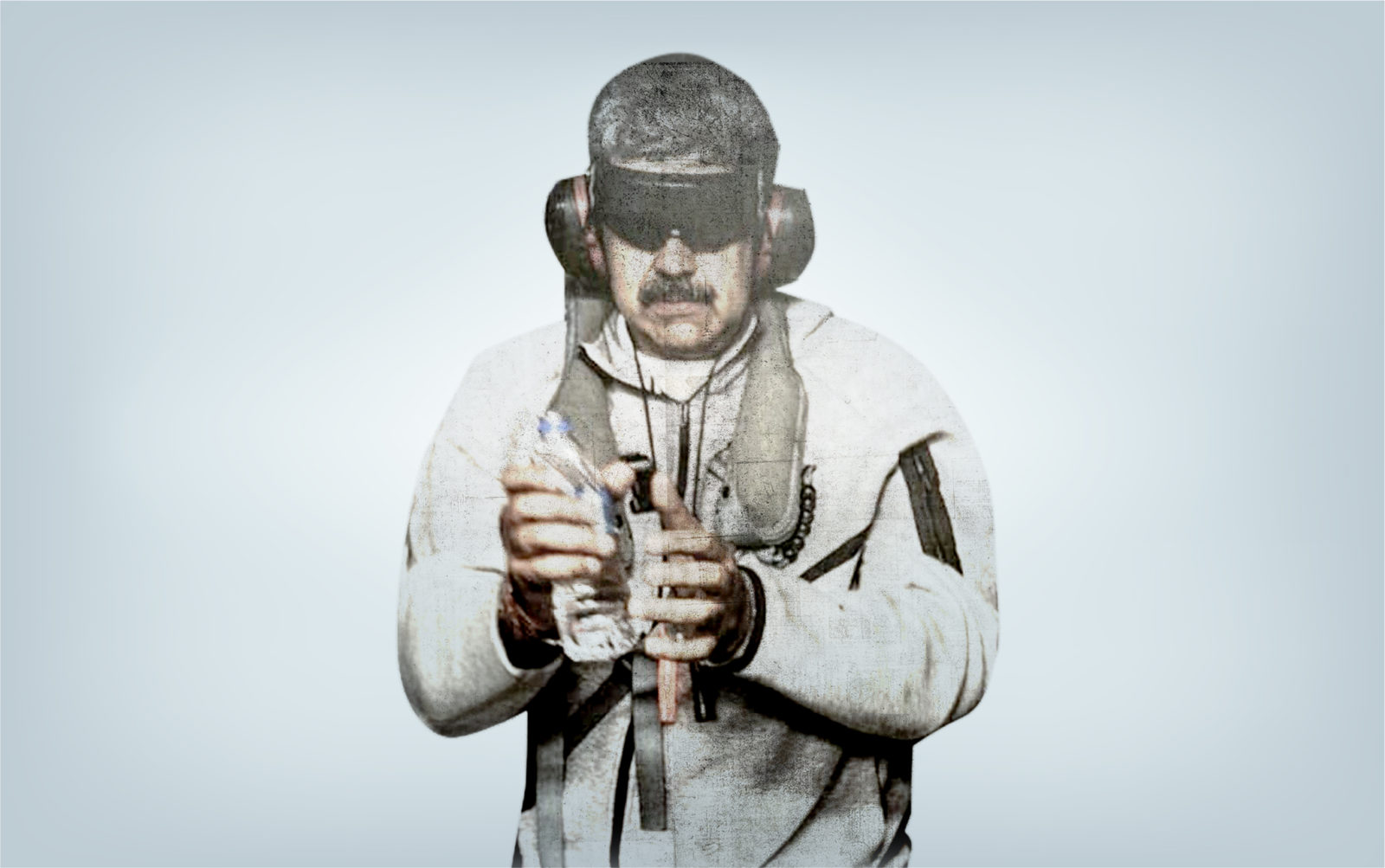
On January 3, 2026, the United States carried out major strikes in the Venezuelan capital of Caracas and its vicinity, before capturing the country’s illegitimate ruler, Nicolás Maduro, and flying him to the United States to face federal criminal charges, including narco-terrorism and drug trafficking. Following his capture, Venezuela’s Vice-President, Delcy Rodríguez, was sworn in as acting President.
The vast majority of Venezuelans supported the American operation, after 12 years of a brutal Maduro regime. During his tenure, Venezuela lost roughly 70% of its GDP, reducing 80% of its population to poverty, with 50% of those suffering from extreme poverty. Thousands of companies and farms were expropriated. Those that survived were suffocated by price controls, currency controls, production quotas, and arbitrary enforcement. The Venezuelan economic crisis since 2013 is considered the worst economic performance of any country in the modern times in the absence of a war.
In addition to this stunning economic collapse, Venezuela suffered a profound political breakdown. Under Maduro’s rule, elections were consistently stolen and manipulated to maintain power rather than reflect the will of the people. The last example of this was in the 2024 Venezuelan presidential election, when the National Electoral Council declared Maduro the winner despite credible evidence that his opponent, Edmundo Gonzalez, secured a clear majority. Since the 2000s, the Venezuelan regime stacked the courts with loyalists, disqualified opposition leaders, jailed critics, and violently suppressed protestors.
However, any exultation from Venezuela’s people must be tempered by the fact that this operation is just the beginning; the decisions taken in the coming days will determine Venezuela’s future. The real test now is whether the country can translate the removal of a dictator into the restoration of the rule of law, credible governance, and economic freedom, without allowing a power vacuum to generate further instability.
Building a Transition Path
Building a successful transition depends on sound decisions across institutions, but none of these decisions can take root without effective security on the ground. Venezuela today remains an extremely high-risk environment. Irregular armed groups, drug trafficking networks, organised crime, and foreign hostile actors, including Iranian-linked cells, operate with relative impunity across large parts of the country. Without credible protection against these actors, there can be neither sustained economic recovery nor free and fair elections. Markets cannot function, investment cannot flow, and democratic processes cannot be trusted when violence, intimidation, and sabotage remain unchecked.
Security mechanisms must therefore prioritise the protection of civilians, but also of the people tasked with rebuilding the Venezuelan state. This includes technical experts, energy specialists, public administrators, and investors who will necessarily need to operate on the ground, many of whom will come from abroad. If these individuals face credible threats to their safety, the reconstruction of the oil sector, public institutions, and the broader economy will simply not occur. This is why a sustainable transition requires a structured partnership between the United States, a legitimate transitional government, and Venezuelan society itself.
Once a baseline of security is re-established, Venezuela must move immediately to economic normalisation. This means lifting price and currency controls, gradually unifying exchange rates, restoring basic monetary credibility, and reopening trade and investment flows with democratic partners. The energy sector must be opened to private investment, so that Venezuela can become an energy hub once again. In the past two decades, Venezuela has lost over 70% of its oil production. From producing 3.5 million barrels per day, Venezuela is now producing less than a million. Returning to its previous levels will require $60 billion in investment and roughly a decade.
In this context, the European Union can emerge as a particularly credible and economically rational partner for Venezuela’s recovery. Europe combines three assets that are directly aligned with Venezuela’s post-crisis needs: surplus capital, advanced industrial and energy technology, and a growing strategic imperative to diversify away from Chinese-controlled supply chains. The European economy runs a persistent current account surplus and faces structurally weak domestic investment demand, creating strong incentives to deploy capital abroad in projects with long time horizons and real asset backing. Venezuela, by contrast, offers a rare combination of scale and underutilisation. It has the largest proven oil reserves in the world, substantial natural gas potential, and an energy system in need of comprehensive rehabilitation.
From a political perspective, Europe should participate in Venezuela’s transition efforts. Yes, the risks are real. Venezuela is fragile, its institutions are weak, and criminal structures remain embedded in the state. But there is no reward without risk, and risk aversion is not a policy. In Venezuela, every peaceful option was tried and exhausted. Years of mass protests. Repeated participation in elections that were systematically manipulated. Diplomatic pressure, mediation efforts, and sanctions. None of it worked. The regime adapted, hardened, and increased repression. Standing with Venezuelans will not be cost‑free, but it is the only choice worthy of Europe’s values and interests. If European governments commit to this difficult transition alongside Venezuelan society, a country that once stood as a democratic and economic beacon in Latin America can be restored. A stable, free Venezuela will matter not only to its own citizens, but to the wider geopolitical balance and global security architecture of the coming decades.
ENJOYING THIS CONTENT?



-

Is demographic decline really a crisis for Europe today? I Op-Ed Ep 11
Video Op-Eds
24 Mar 2026
-
Iran’s Attacks on the GCC: A Strategic Opening for Europe
Blog
13 Mar 2026
-
China, the EU… and Starmer’s Future I Bridge the Channel Ep.22
Bridge the Channel - Multimedia
25 Feb 2026
-
Values-Based Realism and Its Enemies: How to Tackle the new Geopolitical ‘Realism’ from Left and Right
Blog
24 Feb 2026
-

Young People & Pensions – The European View Podcast – Interview with A. Siegmann – Ep.23
Multimedia - Podcasts - The European View Podcast
10 Feb 2026
-
Elections in Japan: What Takaichi’s Supermajority Means for Strategic Realities in the Indo-Pacific
Blog
10 Feb 2026
-

Europe’s Security Future Hinges on Ukraine’s Innovation
Blog - Ukraine
05 Feb 2026
-

From Partner to Problem – How Trump’s Foreign Policy is Reshaping the World Order
Blog
22 Jan 2026
-
Recharging Europe’s Competitiveness: Why the EU Needs a European Productivity Board
Blog
21 Jan 2026
-

Europe’s Single Market: Why Aviation Shows the Way | Op-ed Ep.9
Video Op-Eds
20 Jan 2026