
The WTO’s Future Rests on Europe’s Shoulders
30 October 2025

During the 2025 World Trade Organization Public Forum, one of the defining questions of our time was addressed: can the WTO exist meaningfully without the United States? In a sense, this question has already been partly answered—the organisation is muddling through without Washington’s full support. The U.S. continues to block dispute settlements, resist new negotiations, and impose exorbitant tariffs under questionable national security justifications. Although the Biden administration rolled back some of these measures, it did not abolish them entirely, signalling a bipartisan shift in Washington toward a more sovereignty-based trade policy. The Trump II administration has gone even further, showing little sense of obligation to uphold basic WTO rules. This marks a broader turn toward a “Trump-centric” system—one in which it is not the WTO, but the United States, that sets the terms of global trade.
By contrast, the EU has long been the most consistent defender of multilateralism, recognising that its economic prosperity depends on open and predictable rules. It has therefore invested heavily in the WTO as the cornerstone of global trade governance. Yet the golden age of multilateralism appears to be over. By negotiating bilateral agreements with the U.S. to reduce tariffs, the EU may even be unintentionally reinforcing the “Trump-centric” dynamic. For many members, especially smaller ones, the WTO remains the only forum where they have a genuine voice and at least a minimal level of protection. If major economies—including the EU—start to treat the organisation as little more than a discussion platform, the rules-based multilateral system could fragment into a patchwork of power-driven deals. This would be disastrous for smaller states, leaving them with limited bargaining power and surrounded by uncertainty.
Adding to this decline, the EU has increasingly focused on negotiating bilateral trade agreements outside the WTO, a strategy that is not without risk. The challenges surrounding the ratification of CETA, and the ongoing difficulties with the Mercosur deal, show how hard it can be to finalise such agreements. Moreover, Brussels’ insistence on including clauses on sustainable development, climate goals and human rights often makes negotiations and ratifications more complicated. The EU has also introduced several measures that many WTO members view as hard to accept. A clear example is the recent steel safeguard measures, a sharp tightening of tariff quotas and the imposition of high duties on steel imports to protect a struggling European industry. Moreover, the explanatory memorandum justifying the rationale and consequences of this measure does not even mention the WTO. The same goes for the Carbon Border Adjustment Mechanism (CBAM), which taxes imports of high-emission products, as well as other EU rules that require detailed sustainability reporting or strict anti-deforestation standards. Europe maintains that all these instruments are WTO-compliant and fully justified, but many others see them as proof that the WTO can no longer protect them from such unilateral measures.
The bigger danger, thus, is not that the WTO collapses overnight, but that it quietly fades into irrelevance through simple neglect. This raises a pressing question: has the WTO been abandoned only by the United States, or is it also losing genuine support from the EU? Could the organisation survive without strong European engagement? Ultimately, of course not. Yet if Europe wants to lead, it must first understand how the WTO could regain its relevance. The 2022 Fisheries Subsidies Agreement—far removed from traditional trade talks—showed that global consensus is still possible, even on politically charged issues. Increasingly, smaller “plurilateral” deals among coalitions of willing members on topics like digital trade, services regulation or green goods are proving to be a possible new way forward. These initiatives may not include all 164 members, but they demonstrate that the WTO can still deliver results. This is precisely the moment for the EU to step up, to turn the WTO’s weakness into an opportunity for renewed global leadership. As a possible solution, the EU could push for its revival by embedding environmental principles more deeply within its framework. A ‘green WTO agenda’, including carbon pricing, climate clubs and rules on sustainable subsidies, could make the institution relevant to the most pressing global challenges.
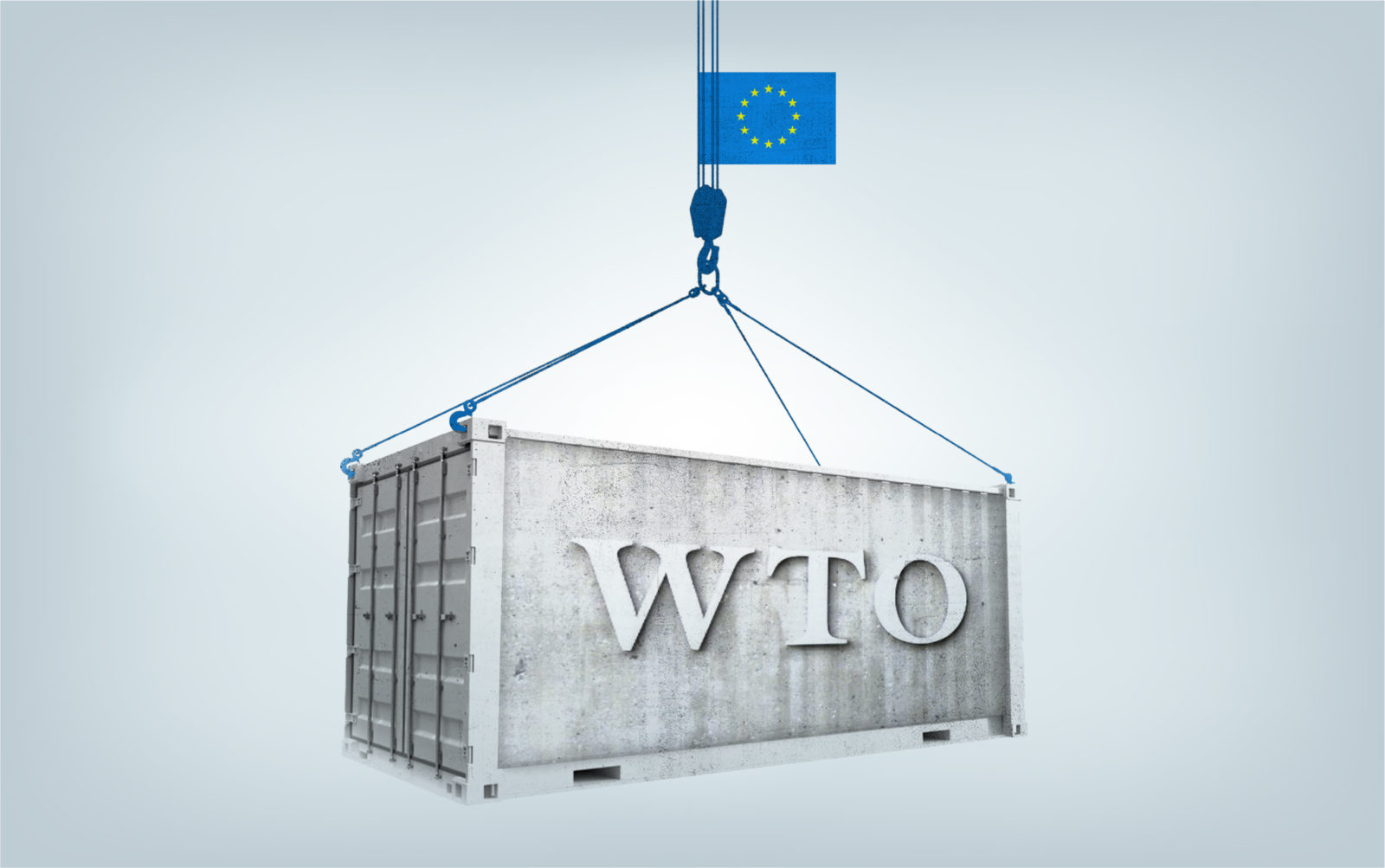
In conclusion, saving the WTO will require Europe to strike a better balance between its bilateral trade deals and its commitment to multilateralism. The latter is slower, more complex and often frustrating, but meaningful WTO reform could yield far greater long-term benefits. A realistic path forward is to pursue both tracks: strengthen WTO initiatives even without the U.S., bring new issues like digital trade and climate policy into a multilateral framework, and continue bilateral deals that could later evolve into broader plurilateral or multilateral agreements. Europe has both the credibility and the capacity to lead this balancing act. By doing so, it can keep the WTO afloat until a future U.S. administration decides to re-engage. For years, critics have described the organisation as a “slowly sinking ship” ready for the scrapyard. Its crisis is indeed serious, but not terminal. Even a damaged vessel can still carry precious cargo. Whether the WTO can be repaired and navigate the stormy waters ahead will depend less on technical fixes and more on the strategic will of its strongest members—above all, the European Union.
ENJOYING THIS CONTENT?
-
Trade Policy is not a Game!
Blog
26 Aug 2025
-
The Challenge of Responding to Tariff Extravagances
Blog
08 May 2025
-
Signals from China’s 2025 “Two Sessions” Plenary
Blog
28 Mar 2025
-
Trump’s ‘Republican Nationalism’ is not new in American History, but its Likely Consequences will be
Blog
13 Mar 2025
-
Axing Down Global Development Cooperation? The Implications of Shuttering USAID
Blog
05 Mar 2025
-
Friend or Foe? An Economic War With the U.S. Should Inspire Greater Canadian Autonomy
Blog
30 Jan 2025
-

Who’s Afraid of Chinese Electric Vehicles and Clean Tech?
Blog
17 Oct 2023
-
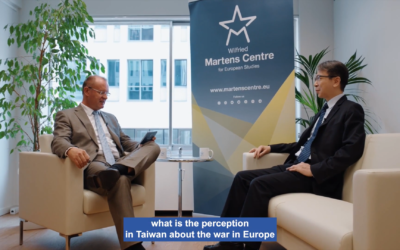
Thinking Talks Ep.6 with Ming-Yen Tsai, Ambassador, Taipei Representative Office in the EU & Belgium
Multimedia - Thinking Talks - Ukraine
27 Jul 2022
-
How Will Trade Shape the Future of Transatlantic Relations?
Multimedia - Other videos
31 May 2022
-

Breaking the “Great Wall”: How Europe can Deal With an Isolating China
Blog
14 Mar 2022