
State of the Union Speech 2025: From Management to Revival Amidst Geopolitical Turmoil
10 September 2025

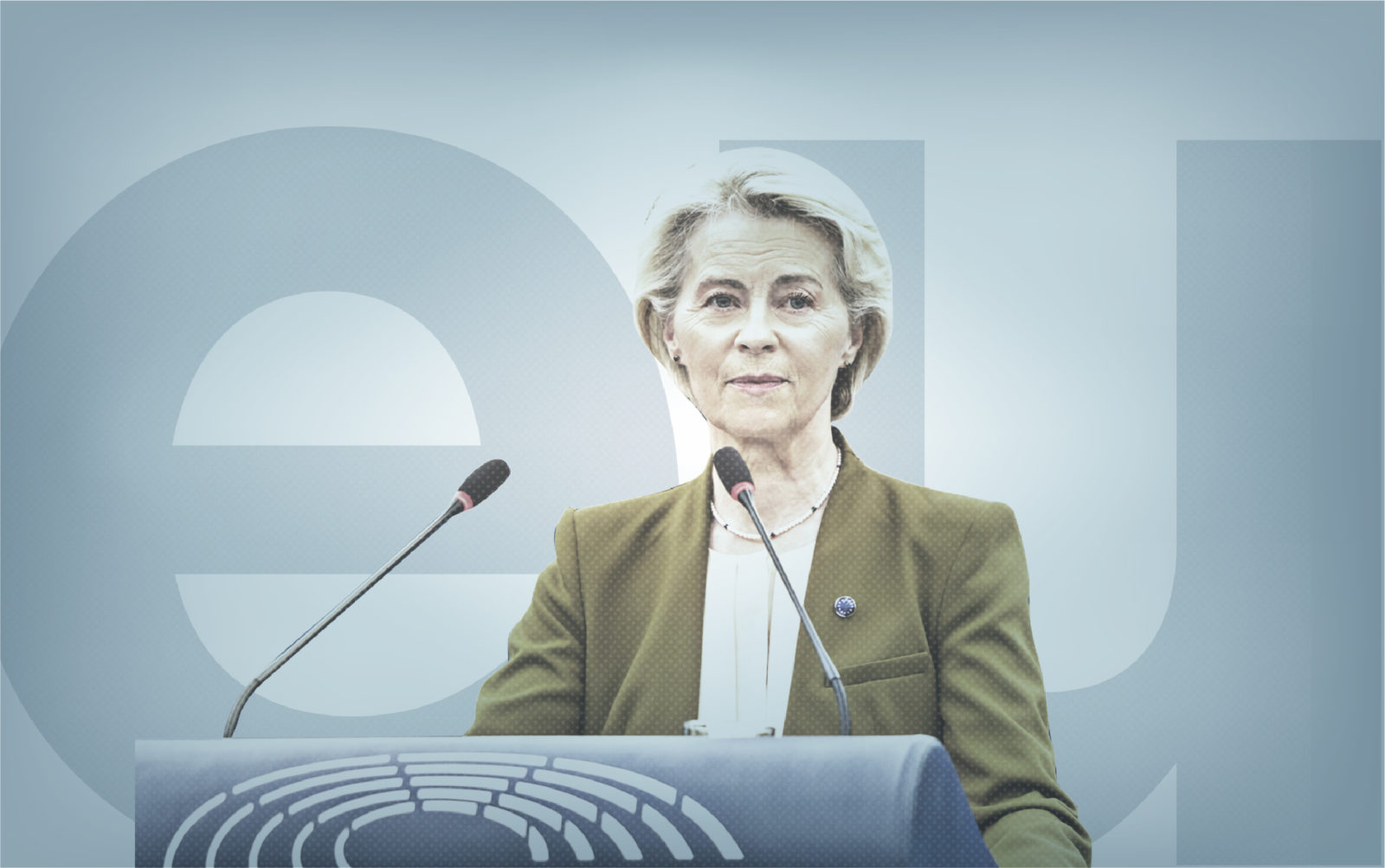
The State of the Union has become a speech to watch. Now in its 15th year, the address has evolved into one of the EU’s most significant political moments. Both in its content and delivery, Ursula von der Leyen’s 2025 State of the Union stood out. It’s no longer just a policy update; it’s a performance, a declaration, and yes, in 2025, it was a rallying cry.
The emotional highlights and presence of invited guests during the speech have become powerful. For a few moments, these appearances seemed to unite the entire Parliament, which has been more fractured since the 2024 European elections. This year, the appearance of Sasha from Ukraine and the Greek firefighter Nikolaos Paisios, both receiving extended standing ovations, brought a rare sense of shared humanity to the chamber.
Some Members of Parliament from fringe groups attempted to disrupt the speech, prompting President Roberta Metsola to threaten their removal to maintain order. In a way, that intensity played in favour of the speech—it underscored that something important was happening. President von der Leyen remained composed, even incorporating some of the heckles into her remarks.
From 2023 to 2025 – What has Changed and What Does it Tell Us?
The last State of the Union speech before 2025 was delivered in 2023, as the 2024 cycle was skipped due to the European elections. Comparing the two speeches, two years apart, reveals a clear shift—not just in tone, but in the EU’s posture toward the world.
The 2023 speech was structured and formal, resembling a multilingual policy digest. It was informative, but emotionally more distant. The 2025 address, by contrast, opened with a dramatic declaration: “Europe is in a fight.”
In 2023, support for Ukraine was present but framed in general terms. By 2025, it had evolved into a centrepiece of the speech, with personal stories like Sasha and Liudmyla anchoring a robust policy package that included reparations loans and a Drone Alliance. The Middle East, notably Gaza, which was absent in 2023, took centre stage in 2025.
Declaring sanctions against Israel, von der Leyen will steer the discussion. Rhetoric about Russia was strong; Russia is now clearly declared an enemy. Focusing on the return of Ukrainian children abducted by Russia was a good choice: it was emotional, touching, and an important issue that was easy to understand and relate to.
Migration policy also saw a shift. In 2023, it was framed around reform and balance. In 2025, it became enforcement-heavy, with calls for a European Return System and sanctions against smugglers. Digital sovereignty, once focused on start-ups and innovation, now includes AI Gigafactories and tech independence. Climate policy, while consistent in ambition, expanded with new instruments like the Circular Economy Act and Battery Booster package.
Social policy gained prominence in 2025. Affordability, housing, and child protection were elevated to core agenda items. The European Affordable Housing Plan and Anti-Poverty Strategy reflected a more citizen-centric approach, moving beyond economic metrics to address lived realities. The focus on housing is an intelligent move, even though EU competence remains limited: it is a core issue, especially when we speak about intergenerational justice and dynamics.
Last autumn, von der Leyen delivered a shorter speech outlining the Commission’s work programme. The 2024 Commission Programme speech was aspirational. It introduced a new team and laid out a roadmap built on innovation, decarbonisation, and security. The “Competitiveness Compass” was the guiding framework, emphasising investment, simplification, and unity. Migration policy hardened. Digital sovereignty expanded. Climate action accelerated, and social justice became a continuing priority.
Even compared to that presentation, signs of change in the 2025 State of the Union speech were visible. Crises were intensifying, and Member States were increasingly forced to act. In that context, the EU’s role was expanding.
The EU’s Global Role Must not Distract From Priorities at Home
The overarching message from Ursula von der Leyen and the clear trend is that the EU is positioning itself not just as a regulatory power, but as a geopolitical actor. The old cliché, some might say. But the content and context have now changed.
The 2025 speech aims to a rhetorical and strategic pivot—from reactive crisis management to proactive global leadership. It’s a call to arms for European independence, resilience, and unity. Ambitions are high, but we know the challenges to deliver.
Despite the shifts in tone and emphasis, the core of the EU’s mission remains intact. Both the 2023 and 2025 speeches anchor their vision in freedom, democracy, and unity. The Green Deal continues to be a cornerstone of climate and industrial policy. Single market reform remains a priority, with renewed urgency. Support for Ukraine is unwavering, evolving from solidarity to a strategic partnership.
The 2025 address builds on the 2024 Commission plan foundation, operationalising its goals through legislation, funding, and partnerships. It reflects a Union that has matured—from vision-setting to action-taking. The continuity in values and strategic direction is clear, but the 2025 speech reveals a Europe that is more assertive, more responsive, and more determined to shape its destiny in a contested world.
The realities remain, however. There is a substantial mismatch between the ambition expressed in the speech and the fact that the EU budget represents only about 1% of GDP. Moreover, many Member States continue to resist several of these ambitions—such as completing the single market and building a real common European defence industry—for their own reasons behind the scenes.Yet, In the end, this year’s address showed the State of the Union speech finally becoming what it was meant to be: not just a report on the past year, but a defining statement of purpose for the year ahead. The challenge, as President Ursula von der Leyen underlined, is to deliver.
ENJOYING THIS CONTENT?


-
Young People & Pensions – The European View Podcast – Interview with A. Siegmann – Ep.23
Multimedia - Podcasts - The European View Podcast
10 Feb 2026
-
2026: The Year Trump Tests Britain’s Limits | Bridge the Channel Ep21
Bridge the Channel - Multimedia
27 Jan 2026
-
From Brussels to Brussels: What Belgium’s Capital Reveals About EU Governance
Blog
20 Jan 2026
-

Europe’s Single Market: Why Aviation Shows the Way | Op-ed Ep.9
Video Op-Eds
20 Jan 2026
-
Leadership beyond stereotypes – Interview with Mariya Gabriel – Her&EU
Her and EU - Podcasts
15 Jan 2026
-
New social contract for European defence – Interview with Homańska & Przybylski
The European View Podcast
19 Dec 2025
-
Can 2026 reset EU-UK relation? – Bridge the Channel ep20
Bridge the Channel - Multimedia
15 Dec 2025
-
The Real Cost of Russia’s War – Thinking Talks Ep 24 with Vladimir Milov
Multimedia - Thinking Talks
27 Nov 2025
-
EU Enlargement 2025: Ambition vs Reality – Thinking Talks Ep 23 with Skander Nasra
Multimedia - Thinking Talks
20 Nov 2025
-

Europe Watches as Trump Turns on the BBC – Bridge the Channel
Bridge the Channel - Multimedia
17 Nov 2025