
From Madrid to Brussels: Spain’s Emerging Rule of Law Challenge
28 January 2026

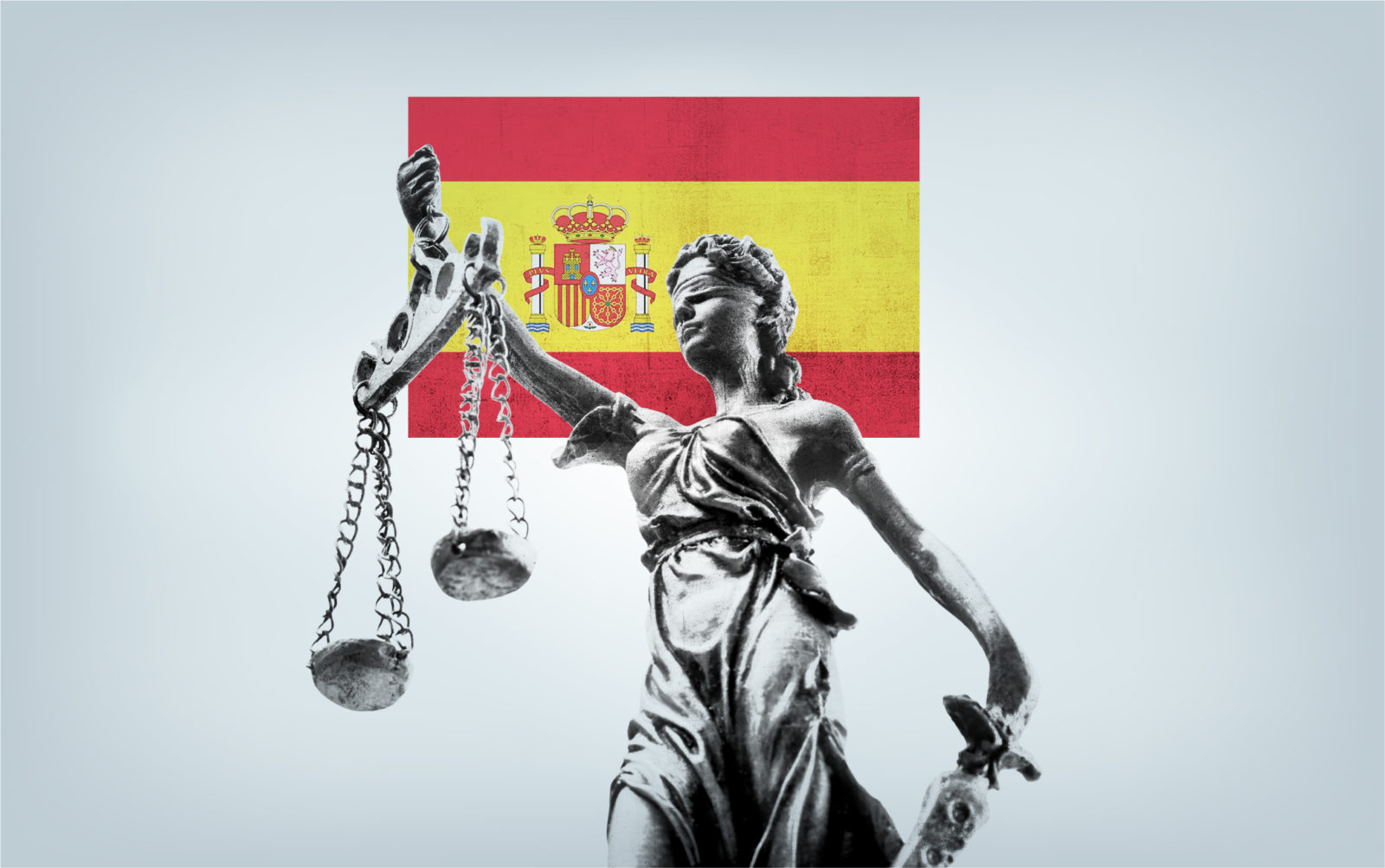
2025 saw an unprecedented event in Spanish politics: The Supreme Court declared the Chief Prosecutor guilty of leaking confidential information to discredit the government’s opposition. This, however, is but the backdrop to a much broader issue unfolding from the peninsula all the way up to the EU. Over the past year, concerns about the Spanish government’s institutional integrity have moved from the national sphere to the centre of European scrutiny, reflecting growing unease within both the European Parliament and the European Commission about trends that risk undermining public trust and democratic accountability.
The Spanish malady first seeped into Brussels in June 2025, when the European Parliament held an unprecedented plenary debate on the rule of law in Spain, focusing on the independence and autonomy of its Judiciary. Such debates on individual Member States outside the annual Rule of Law cycle are of a seriousness and political sensitivity of which ought not be understated.
The process continued in October, when the Parliament’s Committee on Civil Liberties, Justice and Home Affairs (LIBE) held an meeting on Spain, following formal requests from the EPP Group, to examine systemic concerns related to judicial independence, anti-corruption safeguards, and institutional checks and balances. This meeting led to a fact-finding mission being scheduled to be sent to Madrid in early 2026. Their task further complicated by the fact that Spain is experiencing a convergence of issues rather than a single scandal.
First, the independence of the Prosecutor General’s Office is at stake. In Spain, the Prosecutor General is appointed by the government, a model which thereby requires strong safeguards to ensure autonomy. These checks have been severely undermined after the Prosecutor General was himself prosecuted and convicted. Rather than accepting the authority of the judiciary arm, the Socialist government (PSOE, S&D) has continued to proclaim his innocence and has sought to discredit judicial decisions by framing them as “lawfare”, thereby undermining the credibility of courts and judges.
Second, year after year, the Commission has flagged the inability to renew the General Council of the Judiciary in Spain. In its Rule of Law Reports (2022,2023,2024,2025), the Commission has warned that the continued deadlock and the lack of reform to reduce political control over judicial appointments are undermining both the effectiveness and the credibility of the justice system. By failing to insulate the CGPJ from partisan influence, successive governments have allowed a temporary problem to become a structural vulnerability, one that weakens judicial independence and damages public trust.
Third, Spain has been shaken by a succession of corruption investigations involving the leadership of the governing PSOE and Prime Minister Pedro Sanchez’s personal entourage. While courts must adjudicate individual cases, the Commission identified structural weaknesses in Spain’s anti-corruption framework, including fragmented responsibilities, limited coordination among oversight bodies, and the absence of a comprehensive national anti-corruption strategy. These design flaws have then eroded public trust in political accountability and anti-corruption enforcement.
Fourth, the handling of sexual harassment allegations within the PSOE has added another layer of institutional concern. Reports indicate that complaints were known internally but not acted upon in a timely or transparent manner. This has triggered a European Parliament debate questioning whether the governing party’s internal governance standards are compatible with its public commitments to equality, accountability, and victims’ rights.
Finally, alarms have been raised regarding the Sánchez government’s use of ”real decreto-ley” powers, a constitutional mechanism meant for situations of extraordinary and urgent need, to circumvent ordinary parliamentary procedures and sidestep full legislative debate. An independent report highlights how roughly a third of the legislature’s “laws” in 2024 originated in “decreto-ley” form, which has limited participation from opposition parties and consultative bodies, and has effectively frozen the commonplace parliamentary processing of rival proposals. By centralising decision-making power in the executive, they undermine the role of the legislative body and its democratic quality.
This centralisation of power is exactly what the EU’s rule-of-law framework seeks to prevent. The examples of Poland and Hungary show that democratic erosion rarely begins with a single dramatic rupture; it starts with incremental moves that weaken checks and balances, marginalise parliaments, and politicise independent institutions. In both cases, the European Union intervened only after these dynamics had hardened, when judicial independence and constitutional safeguards were already deeply compromised, and when EU leverage was far more limited. Spain is not at that stage. But the combination of pressured prosecutorial autonomy, stalled judicial reform, fragile anti-corruption safeguards and an expanding reliance on decree-law governance mirrors the early warning signs seen elsewhere. If Brussels is serious about prevention rather than repair, this is the moment to act, before institutional weakening becomes entrenched and Spain begins to follow a path Europe has already struggled to reverse.
Spain stands at a pivotal moment for its democratic institutions. Broad political consensus, including proposals from the opposition, and firm, consistent EU engagement will be key to reinforce reforms and restore public trust. Failure to act decisively would not only deepen Spain’s institutional vulnerabilities but also erode the credibility of the EU’s rule-of-law framework. This is a test of Europe’s commitment to democratic standards, one that demands clarity, consistency, and resolve. Constructive cooperation now offers Spain a path toward stronger institutions and renewed confidence in the rule of law.
ENJOYING THIS CONTENT?



-
Values-Based Realism and Its Enemies: How to Tackle the new Geopolitical ‘Realism’ from Left and Right
Blog
24 Feb 2026
-

Money Education: Middle-Class Luxury or Basic Right? I Op-ed Ep.10
Multimedia - Video Op-Eds
24 Feb 2026
-

Young People & Pensions – The European View Podcast – Interview with A. Siegmann – Ep.23
Multimedia - Podcasts - The European View Podcast
10 Feb 2026
-

2026: The Year Trump Tests Britain’s Limits | Bridge the Channel Ep21
Bridge the Channel - Multimedia
27 Jan 2026
-

From Brussels to Brussels: What Belgium’s Capital Reveals About EU Governance
Blog
20 Jan 2026
-

Europe’s Single Market: Why Aviation Shows the Way | Op-ed Ep.9
Video Op-Eds
20 Jan 2026
-

Leadership beyond stereotypes – Interview with Mariya Gabriel – Her&EU
Her and EU - Podcasts
15 Jan 2026
-

New social contract for European defence – Interview with Homańska & Przybylski
The European View Podcast
19 Dec 2025
-

Can 2026 reset EU-UK relation? – Bridge the Channel ep20
Bridge the Channel - Multimedia
15 Dec 2025
-

The Real Cost of Russia’s War – Thinking Talks Ep 24 with Vladimir Milov
Multimedia - Thinking Talks
27 Nov 2025