

From Brussels to Brussels: What Belgium’s Capital Reveals About EU Governance
20 January 2026

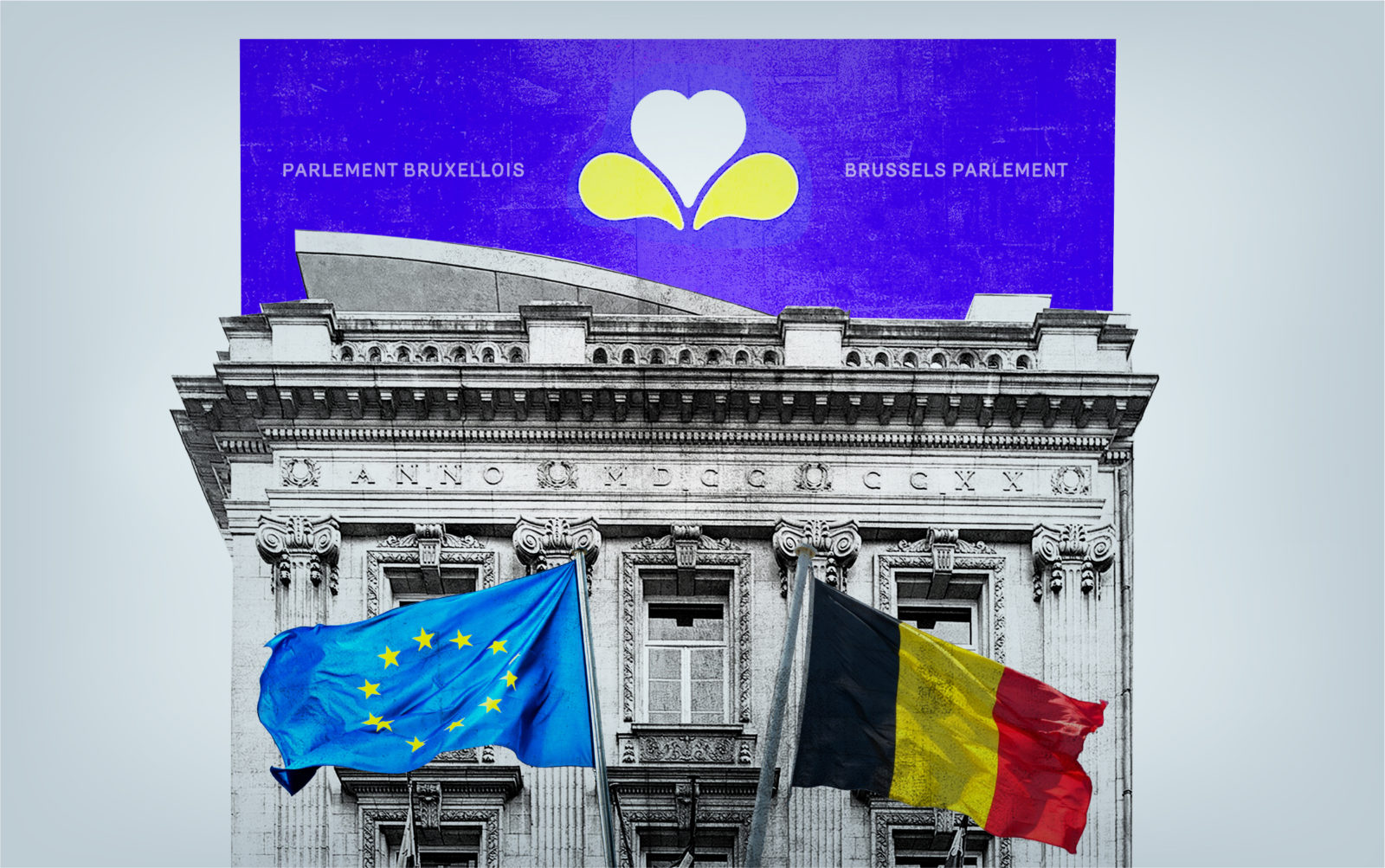
In today’s world, political paralysis may no longer come as a shock. Yet it remains a striking paradox that Brussels – home to the institutions serving 450 million Europeans and the seat of the European Union – has been operating for nearly 600 days without a fully functioning regional government, surpassing Belgium’s previous national record for government formation.
This paralysis was further entrenched today, when yet another attempt to form a Brussels government failed. Rather than paving the way for political stabilisation, each new negotiation round has reinforced the system’s inability to translate electoral outcomes into a viable governing coalition.
The June 2024 regional elections – held alongside the federal election – resulted in a highly fragmented parliament, with 14 parties competing for 89 seats. No clear majority emerged on either the Francophone or Flemish side, making coalition formation particularly complex.
The challenge, however, goes beyond coalition arithmetic and reflects deepening ideological polarisation. Fundamental disagreements over territorial reform – from the consolidation of municipalities and police zones to competing fiscal philosophies of tax reduction versus expanded public spending – indicate that any eventual government would likely be short-lived and primarily supervisory in nature. The absence of a shared vision for Brussels would thus persist.
When Safeguards Become Vetoes: Lessons from Brussels
Behind the visible difficulty of forming a coalition in Brussels lies a more structural problem. The Brussels electoral system was designed decades ago to protect Belgium’s linguistic balance, in particular by ensuring strong representation for the Flemish minority in a predominantly Francophone city. Any regional government must secure support from both language groups, meaning a majority is required not only overall, but also separately among Dutch-speaking and French-speaking parties.
At the time, this system worked relatively well. Brussels was seen as a politically stable and “pillarised” city, where traditional Flemish parties represented a small but cohesive Dutch-speaking community. The assumption was that Flemish seats would be filled by parties clearly anchored in that linguistic group, allowing minority protection to function as intended.
Today, that assumption no longer holds. Brussels’ electorate has become far more fragmented. On the Francophone side, many parties compete for votes, including among an increasingly diverse population. On the Flemish side, a very small number of Dutch-speaking seats is now divided between several parties, making it harder to form a coherent bloc capable of supporting a government.
It is in this context that the rise of Team Fouad Ahidar (TFA) has had a disproportionate impact. Although formally classified within the Dutch-speaking electoral college, TFA draws much of its support from Francophone voters and citizens of Muslim background. Its political appeal is shaped more by identity and urban social issues than by traditional linguistic divides.
As a result, some seats counted as “Flemish” in coalition arithmetic are now held by a party that does not primarily represent the Flemish linguistic community. Because a Brussels government requires backing from both language groups, this creates an additional veto point. What was designed as a minority protection mechanism has effectively turned into a “minority of a minority” veto, complicating coalition formation and weakening the system’s ability to produce stable governance.
Belgium as an “Extreme EU”?
Successive state reforms have turned Belgium into a particularly advanced – and demanding -experiment in multilevel governance. Power is not organised in a clear hierarchy, but shared horizontally between the federal level, three Communities and three Regions. Provinces and 581 municipalities sit below them, yet still exercise substantial authority over areas such as policing, urban planning and local services. The result is an institutional system that increasingly resembles an intensified version of the European Union itself: highly decentralised, consensus-driven, and prone to paralysis when political trust breaks down.
Yet, what distinguishes Belgium from the EU is not the complexity of its system, but the path that led to it. Belgian federalism has evolved through a largely centrifugal process. Since the 1970s, successive state reforms have steadily pushed powers, resources and political authority away from the centre towards regions and communities, largely in response to linguistic and territorial tensions. European integration, by contrast, has followed a more centripetal logic. Member states began as fully sovereign actors and gradually pulled certain competences upwards – in areas such as trade, competition, monetary policy or climate action – in order to manage growing interdependence.
Despite these opposite trajectories, Belgium and the EU now face remarkably similar challenges. Both operate through shared competences, where no single level of authority holds all the levers and progress depends on broad agreement. Economic policy, transport and environmental regulation all require constant coordination across levels. In both systems, political disagreements are rarely settled by decisive central leadership. Instead, they are managed through negotiation, institutional bargaining and, ultimately, judicial arbitration and budgetary redistribution. The consequence is familiar in Brussels as it is at EU level: a growing number of veto players, and an increasing difficulty in translating consensus-based governance into timely and coherent political decisions.
Brussels: Model or Warning for the EU?
Debates on Belgian federalism have long raised the question of whether such a fragmented, highly negotiated system offers a model for the European Union – or instead exposes the structural limits of deep decentralisation. Much like the EU’s own configuration of national governments, Council formations and agencies, Belgian federalism struggles to ensure clear political ownership and authority.
Indeed, the core challenge of multilevel governance does not lie in its capacity to manage day-to-day administration. The difficulty lies elsewhere: in generating and sustaining a long-term political direction that is clearly articulated, collectively supported and owned. As decision-making authority becomes more dispersed, agreement grows harder to reach and responsibility harder to assign.
Belgium’s repeated periods without a federal or Brussels government illustrate this dynamic with particular clarity. Administrative continuity is preserved, yet structural reforms are postponed and unresolved issues (e.g., taxation, state reform, pensions) accumulate beneath the surface. The system continues to function, but it struggles to act decisively.
Seen in this light, Brussels’ prolonged governmental uncertainty is less a political anomaly than a cautionary signal for the Union itself. It highlights a risk inherent in complex multilevel systems as the EU moves beyond managing the single market and competition policy towards decisions on enlargement to Ukraine, long-term migration frameworks, and the next phase of the Green Deal and industrial policy.
The real danger is not paralysis but drift: a system that continues to function administratively while losing strategic direction, as fragmented coalitions and multiple levels of authority make long-term political vision difficult to agree on – and even harder to own.
If Brussels is a warning, the answer is not to abandon multilevel governance, but to complement it. That means a stronger political centre on genuinely strategic questions, fewer veto points where long-term direction is at stake, and a tighter link between political priorities and EU funding. Otherwise, the Union risks drifting towards Belgium’s predicament: a system that works every day, keeps running under pressure- but struggles to decide clearly where it wants to go.
ENJOYING THIS CONTENT?





-

China, the EU… and Starmer’s Future I Bridge the Channel Ep.22
Bridge the Channel - Multimedia
25 Feb 2026
-
Young People & Pensions – The European View Podcast – Interview with A. Siegmann – Ep.23
Multimedia - Podcasts - The European View Podcast
10 Feb 2026
-

From Madrid to Brussels: Spain’s Emerging Rule of Law Challenge
Blog
28 Jan 2026
-

2026: The Year Trump Tests Britain’s Limits | Bridge the Channel Ep21
Bridge the Channel - Multimedia
27 Jan 2026
-

Europe’s Single Market: Why Aviation Shows the Way | Op-ed Ep.9
Video Op-Eds
20 Jan 2026
-

Leadership beyond stereotypes – Interview with Mariya Gabriel – Her&EU
Her and EU - Podcasts
15 Jan 2026
-

New social contract for European defence – Interview with Homańska & Przybylski
The European View Podcast
19 Dec 2025
-

Can 2026 reset EU-UK relation? – Bridge the Channel ep20
Bridge the Channel - Multimedia
15 Dec 2025
-

The Real Cost of Russia’s War – Thinking Talks Ep 24 with Vladimir Milov
Multimedia - Thinking Talks
27 Nov 2025
-

EU Enlargement 2025: Ambition vs Reality – Thinking Talks Ep 23 with Skander Nasra
Multimedia - Thinking Talks
20 Nov 2025