

Decoding Sovereignty, Defence, Competitiveness: Democratic Resilience as the Key to Success
27 July 2026



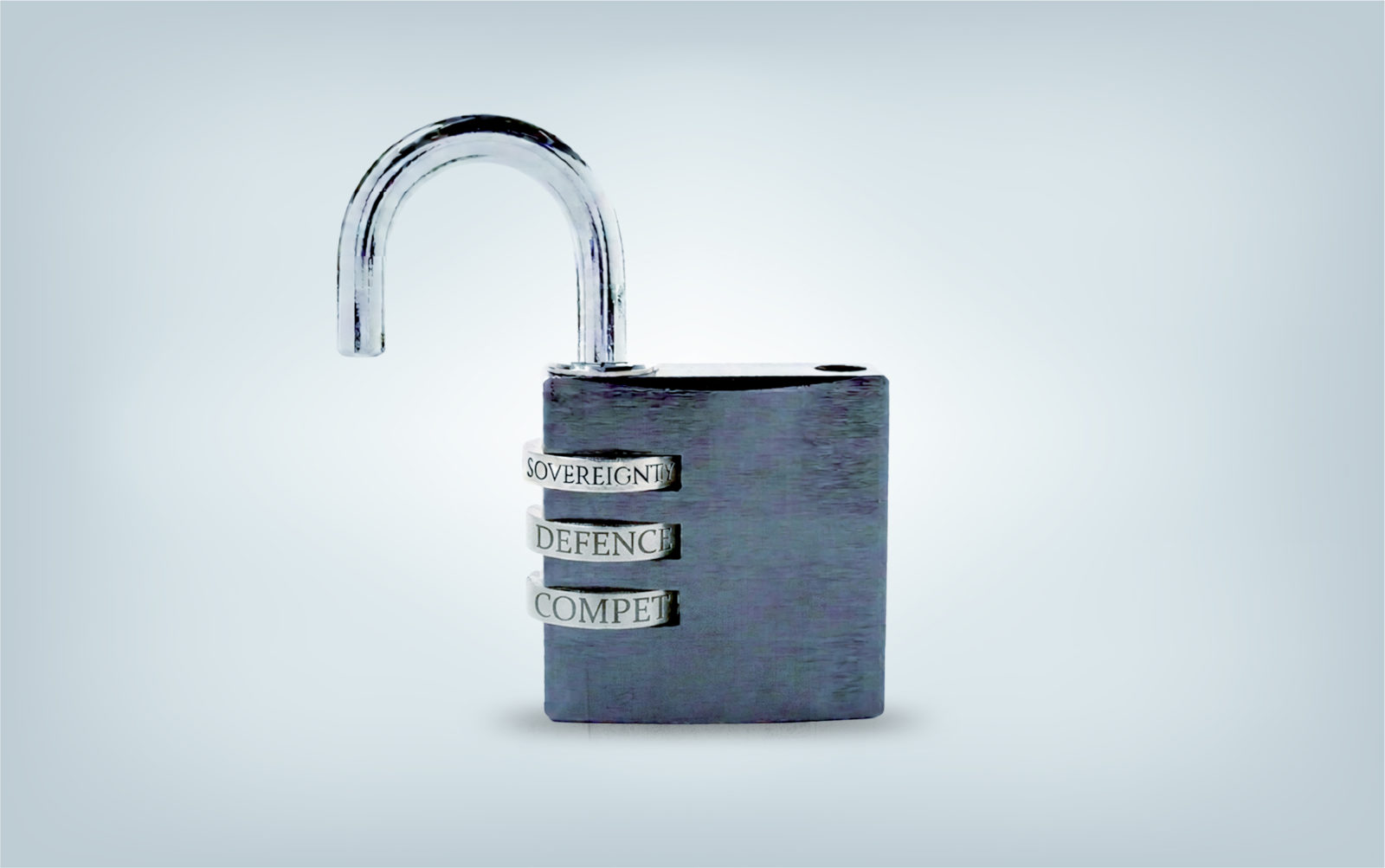
Europe needs to navigate the rupture of the world order that we are seeing around us, and it has some tough choices to make. The recent decision by the US government to limit access for non-US citizens to advanced AI models encapsulates Europe’s tough situation. But the good news is that the choice has significant upsides – if European leaders make responsible decisions now, there will be a return on investment in European capacity.
There is a formula that decodes the steps that need to be taken. What’s needed is not business as usual, but it is also not rocket science or major upheaval. Rather, what is needed is determination to deliver on an “all of the above strategy”.
“All of the above” of what? The EU has set out some major policy priorities: sovereignty, competitiveness, and defence. All of these are crucial for Europe to deal with the challenges it faces. In fact, these priorities all depend on each other – the EU and national governments will not achieve these if they do not achieve them all at the same time. There is one key which would unlock these, and that is democratic resilience.
Whichever way you try to split the issue, you will find out that these issues are inexorably intertwined with each other. If we look through each goal, we see it cannot be achieved without the others also being fulfilled.
Economic competitiveness can only realistically be achieved if Europe builds up its own capacities in terms of infrastructure, scaling up business models that suit its society and values, and its own independence. This does not mean protectionism – it means closing a severe gap, and doing so would empower other like-minded global actors and allies. If the EU makes the mistake of trying to compete with hyperscaling US Big Tech companies on their own terms, the EU will lose that competition. The EU needs to compete on its own terms, and on its own model – trustworthy tech, secure rights, and legal certainties, a move away from surveillance advertising to user empowerment.
Competitiveness requires sovereignty, and sovereignty requires the capacity for self-reliance. Likewise, without sovereignty, there can be no meaningful effort in defence. This is because if Europe is entirely dependent on other powers for its tech infrastructure, it will not be able to meaningfully deploy any defence capability – it will be vulnerable to pressure, coercion, intimidation, and attack if it is not able to be technologically self-reliant, at least to some extent. In an international order that is unfortunately driven by muscle-flexing and intimidation, competitiveness also cannot be achieved without defence, as the political decision-making required to invest in competitiveness cannot be carried out so long as security vulnerabilities are used as a tool of coercion.
Democratic resilience, in turn, is the underlying infrastructure that is necessary in order to drive any of these priorities. It is not a nice-to-have add on, but rather an essential pre-requisite. That is because democratic institutions and processes are the societal operating system that enables the central decisions to be taken. Without it, there is paralysis.
If societies are manipulated and divided by pro-Putin extremists, sensible decision-making becomes impossible, and investments in defence or competitiveness lose the political will they require to come through. This is why information integrity has to be taken as part of Europe’s defence agenda, along with tackling cyber and hybrid threats.
The equation is clear: for competitiveness, sovereignty, and defence goals to be achieved, democratic resilience has to be secured and advanced. The question is: what to do?
Luckily, the solutions are relatively simple: first, enable investment in democratic resilience and information integrity across the long-term EU budget (MFF) where it is relevant – including in funding programmes on competitiveness, defence, and social cohesion, as per the EU’s proposed Democracy Shield. The MFF should provide for ambitious investment putting into practice the commitments that the Commission has made in the Shield.
In specific concrete terms, that means including a resilience perspective in existing programmes. When the European Competitiveness Fund refers to resilience to hybrid threats, it should include and prioritise support for efforts to secure information integrity. Where it mentions training, that should include media literacy training. Where it mentions digital leadership, that should include support for trust and safety online, as well as citizen participation. Regional partnership cohesion funds need to include media literacy, digital participation, and information integrity in programmes as part of the efforts to drive regional and local level social cohesion, and deliver on a commitment to synergies across EU budget programmes. Outside the MFF, defence spending via SAFE and Readiness2030 need to include a focus on counter information manipulation and interference, and agree on a percentage of defence spending that goes towards combatting these, as part of the effort to counter hybrid and cyber threats. This is not a mish-mash of different priorities, but rather the same priority, resilience, which is necessarily interweaved across these different areas.
The AgoraEU programme, which centralises efforts towards democracy resilience, needs to keep the proposed mechanism for bringing in funds from fines imposed as part of Digital Services Act, Digital Markets Act, and AI Act enforcement. This is important in terms of ensuring Big Tech platform responsibility, and sustaining the digital accountability and safety effort.
To keep track of all this and deploy it strategically, democratic resilience funding should be driven via a Democracy Shield Funding Initiative, a coordination mechanism which would provide an overview across programmes and monitor how it is deployed strategically.
The second key component is to enforce EU laws ambitiously, and set out resources to do that, including through a whole-of-society approach, connecting civil society, researchers, academia, and policy-makers. That enforcement has been so far too slow, and lacking clarity, despite sincere efforts by the Commission. The Digital Services Act, the Digital Markets Act, and the AI Act need to be enforced ambitiously, especially towards Big Tech players who have an outsized footprint (the DSA’s Very Large Online Platforms and DMA’s Gatekeepers). This means setting out clear guidelines and red lines by the Commission, and then moving as rapidly as possible from investigations to results. The Commission has to be able to ensure a robust and secure legal position for itself, which is important, while keeping up with fast-moving events.
At the same time, the Simplification agenda must be smart to ensure that European start ups and SMEs can grow – meaning providing clear guidelines and legal certainties. We should remember that it is not European rules, but rather national red tape on corporate law, taxation, capital, and procurement rules, that holds back European companies. Simplification should prioritise streamlining of national legislation and opening up horizons for growth for European companies that leverage our fundamental values as a competitive advantage. Accelerating the EU Inc initiative for a European company structure, and a Capital Market Union is part of that – and these should go hand in hand with securing a robust EU budget.
There’s no question that achieving all this at the same time is tough to do, but it is part of the same drive, and requires the same momentum. Fortunately enough, all the tools are on the table, and have been fleshed out by networks of stakeholders and EU decision-makers. All we need now is for MEPs in Parliament and, crucially, a coalition of governments in the Council to act responsibly and with determination to get this done.
ENJOYING THIS CONTENT