Europe needs to navigate the rupture of the world order that we are seeing around us, and it has some tough choices to make. The recent decision by the US government to limit access for non-US citizens to advanced AI models encapsulates Europe’s tough situation. But the good news is that the choice has significant upsides – if European leaders make responsible decisions now, there will be a return on investment in European capacity.
There is a formula that decodes the steps that need to be taken. What’s needed is not business as usual, but it is also not rocket science or major upheaval. Rather, what is needed is determination to deliver on an “all of the above strategy”.
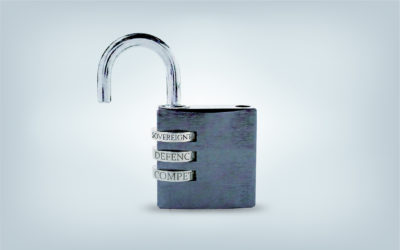
“All of the above” of what? The EU has set out some major policy priorities: sovereignty, competitiveness, and defence. All of these are crucial for Europe to deal with the challenges it faces. In fact, these priorities all depend on each other – the EU and national governments will not achieve these if they do not achieve them all at the same time. There is one key which would unlock these, and that is democratic resilience.
Whichever way you try to split the issue, you will find out that these issues are inexorably intertwined with each other. If we look through each goal, we see it cannot be achieved without the others also being fulfilled.
Economic competitiveness can only realistically be achieved if Europe builds up its own capacities in terms of infrastructure, scaling up business models that suit its society and values, and its own independence. This does not mean protectionism – it means closing a severe gap, and doing so would empower other like-minded global actors and allies. If the EU makes the mistake of trying to compete with hyperscaling US Big Tech companies on their own terms, the EU will lose that competition. The EU needs to compete on its own terms, and on its own model – trustworthy tech, secure rights, and legal certainties, a move away from surveillance advertising to user empowerment.
Competitiveness requires sovereignty, and sovereignty requires the capacity for self-reliance. Likewise, without sovereignty, there can be no meaningful effort in defence. This is because if Europe is entirely dependent on other powers for its tech infrastructure, it will not be able to meaningfully deploy any defence capability – it will be vulnerable to pressure, coercion, intimidation, and attack if it is not able to be technologically self-reliant, at least to some extent. In an international order that is unfortunately driven by muscle-flexing and intimidation, competitiveness also cannot be achieved without defence, as the political decision-making required to invest in competitiveness cannot be carried out so long as security vulnerabilities are used as a tool of coercion.
Democratic resilience, in turn, is the underlying infrastructure that is necessary in order to drive any of these priorities. It is not a nice-to-have add on, but rather an essential pre-requisite. That is because democratic institutions and processes are the societal operating system that enables the central decisions to be taken. Without it, there is paralysis.
If societies are manipulated and divided by pro-Putin extremists, sensible decision-making becomes impossible, and investments in defence or competitiveness lose the political will they require to come through. This is why information integrity has to be taken as part of Europe’s defence agenda, along with tackling cyber and hybrid threats.
The equation is clear: for competitiveness, sovereignty, and defence goals to be achieved, democratic resilience has to be secured and advanced. The question is: what to do?
Luckily, the solutions are relatively simple: first, enable investment in democratic resilience and information integrity across the long-term EU budget (MFF) where it is relevant – including in funding programmes on competitiveness, defence, and social cohesion, as per the EU’s proposed Democracy Shield. The MFF should provide for ambitious investment putting into practice the commitments that the Commission has made in the Shield.
In specific concrete terms, that means including a resilience perspective in existing programmes. When the European Competitiveness Fund refers to resilience to hybrid threats, it should include and prioritise support for efforts to secure information integrity. Where it mentions training, that should include media literacy training. Where it mentions digital leadership, that should include support for trust and safety online, as well as citizen participation. Regional partnership cohesion funds need to include media literacy, digital participation, and information integrity in programmes as part of the efforts to drive regional and local level social cohesion, and deliver on a commitment to synergies across EU budget programmes. Outside the MFF, defence spending via SAFE and Readiness2030 need to include a focus on counter information manipulation and interference, and agree on a percentage of defence spending that goes towards combatting these, as part of the effort to counter hybrid and cyber threats. This is not a mish-mash of different priorities, but rather the same priority, resilience, which is necessarily interweaved across these different areas.
The AgoraEU programme, which centralises efforts towards democracy resilience, needs to keep the proposed mechanism for bringing in funds from fines imposed as part of Digital Services Act, Digital Markets Act, and AI Act enforcement. This is important in terms of ensuring Big Tech platform responsibility, and sustaining the digital accountability and safety effort.
To keep track of all this and deploy it strategically, democratic resilience funding should be driven via a Democracy Shield Funding Initiative, a coordination mechanism which would provide an overview across programmes and monitor how it is deployed strategically.
The second key component is to enforce EU laws ambitiously, and set out resources to do that, including through a whole-of-society approach, connecting civil society, researchers, academia, and policy-makers. That enforcement has been so far too slow, and lacking clarity, despite sincere efforts by the Commission. The Digital Services Act, the Digital Markets Act, and the AI Act need to be enforced ambitiously, especially towards Big Tech players who have an outsized footprint (the DSA’s Very Large Online Platforms and DMA’s Gatekeepers). This means setting out clear guidelines and red lines by the Commission, and then moving as rapidly as possible from investigations to results. The Commission has to be able to ensure a robust and secure legal position for itself, which is important, while keeping up with fast-moving events.
At the same time, the Simplification agenda must be smart to ensure that European start ups and SMEs can grow – meaning providing clear guidelines and legal certainties. We should remember that it is not European rules, but rather national red tape on corporate law, taxation, capital, and procurement rules, that holds back European companies. Simplification should prioritise streamlining of national legislation and opening up horizons for growth for European companies that leverage our fundamental values as a competitive advantage. Accelerating the EU Inc initiative for a European company structure, and a Capital Market Union is part of that – and these should go hand in hand with securing a robust EU budget.
There’s no question that achieving all this at the same time is tough to do, but it is part of the same drive, and requires the same momentum. Fortunately enough, all the tools are on the table, and have been fleshed out by networks of stakeholders and EU decision-makers. All we need now is for MEPs in Parliament and, crucially, a coalition of governments in the Council to act responsibly and with determination to get this done.
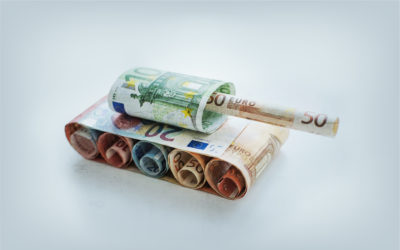
Europe’s defence debate has long been framed as a trade-off: more spending on security meant fewer resources for everything else. Rearmament was treated as a necessary but subtractive fiscal burden. That framing is increasingly misleading. With national defence budgets rising and new EU-level defence funding instruments emerging, the central question is no longer how to finance defence, but how to turn defence investment into military capability while catalysing Europe’s industrial renewal. Realising this opportunity will rely on Europe’s ability to quickly and sustainably expand defence industrial capacity—by repurposing existing civilian and revitalising legacy industrial sites, retaining skilled workforces, and embedding defence production more deeply into its broader economic base.
Europe is finally taking defence seriously again, even if Russian revisionism has forced its hand. After decades of underinvestment, governments across the continent are increasing military spending, launching new defence initiatives, and abandoning long-standing taboos in order to speak openly about the need to rearm in an increasingly threatening world. Under the banner of Defence Readiness 2030, the European Union has set itself an ambitious goal: to ensure that Europe can credibly deter military aggression by the end of this decade.
Higher defence budgets are the conditiosine qua non for achieving this goal. However, defence expenditure is a means, not an end. The central question is not only how much Europe spends on defence, but whether those resources are being translated into the military capabilities, industrial capacity and strategic coherence necessary to deter and, if required, defeat potential adversaries.
Russia’s full-scale invasion of Ukraine exposed a dangerous complacency and strategic naivety that had been taking root for decades. Following the end of the Cold War, European countries steadily reduced defence expenditure and reaped the benefits of the so-called peace dividend. Defence industries adapted accordingly. Production lines were downsized, stockpiles shrank, supply chains became increasingly optimised for efficiency rather than resilience, and military production shifted from large-scale manufacturing to relatively small and specialised orders. The result was a minute industrial base that proved sufficient in times of peace, yet lacked the scale, capacity, accumulated know-how and political support needed to expand rapidly if and when circumstances demanded it.
When suddenly confronted with the need to arm Ukraine, replenish their own depleted arsenals and reinforce deterrence against Russia, European governments discovered that defence production cannot be expanded at the stroke of a pen. Factories cannot appear overnight. Supply chains cannot be rebuilt in a matter of weeks. Skilled workers, specialised machinery and critical components all require time to develop and mobilise. Above all, they depend upon a culture of preparedness, resilience and deterrence; one that Europe had steadily neglected under the illusion that war in Europe was somehow a thing of the past.
To Europe’s credit, recent progress has been substantial. Defence spending has increased sharply since 2022, while many European defence companies have significantly expanded production. Output of ammunition, air-defence systems and other critical equipment has risen considerably. Yet the scale of the challenge is immense, and Europe is still far from producing the military capabilities and industrial output required to achieve genuine defence readiness by 2030.
The challenge is further intensified by a series of profound geopolitical and technological shifts. The United States has made it crystal-clear that Europe can no longer rely indefinitely on American security guarantees and must shoulder a far greater share of its own defence burden. Simultaneously, global supply chains are becoming more fragile as strategic competition and geopolitical fragmentation deepen. European defence industries are still dependent on American technologies in key areas, while China maintains a commanding position in many of the critical raw materials and industrial inputs upon which modern defence production depends. At the same time, artificial intelligence, autonomous systems and software-driven warfare are reshaping the battlefield at a pace that no military can afford to ignore.
Europe’s defence industrial base therefore faces a triple challenge: it must increase production, reduce strategic dependencies and maintain technological competitiveness simultaneously. Meeting this challenge requires more than additional funding. It requires structural reform.
First, procurement processes must become faster and more predictable. Defence companies are unlikely to make major investments in new production facilities without confidence that long-term demand exists. Governments should therefore move towards longer procurement cycles and explore innovative arrangements such as capacity contracts, which guarantee industrial production capacity rather than merely purchasing specific quantities of equipment.
Second, Europe must address the fragmentation that continues to undermine its defence industrial base. Twenty-seven separate procurement systems inevitably generate duplication, inefficiency and higher costs. Greater coordination is urgently needed to not only reduce waste of financial resources but also allow industry to benefit from economies of scale and more predictable demand.
Third, Europe must invest strategically in the capabilities that matter most. The continent remains heavily dependent on the United States in areas such as command and control, strategic airlift, satellite communications, advanced intelligence systems and military software. Reducing these dependencies should become a central objective of European defence policy over the coming decade. The same logic applies to research and development. While immediate capability gaps understandably dominate political and financial attention, Europe cannot afford to neglect long-term technological competition. Military superiority increasingly depends on innovation, and Europe’s investment in defence research remains significantly below that of the United States. The goal should therefore be to rapidly raise Europe’s R&D share to around 10% of total defence spending.
In conclusion, the debate surrounding Defence Readiness 2030 should not be reduced to headline spending figures or ever-higher budgetary commitments. The fundamental question is whether Europe can build, within the narrow window remaining before the end of the decade, the industrial foundations necessary to sustain military power, strategic autonomy and credible deterrence in a now undeniably unstable world.
Defence industries are too often treated as merely another economic sector. In reality, they constitute a strategic capability in their own right. Without the capacity to produce at scale, innovate at speed and sustain military operations over time, no amount of political ambition, strategic rhetoric or financial investment will be sufficient. If Europe is serious about deterrence, it must become equally serious about the industrial base that underpins it. For deterrence ultimately rests not only on what Europe possesses today, but on what it can build, replace and sustain tomorrow. After all, wars are won not only on the battlefield, but also in factories, laboratories and supply chains.
The legal proceedings presently unfolding before the Amsterdam Court of Appeal between Dutch semiconductor firm Nexperia and its Chinese parent, Wingtech Technology, mark a watershed moment for European industrial policy. On February 11, the court ordered an independent investigation into Nexperia’s governance — a probe whose findings will take several months to emerge, but whose implications are already plain. The dispute has laid bare the structural vulnerabilities running through Europe’s automotive supply chains, and with them, the strategic consequences of China’s dominance over legacy (or mature-node) semiconductors, typically defined as chips manufactured at process nodes of 28 nanometres and above, considered as foundational chips, the backbone of modern economies. For Europe, the case of Nexperia shows that the era of industrial innocence is over.
For policymakers in Brussels and national capitals, the question is no longer whether Dutch authorities were justified in their intervention in late 2025. It is whether the European Union possesses the institutional capacity – and willingness to use its collective weight – to prevent supply chain dependencies from being weaponised by China.
For all the rhetoric about “strategic autonomy,” which has long been at the heart of the EU’s efforts to boost its geopolitical standing on the global stage, its realisation remains elusive.
This paper uses the Nexperia case to examine Europe’s structural vulnerabilities in legacy semiconductor supply chains. It argues that the crisis is not an isolated incident but a consequence of decades of cost-driven procurement that systematically discounted geopolitical risk. Drawing on the Nexperia case, it assesses the adequacy of Europe’s existing policy instruments — from foreign investment screening to the EU Chips Act — and sets out a concrete policy agenda for how the EU can move from reactive crisis management to durable supply chain resilience, with Taiwan as a central pillar of that strategy.
Is the idea of ‘European sovereignty’ still relevant? It was originally developed as an EU response to the rise of populism within its territory and the disruption of transatlantic relations brought about by the Trump presidency. But today its relevance appears uncertain in the face of Russia’s invasion of Ukraine and the growing assertiveness of China. This brief argues that European sovereignty (and related concepts such as strategic autonomy) is still an important and necessary guide for EU policy, but only if it is dissociated from some of the excessive and overambitious definitions given to the concept when it was first developed. European sovereignty is bound to fail if it is defined as taking an equidistant position between the US and China or as aiming for the atavistic goal of autarky in all conceivable policy areas, from security and energy to economy and technology. Instead, the brief argues, European sovereignty must be understood as a moderate and pragmatic agenda of defending EU interests and priorities within the wider framework of the transatlantic relationship, protecting the EU’s internal liberal political and economic order, and defending international openness where the EU still has comparative advantages. Most of all, the necessary objective of protecting European sovereignty against external forces must not become a backdoor for the undue centralisation of political and economic power inside the EU, a process that would be bound to generate new populist reactions and constrain the EU’s room of manoeuvre internationally. The brief concludes by proposing an understanding of European sovereignty as a compound term, containing both the ideal of EU autonomy of action internationally and the protection of the Union’s internal heterogeneity, diversity and level playing field. Understood in this way as a ‘sovereignty of sovereignties’, European sovereignty can serve as an important guide for EU policy.


 Loading...