

Values-Based Realism and Its Enemies: How to Tackle the new Geopolitical ‘Realism’ from Left and Right
24 February 2026


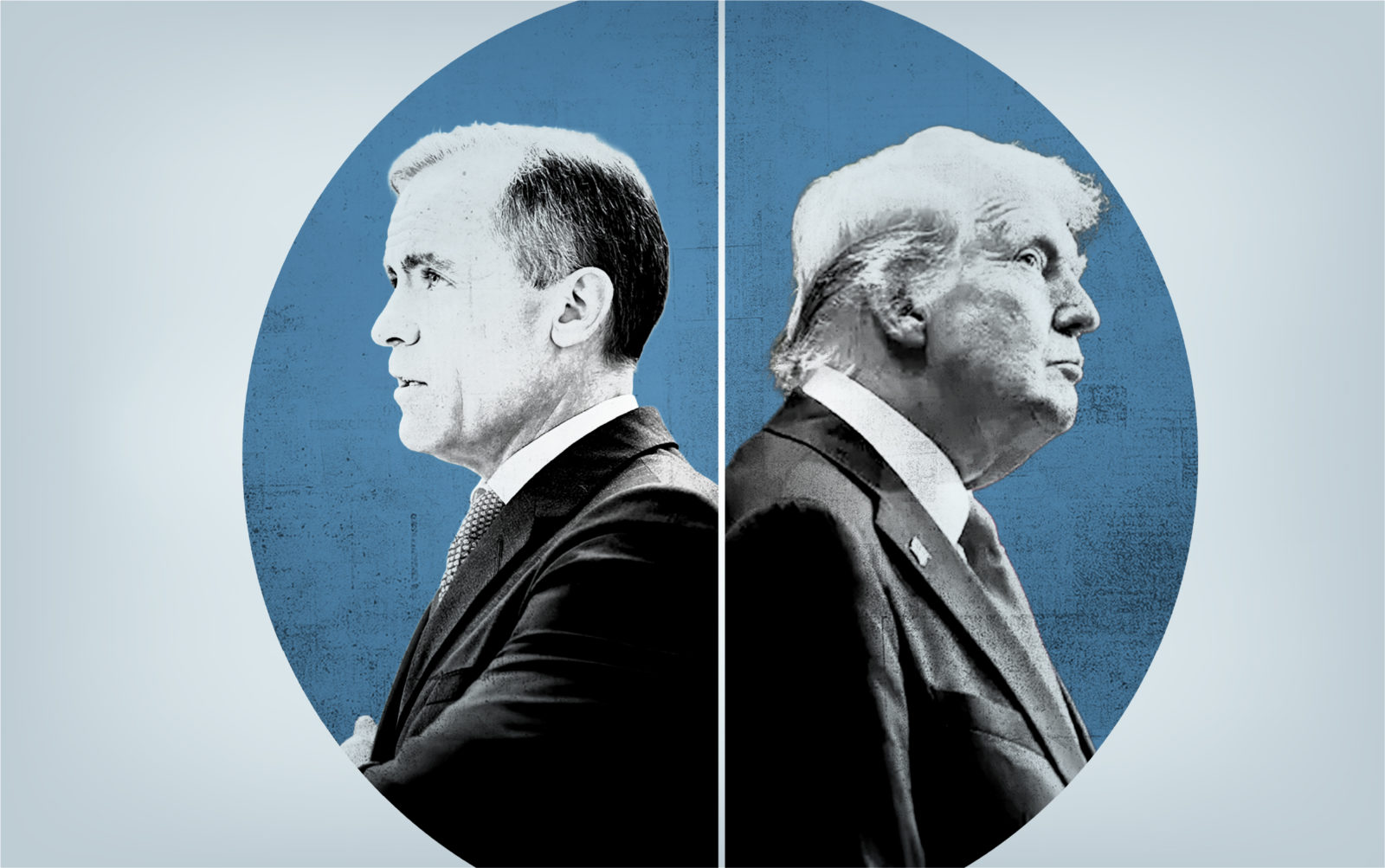
This year’s Davos World Economic Forum stood out for many things, not least the Greenland crisis, but it will also be known for two memorable speeches: Those of US President Donald Trump and Canadian Prime Minister Mark Carney. While Trump’s 90 minute rambling, self-congratulatory, passive-aggressive rant may have been the most overcrowded event, Carney’s well-crafted 15-minute speech will enter the history books, not only for its succinctness (as opposed to Trump’s rambling) but for its sketch of a ‘values-based realism’ as a viable alternative to the new transactional pseudo-realism Trump stands for.
Carney acknowledged the end of the old rules-based international order and proposed a coalition of middle powers that pragmatically cooperates in diversifying its trade while still sticking to essential values as the basis of their international behaviour. But just looking back at the last 5 years, values-based realism has two powerful counter-narratives.
Great power geopolitics of the Alt-Right
Geopolitics is back in fashion. For more than a year, we’ve heard from the White House that a new era of global power politics has begun. Trump’s Deputy Chief of Staff Stephen Miller summarised it neatly in early January 2026: ‘We live in a world … that is governed by strength, that is governed by force, that is governed by power.’ This transactional, might-makes-right ‘America First’ approach to world affairs is underpinned by official documents such as the National Security Strategy of November 2025.
In a perfectly clear departure from ‘spreading liberal ideology’ and ‘hectoring … nations into abandoning their traditions and historic forms of government’, the administration dismisses at least eight decades of global democracy support and values-based foreign policy. The partial or total destruction of America’s formidable instruments of democratic solidarity – USAID, the National Endowment for Democracy, Radio Free Europe/Radio Liberty – is entirely in line with this thinking.
To put it bluntly: In this perspective, what used to be the greatest strength of the West – individual freedom, checks and balances. rules-based multilateralism, and the belief in universal human rights – is now considered its biggest weakness in the global power struggle.
But there is a new phenomenon arising next to the Trumpian view on great powers eternally jostling for spheres of influence. We observe a rising movement and global alliances on what we would like to call a new realpolitik of Progressives and the Global South.
After the beginning of Russia’s full-scale invasion of Ukraine in 2022, many in the West, freshly self-confident with a newfound sense of purpose, were disappointed to see so little support for Ukraine in the ‘Global South’, from Latin America via Africa to much of Asia. That should not have come as a surprise.
British foreign policy expert Fiona Hill in 2023 spoke of a ‘rebellion’ in the Global South against the collective West. One of the tenets of this mindset is to see the rules-based international order increasingly as a poor disguise for the great power politics of a dominant West – and not as a level playing field. Another central element is that the Global South very pragmatically forges alliances to defend itself against any Western ‘preaching’, weakening or obliterating ideas like global democracy support. Those are allegedly poorly disguised instruments of Western imperialism.
What is striking in the context of 2026 geopolitics is how many overlaps there are between the neorealism from the radical right and the progressive Southern philosophies – including their left-progressive acolytes in the West – of the new global disorder and what to make of it. The messages and consequences are clear: in the end, countries, or rather their often autocratic regimes, have to fight for themselves, or even help each other crush Western-inspired democratic movements. Civil society is not a valid concept and a voice to be heard; democracy support is tainted.
The challenges of Carneyism
Mark Carney’s fascinating speech in Davos proposed a new coalition of democratic middle powers, believing in values such as human rights and democracy, but capable of creating partnerships with autocracies.
The latter come with some unpleasant consequences and bitter pills to swallow. And politicians have to explain this to their voters. Canada’s plans for a free trade agreement with China, for the time being withdrawn, is an example of such dilemmas. The most recent EU-India Free Trade Agreement is another one: it means buying more products made with Russian oil, thus indirectly financing Russia’s war on Ukraine.
For Europe’s democracies, there is no alternative to navigate the geopolitical storm without illusions, but still based on principles worth defending, and in cooperation with civil societies and democratic forces across the world. We need to hedge against over-dependency on an unreliable and often hostile US by diversifying, obviously not by replacing one dependency with another. Neither the cynicism of the Alt-Right, nor the relativism and defeatism of many progressives and Global South propagandists, should keep us from promoting our values of a free and open society, contributing to making the world at least a bit safer and freer.
ENJOYING THIS CONTENT?



-
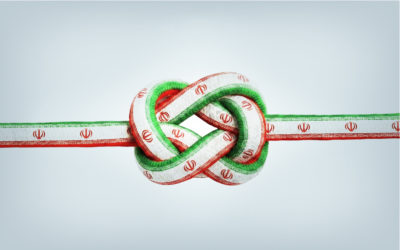
“The Iran Knot”: How the War Exposed Italy’s Middle Power Dilemma
Blog
06 Jul 2026
-

Subsidiarity in the Age of Artificial Intelligence: A Reflection on the new Encyclical “MAGNIFICA HUMANITAS”
Blog
29 May 2026
-
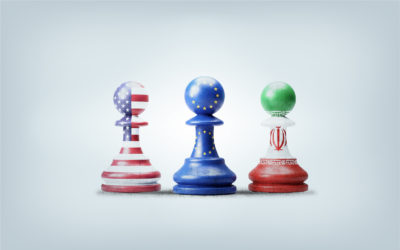
Europe Cannot Afford Irrelevance and Must Facilitate Dialogue with Iran
Blog
15 Apr 2026
-
Iran’s Attacks on the GCC: A Strategic Opening for Europe
Blog
13 Mar 2026
-

China, the EU… and Starmer’s Future I Bridge the Channel Ep.22
Bridge the Channel - Multimedia
25 Feb 2026
-
Money Education: Middle-Class Luxury or Basic Right? I Op-ed Ep.10
Multimedia - Video Op-Eds
24 Feb 2026
-

Elections in Japan: What Takaichi’s Supermajority Means for Strategic Realities in the Indo-Pacific
Blog
10 Feb 2026
-

Europe’s Security Future Hinges on Ukraine’s Innovation
Blog - Ukraine
05 Feb 2026
-
From Madrid to Brussels: Spain’s Emerging Rule of Law Challenge
Blog
28 Jan 2026
-

From Partner to Problem – How Trump’s Foreign Policy is Reshaping the World Order
Blog
22 Jan 2026