

After the Midterms: White House Policy Need Not be Europe’s Destiny
26 November 2026



Policymakers in Europe are rightly wary of a beleaguered, lame-duck President Trump desperate to enshrine his legacy by consequential US action. Trump, to campaign for a Nobel Prize, may try, as at various points previously, to pressure Ukraine into one-sided concessions. On trade, the president still believes, despite legal setbacks, that unilateral tariffs offer him not just sound economic tools but effective foreign policy weapons. At home, he will likely do all he can to reconstitute, perhaps less for his successor than his brand, a historic America-First, MAGA coalition now fractured over the Iran War.
The EU, Trump’s old ‘‘foe’’ and bogeyman of liberalism, may indeed present a tempting foil. So, too, may Ukraine, whose cause the president has never embraced. The administration recently lifted US sanctions on Russian diesel. It has reportedly tried to pressure European leaders into transferring to the US some frozen Russian assets; into buying, via US brokers, more Russian gas; into granting export access, via Lithuania, to Belarusian potash; and into jeopardising decades of transatlantic consensus by opening talks with Russia on a new European security architecture. The administration retains critical control over US weapons sales to Ukraine via the Prioritised Ukraine Requirements List (PURL) programme and over key aspects of Ukraine’s military connectivity under Starshield. Further unilateral US sanctions relief for Russian energy would strain European economies and Europe’s political unity.
Recent personnel developments signal a doubling down on these policies. Facing political blowback over his handling of the Iran War, Secretary of Defence/War Pete Hegseth, a harsh critic of Europe and Ukraine, has — with the president’s support — loudly defied his detractors. New White House Chief of Staff Stephen Miller is a hardliner who has publicly derided President Zelensky and boasted of the US’s power to enforce its will abroad. The newly elected Republican House Minority Leader for the incoming 120th Congress, Jim Jordan of Ohio, is a firebrand who, as chair of the House Judiciary Committee, consistently denounced EU digital rules as authoritarian and anti-American. Perhaps just as significant is who is exiting the scene: several senior Republican senators supportive of Ukraine and committed to the transatlantic alliance — among them John Cornyn, Joni Ernst and Tom Tillis, not to mention the ailing former majority leader, Mitch McConnell, or Lindsey Graham, a close Trump confidante, who died in July — will hold diminished sway in the caucus and media.
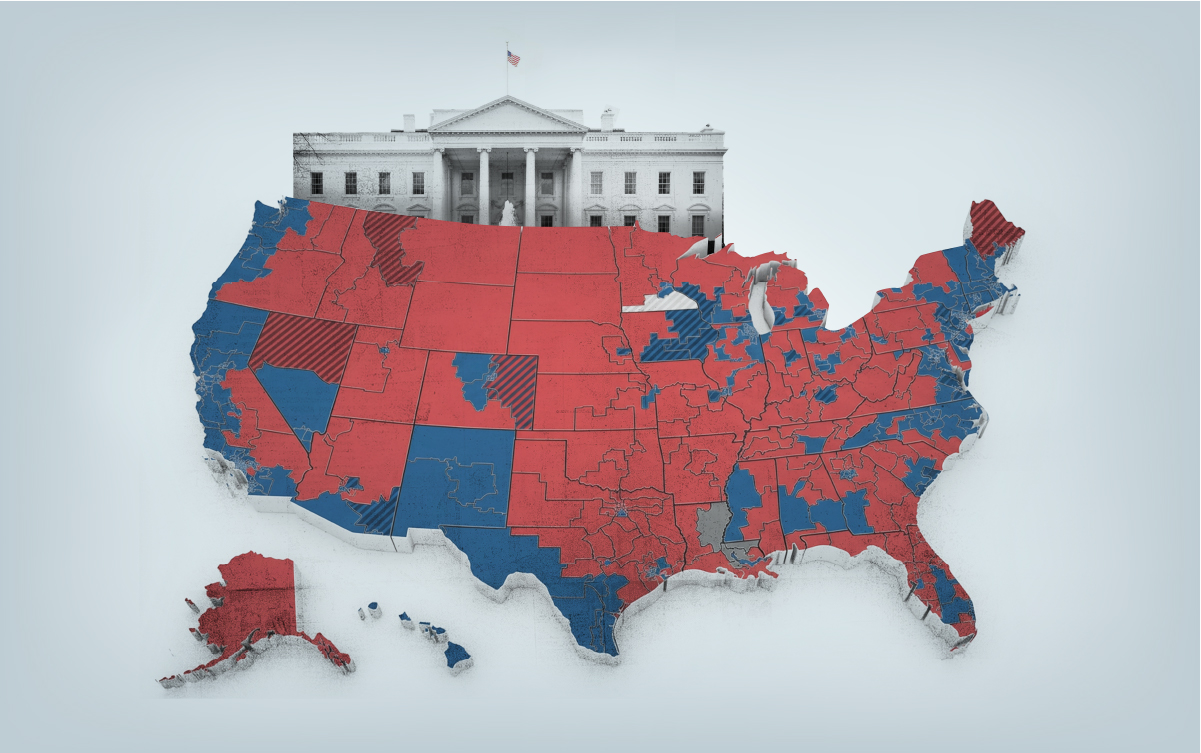
And yet, despite all this, it may be, too, that Trump finds himself constrained in his policy toward Europe. A Democratic-controlled US Congress will issue a steady stream of resolutions and legislation, some including budgetary controls, in support of transatlantic partnership and Ukrainian sovereignty. They may even hope to override presidential power on sanctions relief for Russia, in the spirit of the bipartisan, September 2026 Lindsey O. Graham Sanctioning Russia and Iran Act. On tech, many Democrats campaigned for AI guardrails and a pause on data centres; they may be less interested in punishing the EU than in learning from its experience in implementing the AI Act and other laws. And they will almost certainly launch investigations into dubious dealings by the Trump administration with undemocratic foreign powers, with Trump’s China policy, in particular, now under fresh scrutiny following news of now-former Nvidia CEO Jensen Huang’s compromising affair with an alleged Chinese asset. The next Congress, led by a newly reprioritised House Select Committee on the Chinese Communist Party, may push back against what even many Republicans have felt to be a concerning dovishness on the part of the president — and find firm bipartisan ground in demanding a clearer US posture towards Beijing and more unequivocal support for Taiwan. Lawmakers across the spectrum may reassert the vital importance of European partnership in forging a united geopolitical front in this endeavour.
Democrats will need to pick their battles, of course. But so, too, will the president. It could be that Trump rather hones his energy in rallying support for unfettered frontier AI, for regime change in Cuba or for populist allies in Israel, Spain, France, Poland, Argentina or elsewhere — or in rallying antagonism, domestically, to universal health care or to amnesty for illegal immigrants. He may conclude that ratcheting up new trade threats against the EU or further undermining support for Ukraine bear a political cost he can less and less afford.
Such costs can be exacted in Senate confirmations. Several Cabinet seats are already reportedly in question — including for defence/war, commerce and state — whether (in the former two cases) from political pressure or (in the latter) from personal-political calculations. It is likely that Defence/War Secretary Pete Hegseth, who last week narrowly survived an impeachment attempt in the House, will face another in the new year — and one more likely to succeed, including perhaps even with support, in a Senate trial, from some Republicans. Though actually removing Hegseth, or any impeached Cabinet member, from office remains a very high bar, normally requiring 67 votes, such a spectacle would consume considerable capital and bandwidth for the administration. Trump could try to avoid political storms by firing embattled officials. But any permanent replacements will require majority support from a Democrat-controlled Senate strongly defensive of Ukraine and vocal in its support for NATO, transatlantic partnership, international law and human rights. Democratic senators will feel they have a clear mandate to press these points; nominees’ clear commitment to such values could indeed become the litmus test for any new confirmations.
What should European policymakers do? One obvious answer, of course, is to engage, especially with new Congressional members, committee chairs and caucus leaders. Another, even more fundamental, task is to continue the work of getting Europe’s own house in order — regardless of White House policy. Forging a clear, unified European voice in negotiations to end the Ukraine War is a good place to start.
ENJOYING THIS CONTENT?
Stay up to date by joining our database !