
Europe Cannot Afford Irrelevance and Must Facilitate Dialogue with Iran
15 April 2026

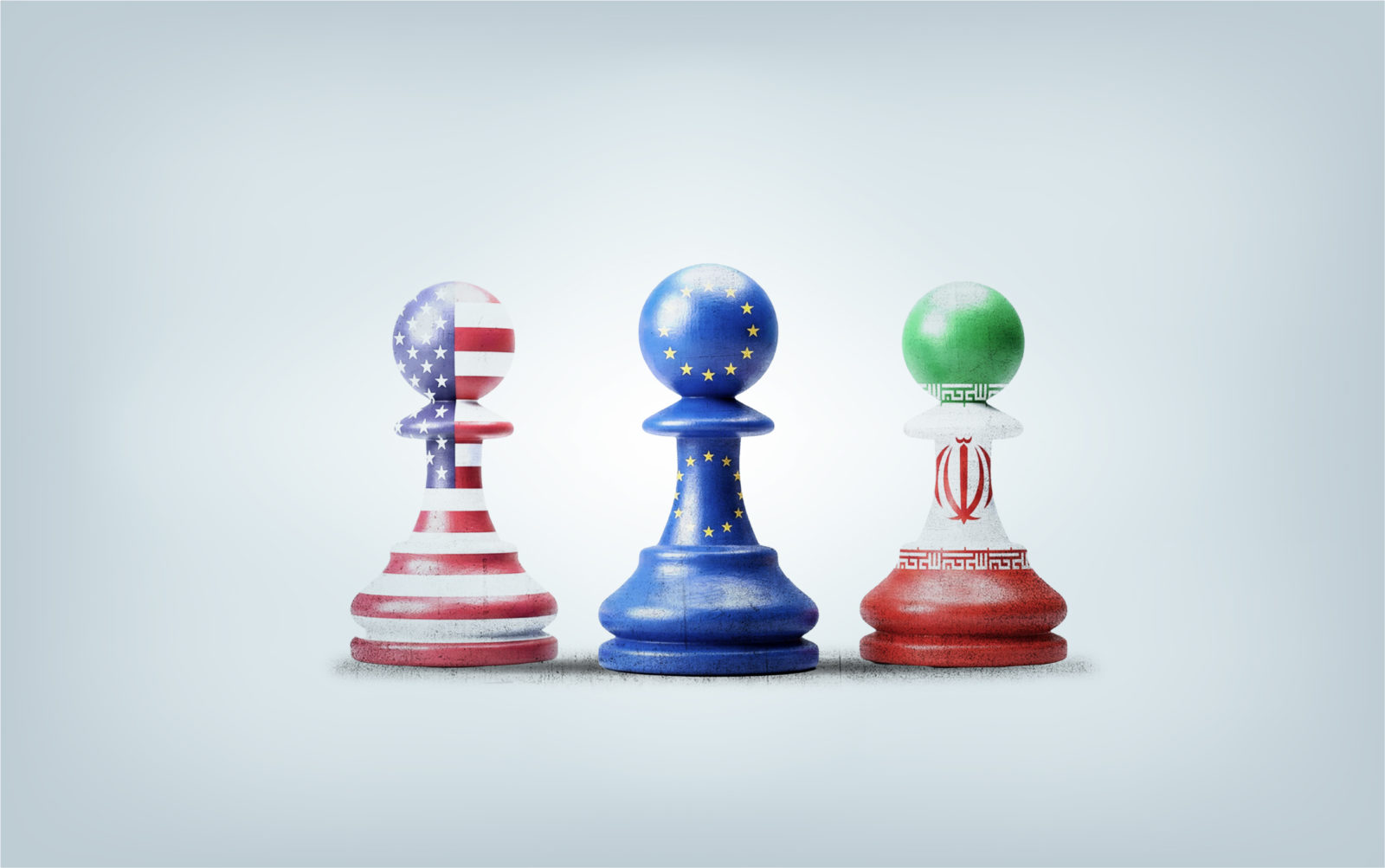
Europe finds itself in a poor position in the Iran War: deeply exposed to its consequences, unable to shape direction. Fortunately, it still has choices, if only it can focus and shape events to its advantage. This situation is not a recent development. For several years now, Iranian officials have treated Europe, and in particular, France, Germany, and the United Kingdom (E3), as marginal actors in its nuclear tussle with the outside world. That judgment has merit and reflects a practical reality: Europe neither delivered meaningful economic relief nor offered a useful diplomatic channel distinct from Washington. Aligned too closely with US policy, but not influential enough to affect it. Europe is now in the worst of both worlds: exposed without agency.
This outcome is the result of a sequence of unwise choices, not a single failure. After the US withdrawal from the nuclear agreement in 2018, Europe boldly claimed it would preserve a distinct track of strategic autonomy, but failed to deliver. Regrettably, there has never been an honest evaluation of this gap between ambition and delivery. For a brief period in 2018 and 2019, that claim had some credibility. The E3 were still seen in Tehran as potential guarantors of limited economic and diplomatic space if they could mobilise. What emerged instead was a consistent pattern: when faced with real costs and US threats, European capitals chose to hedge time and time again. They spoke the language of autonomy while avoiding the decisions required to deliver it. Numerous warnings that this would eventually erode leverage and credibility were ignored; the time was never right to act decisively nor independently. Eventually, that retreat hardened into de facto alignment with Washington’s aggressive stance, culminating in the snapback of European sanctions and the effective absorption into Trump’s Maximum Pressure framework last year. That campaign, launched in 2018, with little respite during the Biden term, relied on sustained economic warfare to force Iranian concessions that never emerged. Instead, it contributed to escalation towards war as Europe also abandoned constructive dialogue with Iran, reimposed sanctions, and followed Washington.
The consequences for Europe are before us. Instability in the Middle East feeds immediately into energy markets, risks mass migration, soaring fertiliser prices, and inflationary pressures. At the same time, limited European military resources are drawn into peripheral contingencies while threats closer to home remain unresolved. Europe is therefore not an external observer. It is a stakeholder without a meaningful role in shaping outcomes. Recent efforts reflect this imbalance – the British-led initiative to assemble a coalition to reopen the Straits of Hormuz is an attempt to address a real problem. Unfortunately, it is likely to prove unworkable. The operating environment in that waterway favours anti-access and area-denial capabilities, including mines, drones, and missile systems, making sustained forcible reopening exceptionally difficult. Europe would be better served by directing political capital towards recommencing dialogue than towards coercive projects with limited prospects of success.
Europe has compounded its position through inconsistency. Its credibility rests on the consistent application of principles, particularly international law. However, its recent record is profoundly uneven. Categorical in judgement when condemning adversaries, largely mute when allies are involved. This is not a marginal issue – states do not trust intermediaries whose standards appear to shift depending on the actor involved.
Reversing this perception now requires pragmatism in a useful direction – towards the negotiating table. That begins with re-establishing effective channels of dialogue with Iran. This is not a concession; however, it is a minimum prerequisite for influence, which Europe cannot have unless it is also at the table. Without engagement, there is no role and Europe remains a hapless spectator. Europe should develop Track 2 engagement, complementary to existing mediation efforts, including the Pakistani channel that secured the recent ceasefire. Multiple channels are not a weakness if they are aligned in productive, coherent direction. They create resilience if primary negotiations stall. France is best placed to lead the effort – it has the strongest predisposition towards talking, as demonstrated again recently in Lebanon, and is resilient to criticism when talking is the best course of action. While Europe cannot return to the peak position it held in 2018, it can begin to recover the direction it abandoned with myopic hedging. The alternative is clear: exposure without influence, a passive role defined by others. No, Europe cannot afford irrelevance and must facilitate dialogue.
ENJOYING THIS CONTENT?

-
“The Iran Knot”: How the War Exposed Italy’s Middle Power Dilemma
Blog
06 Jul 2026
-
What is Europe’s Role in the Middle East Crisis – Global Perspectives Ep1 with Marwan Abdallah
Multimedia - Podcasts
27 May 2026
-
Is UK’s cautious Iran’strategy paying off? I Bridge the Channel Ep.23
Bridge the Channel - Multimedia
30 Mar 2026
-
Iran’s Attacks on the GCC: A Strategic Opening for Europe
Blog
13 Mar 2026
-
China, the EU… and Starmer’s Future I Bridge the Channel Ep.22
Bridge the Channel - Multimedia
25 Feb 2026
-
Values-Based Realism and Its Enemies: How to Tackle the new Geopolitical ‘Realism’ from Left and Right
Blog
24 Feb 2026
-
Elections in Japan: What Takaichi’s Supermajority Means for Strategic Realities in the Indo-Pacific
Blog
10 Feb 2026
-
Europe’s Security Future Hinges on Ukraine’s Innovation
Blog - Ukraine
05 Feb 2026
-

From Partner to Problem – How Trump’s Foreign Policy is Reshaping the World Order
Blog
22 Jan 2026
-
Flight 93, the Donroe Doctrine, and Gunboat Diplomacy
Blog
15 Jan 2026