

Europe’s Security Future Hinges on Ukraine’s Innovation
05 February 2026

Ukraine’s Innovation Edge
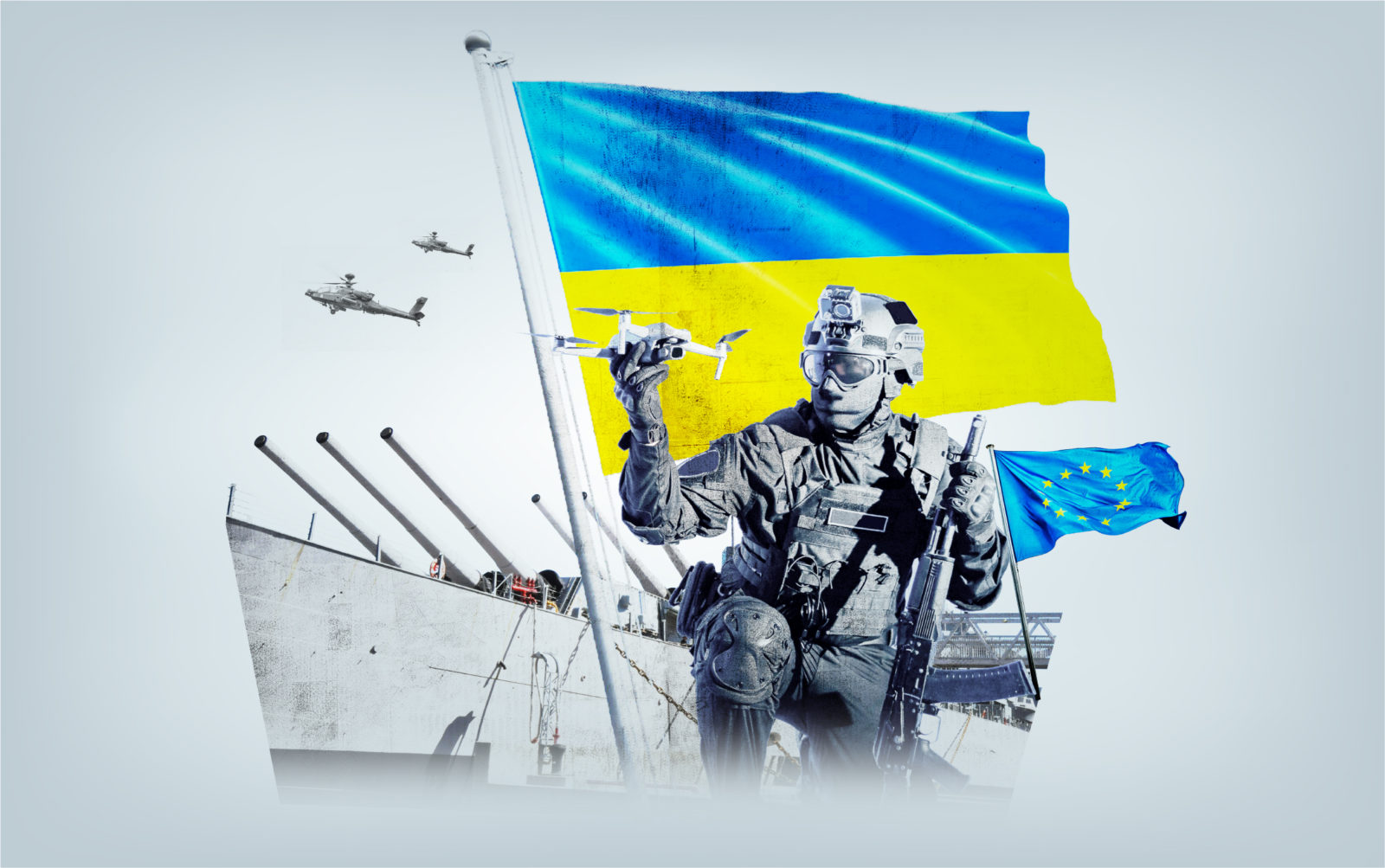
Soon entering the fifth year of Russia’s brutal full-scale invasion, Ukraine’s defence industry has emerged as one of the most innovative and dynamic in the world. Under the immense pressure of a war of attrition and the persistent shortage of conventional Western weapons, Ukrainians have mobilised one of their nation’s greatest assets – ingenuity.
Since 2022, Ukraine’s defence technology sector has grown by 218%, with revenues projected to reach €4 billion in 2025. Annual defence spending has averaged roughly €54 billion – an extraordinary 35% of GDP. One of its key advantages lies in the speed at which new technologies are tested in combat conditions, refined, and redeployed, creating a decisive competitive edge on the battlefield.
Ukraine has established leadership in autonomous warfare through the development of aerial, naval, and ground drones, recently complemented by subsea unmanned vehicles – a capability likely to reshape seabed warfare globally. Long-range strike platforms, cruise missiles, aerostat systems, and advanced surveillance technologies further demonstrate the sector’s sophistication.
Perhaps most notably, Ukraine has become a global leader in defence AI. Artificial intelligence enables complex operations behind enemy lines, coordinating drone swarms to target strategic assets deep inside Russia. AI-driven ISR (intelligence, surveillance, reconnaissance) and command-and-control systems enhance battlefield decision-making, allowing Ukraine to maximise the effectiveness of limited hardware and ammunition.
Europe’s Security Shift
Russia, however, has proven equally adaptive. It has outpaced Ukraine in deploying fibre-optic drones – less manoeuvrable but highly resistant to electronic warfare. Moscow’s electronic warfare capabilities remain formidable on a strategic scale, as evidenced by recent interference affecting European satellite infrastructure. This is an area where EU states must urgently strengthen Ukraine’s capabilities to counter a shared threat.
It is now widely accepted that Ukraine is fighting not only for its own survival but for Europe’s security. Brussels is increasingly focused on drawing lessons from the war and preparing for a future defined by asymmetric, technologically advanced conflict — particularly at a time when the American security umbrella can no longer be taken for granted. The possibility of a reduced US military presence in Europe places additional responsibility on European capitals.
The EU is exploring mechanisms that could resemble a European equivalent of NATO’s Article 5, as noted by Defence Commissioner Andrius Kubilius. Security decision-making is already concentrated among the so-called E5 – Germany, France, the UK, Italy, and Poland – and Brussels is considering how this framework might underpin a new continental security architecture.
Discussions around a European army, once politically unthinkable, are resurfacing. The failed European Defence Community of 1954 sought strategic autonomy but collapsed amid fears of rearming Germany too soon after the Second World War. Today’s geopolitical fragmentation gives renewed relevance to the concept. Yet building such a force would take decades – time Europe does not have.
A more immediate step would be to integrate the continent’s most battle-hardened nation into emerging security structures. Ukraine should be invited to join a proposed European Security Council alongside key non-EU partners such as the United Kingdom and Norway. Such a body could guide defence innovation strategy and adapt Europe to the realities of multidomain warfare.
Ukraine’s participation would accelerate knowledge transfer, provide access to cutting-edge technologies and intellectual property, and allow European militaries to learn directly from some of the world’s most experienced combat forces.
A New EU–Ukraine Defence Partnership
On a practical level, European-Ukrainian defence cooperation must deepen. The Joint White Paper on European Defence Readiness 2030 laid the groundwork for integrating Ukraine into the European Defence Technological and Industrial Base. Meanwhile, the Security Action for Europe (SAFE) initiative – offering up to €150 billion in loans – allows Ukrainian manufacturers to participate in joint procurement, supply chains, and joint ventures, marking an unprecedented level of cooperation.
The EU Defence Innovation Office in Kyiv is now operational, and the EU-Ukraine Task Force on Defence Industrial Cooperation has already convened in Brussels. These are important steps – but they must be matched by dynamic follow-ups.
Europe’s foremost priority should be enabling Ukraine to sustain its defence effort by directly supporting its industrial base. Ukraine’s defence tech capacity is estimated at €35 billion, yet only around €8 billion is currently financed. Kyiv has signalled readiness for joint production, foreign investment, technology transfers, and localisation of Western manufacturing.
While companies such as KNDS, BAE Systems, Rheinmetall, FFG, Kongsberg, and Saab have established a presence in Ukraine, a more systematic approach is required. Helping drive investment into defence start-ups is key to unlocking and scaling innovation. One of the first successful examples of joint ventures is the partnership between Ukrainian Frontline Robotics and German Quantum Systems to manufacture about 10,000 drones a year at a new factory in Bavaria.
EU-Ukraine defence cooperation has advanced significantly in recent years. Given persistent Russian aggression, the expanding use of hybrid warfare, and uncertainty surrounding transatlantic unity, this convergence is not optional – it is a strategic necessity.
While the mechanisms are in place, implementation must accelerate. Europe cannot afford to move at a glacial pace if it intends to remain a consequential global actor. By integrating Ukraine’s defence innovation, AI capabilities, and combat-tested military into a new security architecture, Europe has a rare opportunity to reinforce its resilience and reclaim strategic weight in an increasingly contested world.
ENJOYING THIS CONTENT?
Related publications
-
Preparing the Private Sector in the Western Balkans and Ukraine for EU Integration: Unlocking the EU Before Accession Through Early Engagement
24 September 2026
-
Why the EU and India Must Shape AI Together
14 September 2026
-
From Rupture to Resilience: Middle Power Dynamics in EU–ASEAN Cooperation
24 August 2026

-

Reset or Restart? Andy Burnham’s EU Challenge – Bridge the Channel
Bridge the Channel
27 Jul 2026
-
Decoding Sovereignty, Defence, Competitiveness: Democratic Resilience as the Key to Success
Blog
27 Jul 2026
-

“The Iran Knot”: How the War Exposed Italy’s Middle Power Dilemma
Blog
06 Jul 2026
-
Defence Readiness 2030 Requires More Than Higher Defence Spending
Blog
23 Jun 2026
-

Europe Cannot Afford Irrelevance and Must Facilitate Dialogue with Iran
Blog
15 Apr 2026
-
Is UK’s cautious Iran’strategy paying off? I Bridge the Channel Ep.23
Bridge the Channel - Multimedia
30 Mar 2026
-
Iran’s Attacks on the GCC: A Strategic Opening for Europe
Blog
13 Mar 2026
-

China, the EU… and Starmer’s Future I Bridge the Channel Ep.22
Bridge the Channel - Multimedia
25 Feb 2026
-

Values-Based Realism and Its Enemies: How to Tackle the new Geopolitical ‘Realism’ from Left and Right
Blog
24 Feb 2026
-

Elections in Japan: What Takaichi’s Supermajority Means for Strategic Realities in the Indo-Pacific
Blog
10 Feb 2026