

Flight 93, the Donroe Doctrine, and Gunboat Diplomacy
15 January 2026

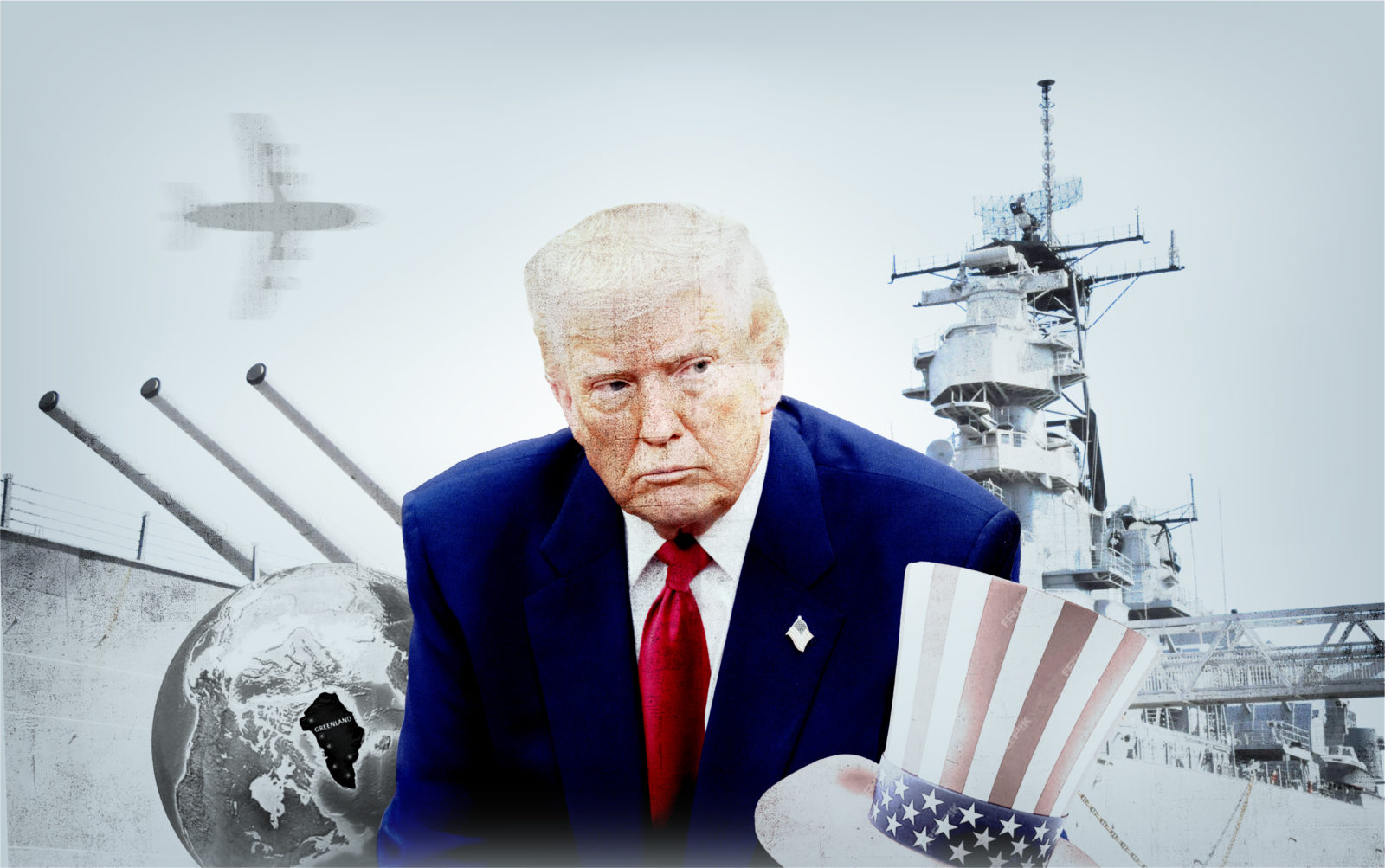
In 2016, before the US presidential election that brought Trump’s first term, Michael Anton, a conservative thinker and senior fellow at the Claremont Institute, published an article under the alias Publius Decius Mus, titled “Flight 93 Election.” Michael Anton’s article played a crucial role in convincing conservatives of the new American right, as well as the broader conservative establishment, to abandon their reservations and rally around Trump’s candidacy.
Anton’s argument to conservatives was that Trump may not have been the ideal candidate for the conservative counter-revolution, but he was aligned with their key priorities. He advocated economic nationalism, secure borders, and a foreign policy that prioritised America. Anton urged America’s serious conservative intellectuals to engage in political activism using an emotionally charged metaphor. He urged conservatives to charge the cockpit of the “American aircraft” together with Trump, just as the passengers of the ill-fated Flight 93 did on September 11, to take control and dismantle the ideological hegemony of the liberal left. “If he fails, they may not deserve the fate that will befall them, but they will suffer it regardless”. But if he succeeds, we will have a “second American Revolution that restores Constitutionalism, and limited government…”
The US National Security Strategy, published by the Trump administration in early December, exceeded the expectations of the new American right. It was a revolutionary document that completely overturned the post-war “rules-based” international order established by America, which was abided, in its basic tenets, by Democratic and Republican administrations until Trump. This text revived nationalism in the face of globalisation and economic mercantilism, declared war on immigration, and signalled America’s isolation in the Western hemisphere.
Maduro’s abduction and his transfer to American justice had all the ingredients of the new US Security Strategy. This was a unilateral action taken without convening the United Nations Security Council and without consulting either the Organization of American States or even America’s allies. It signaled the return to the realpolitik of the 19th century, gunboat diplomacy, spheres of influence, and a world where might is right. In domestic politics, the complete disregard for Congressional oversight of an act of war demonstrated the erosion of institutional checks and balances and the complete dominance of the executive branch. In other words, a drift to what Arthur Schlesinger identified as the excessive growth of presidential power beyond constitutional limits, the “Imperial Presidency”.
The dictator’s removal from power was not done to restore democracy. Trump’s statements showed that the form of the regime is not as important as its obedience to the Trump administration. Furthermore, Maduro’s removal was not only about combating drugs or grabbing Venezuela’s oil. It was a policy designed to assert American hegemony throughout the region. Hegemony in the Western Hemisphere, the Donroe Doctrine, as Trump himself called it, is the Monroe Doctrine with the addition of the “Roosevelt Corollary”, in an extreme Trumpian version.
The Monroe Doctrine of 1823 was a defensive policy by a newly formed state seeking to protect its interests in the wider region from the European colonial powers. In 1904, Theodore Roosevelt transformed the Monroe Doctrine into a doctrine of interventionism. Under the “Roosevelt Corollary”, the United States could intervene militarily in the Western Hemisphere to restore order and protect its interests. From a policy designed to exclude European powers from the Western Hemisphere, the Monroe Doctrine became the vehicle for American interventionism in Latin America. In its Trumpian version, the “Donroe Doctrine”, America proclaims that it will act unhinged in its hemisphere, from immigration and the war on drugs to the management of natural resources, regime change, renaming geographical sites, and even the annexation of territories.
America’s policies in its hemisphere revive imperialist and neo-colonial practices and divide the international chessboard into spheres of influence among the US, Russia, and China. If Venezuela, and tomorrow Greenland, are Trump’s Georgia and Ukraine, Taiwan could later be Xi’s Venezuela, and Moldova could be Putin’s Greenland.
The insistence of the Trump administration on its claims on Greenland, in particular, will test the already strained Euro-American relations and will undermine the solidarity of NATO.
European-American relations have already been tested on a number of issues from tariffs, to defense expenditures in NATO, the “burden sharing” issue, and support for Ukraine. Furthermore, the Trump administration has missed no opportunity to show its contempt for the European Union, whether in the form of Vance’s admonitions, the support of like-minded right-wing political forces in Europe, or the condescending view of Europe in the US National Security Strategy. Trump’s aversion to institutions, norms and procedures has amounted to a frontal attack on the very existence of the European Union. European leadership has responded by appeasing and cajoling Trump in an effort to salvage the Transatlantic Alliance. But sooner or later, it will have to face harsh realities. Europe was the cornerstone of the rules-based post-war international order, which the Trump administration has chosen to upend. The Trump administration is keen to a rapprochement with Russia even at the expense of its European Allies. Europe cannot depend on the American security guarantee anymore. We have returned to an international order of great power antagonism. That means that if a European version of De Gaulle’s “all-azimouth” strategy might be “a bridge too far”, certainly, European strategic autonomy has been long overdue.
In Europe, we need to realise that Trump’s foreign policy is revolutionary, and the new Security Strategy and the “Donroe doctrine” have unleashed forces that threaten to bring about a domino of uncontrollable geopolitical developments.
ENJOYING THIS CONTENT?



-
“The Iran Knot”: How the War Exposed Italy’s Middle Power Dilemma
Blog
06 Jul 2026
-
Taiwan, Trump, Xi and Europe’s Strategic Interests
Blog
20 May 2026
-

Europe Cannot Afford Irrelevance and Must Facilitate Dialogue with Iran
Blog
15 Apr 2026
-
Is UK’s cautious Iran’strategy paying off? I Bridge the Channel Ep.23
Bridge the Channel - Multimedia
30 Mar 2026
-
Iran’s Attacks on the GCC: A Strategic Opening for Europe
Blog
13 Mar 2026
-
China, the EU… and Starmer’s Future I Bridge the Channel Ep.22
Bridge the Channel - Multimedia
25 Feb 2026
-
Values-Based Realism and Its Enemies: How to Tackle the new Geopolitical ‘Realism’ from Left and Right
Blog
24 Feb 2026
-

Elections in Japan: What Takaichi’s Supermajority Means for Strategic Realities in the Indo-Pacific
Blog
10 Feb 2026
-

Europe’s Security Future Hinges on Ukraine’s Innovation
Blog - Ukraine
05 Feb 2026
-
2026: The Year Trump Tests Britain’s Limits | Bridge the Channel Ep21
Bridge the Channel - Multimedia
27 Jan 2026