

 Loading...
-
Across Europe and the wider West, parliamentary democracy is under growing strain. What once appeared as the most stable and self-evident form of democratic governance is increasingly contested—not only from without, but from within.
The signs are varied but convergent: rising ideological polarisation, mounting dissatisfaction with representative institutions, and a growing fascination with direct or plebiscitary forms of democracy—perhaps most tragically embodied by a mob’s assault on the US Capitol on January 6, 2021. These developments unfold in a broader geopolitical and economic context that favours executive power: successive crises, geopolitical competition, rising protectionism and disruptive technologies all reward speed, centralisation and decisiveness over deliberation.
At first sight, the complexity of the EU’s multilevel polity should make these challenges even more intractable for the European Parliament than for national legislatures. Yet, somewhat unexpectedly, the opposite holds. On closer inspection, the European Parliament appears in several respects better placed than many national parliaments.
It enjoys significant political autonomy from the executive. Somewhat paradoxically, given its lack of a formal right of legislative initiative, it retains a genuine role as co-legislator—one increasingly constrained in many national systems. And despite growing fragmentation, it has preserved a remarkable capacity for cross-party cooperation and majority-building.
Yet the European Parliament is not insulated from the structural pressures reshaping parliamentary democracy across the West. In the decades ahead, its ability to thrive will depend on its capacity to contain three major risks that affect all parliaments, but may manifest themselves with particular intensity at the European level.
The first is executive dominance. Over the past decade, successive crises—from financial instability to pandemics and geopolitical shocks—have shifted decision-making towards executive actors at both national and European levels. Within the EU, emergency instruments and large-scale spending programmes—from the European Stability Mechanism to the European Peace Facility and the decisions taken under the so called ‘emergency clause’ of Art.122 TFEU—have often been designed and implemented with limited or no parliamentary involvement. These pressures are unlikely to recede. In a world of permanent urgency, deliberation risks giving way to ratification.
The second risk is technocratic policymaking. Owing to design features that can be traced back to the High Authority of the European Coal and Steel Community, a strong technocratic dimension has always characterised the EU. Ongoing transformations in areas such as digitalisation and climate policy, marked by increasingly complex regulatory regimes, are likely to reinforce this tendency. Over the past fifteen years, some of the most significant attempts to counterbalance it have come from the Parliament itself, notably through efforts such as the Spitzenkandidaten process, aimed at linking electoral outcomes more directly to the Commission’s political direction. Yet the underlying tension between technocracy and politicisation is likely to remain a structural feature of the coming decades.
The third risk is the combination of populist polarisation and cultural disembeddedness. Demographic change, migration and broader processes of fragmentation are reshaping the constituencies to which parliaments respond. Political competition is becoming more adversarial and performative, less oriented towards compromise.
The danger is the emergence of “performative parliaments”: institutions in which grievances are expressed but rarely translated into durable outcomes. Given the diversity it must represent and the growing presence of anti-system forces within it, the European Parliament may face this challenge even more acutely than many national parliaments.
Crucially, these risks are not separate, but mutually reinforcing. Complexity strengthens technocratic governance; technocracy shifts power towards executives; and both dynamics fuel political disaffection and populist mobilisation. It is no coincidence that many scholars now speak of “technopopulism”.
Taken together, these trends raise serious concerns about the future of the European Parliament—and of parliaments more broadly. There is a real risk that, while retaining formal powers, parliaments evolve into either performative arenas, where conflict is staged but not resolved, or into validators, where decisions taken elsewhere are simply endorsed.
If the European Parliament is to remain a strategic actor—capable not only of representing and deliberating, but also of shaping long-term direction—it will need to adapt.
Despite the progress of recent decades, it must further strengthen its institutional identity and administrative capacity. But institutional strength alone is not enough. It must be sustained through renewed cross-party cooperation willing, when necessary, to place institutional interests above narrow partisan considerations. This reflex has been central to the Parliament’s long evolution from consultative assembly to co-legislator.
Ultimately, however, parliaments stand and fall on the strength of political parties as transmission belts between citizens and institutions. Here lies perhaps the most underdeveloped aspect of the EU’s democratic architecture. European political parties remain comparatively weak and insufficiently rooted.
Strengthening them may yield the highest returns for European democracy. Otherwise, their weakness risks becoming the Achilles’ heel of the entire system.
The European Parliament’s relative strength today should not breed complacency. It should be seen as an opportunity—and a responsibility—to ensure that parliamentary democracy in Europe remains not only formally intact, but also substantively meaningful in the decades to come.
Federico Ottavio Reho Democracy EU Institutions European Parliament

Federico Ottavio Reho
The European Parliament’s Quiet Advantage—and Its Strategic Test
Blog
28 Jul 2026
-
This research paper argues that there is no single preferred way to involve national parliaments in EU democracy, but rather several. The diversity of experiences in the 27 member states makes it possible to identify certain best practices that go beyond a purely passive role of approving treaty changes and validating European secondary legislation. The paper highlights them by presenting a number of case studies that are emblematic in both their legal and political dimensions. The six cases focus on the drivers of successful parliamentary oversight procedures on the Executive on EU affairs; the direct and systematic involvement of national parliaments’ officials at the EU level; the ‘right’ of national legislatures to access information on EU dossiers and decision-making processes; the regular scrutiny of the European Council’s activities in domestic parliaments; the permanent involvement of Members of the European Parliament in the relevant EU activities carried out by the legislature of their country of election; the setting up of effective mechanisms of interparliamentary cooperation, drawing on the example of Europol. The study covers a variety of parliaments: in particular, the Danish, the Finnish, the German, the Hungarian, the Italian, the Spanish, and the Swedish Parliaments, while considering, of course, also the European Parliament into the picture. Each practice identified has been associated with one or two specific parliamentary assemblies to better understand their rationales and procedures.
EU Institutions EU Member States European Parliament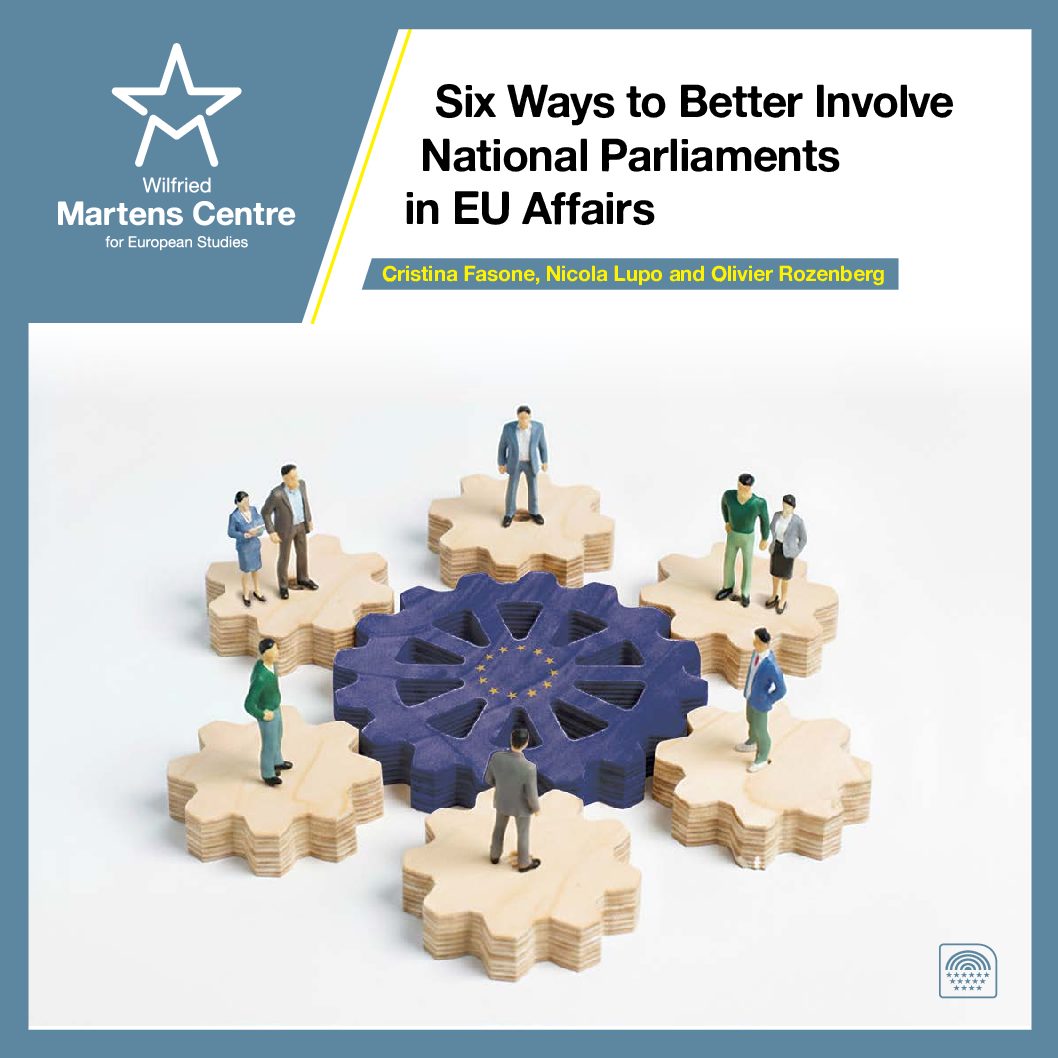
Six Ways to Better Involve National Parliaments in EU Affairs
Research Papers
09 Mar 2026
-
The European Parliament, with its predecessor being the Common Assembly of the European Coal and Steel Community, has a long history. It is one of the oldest community institutions, together with the High Authority, now known as the Commission; the Council of Ministers; and the European Court of Justice. From the very beginning, Christian Democrats, conservatives, socialists, Social Democrats and liberals from the founding member states advocated establishing a European parliamentary system with its own budget and specific procedures.
Over the course of time, a range of efforts and numerous initiatives by various parliamentary groups have forced the heads of state and government to grant the EP ever more rights. Even before the first direct elections in 1979, the representatives had already achieved respectable successes. The close cooperation of the groups across the political and ideological divides has been decisive, with there always having been a fundamental pro-European consensus among the Members of the European Parliament on the need for Europe’s unification. Both in the context of crises and in the course of the enlargements from 6 to 27 members, a growing number of tasks and challenges have not been able to be solved on a purely national level.
As a result, there has been a continual need to further legitimise decision-making through the introduction of increasingly democratic parliamentary processes; this has enabled the EP to acquire more and more opportunities for co-decision. During this process, European Christian Democrats, in particular, have played a major role. In the face of the recent onslaught from EU opponents and populists, the European People’s Party has held the European flag high, while also defending and strengthening the EP, the development of which represents one of the greatest achievements of European unification.
This paper attempts to periodise this evolution of the Parliament.
EU Institutions European Parliament
From Mandated to Representative Democracy: European Parliamentarism From 1952 to 2024
Research Papers
28 Nov 2025
-
In 1999, the European People’s Party (EPP) emerged as the largest political group in the European Parliament, maintaining its dominance for more than 25 years and influencing the direction of the EU through five consecutive Presidencies of the European Commission.
This book presents memories from Prime Ministers, Presidents of EU institutions, Party Presidents and EPP officials. The book traces the pivotal moments in EU politics, from the EPP’s expansion to include conservative, liberal, and like-minded parties, particularly in Central and Eastern Europe, to the actual management of the new enlarged party.
This book sheds light on the EPP’s evolution, successes, and controversies through firsthand accounts, offering a comprehensive view of its impact on the European Union over the past quarter-century.
If you are interested in purchasing a physical copy of the book, you can do so by clicking here.
Democracy European Parliament European People's Party Leadership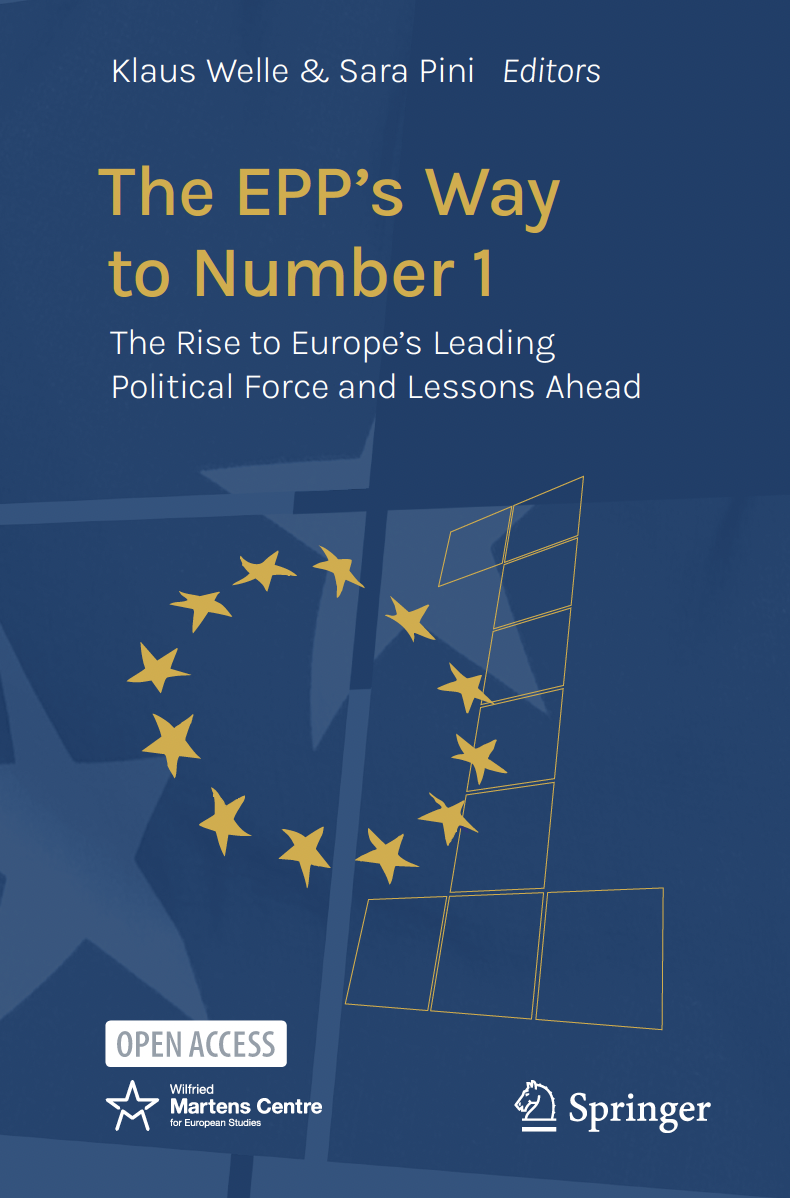
The EPP’s Way to Number 1
Other
20 Nov 2025