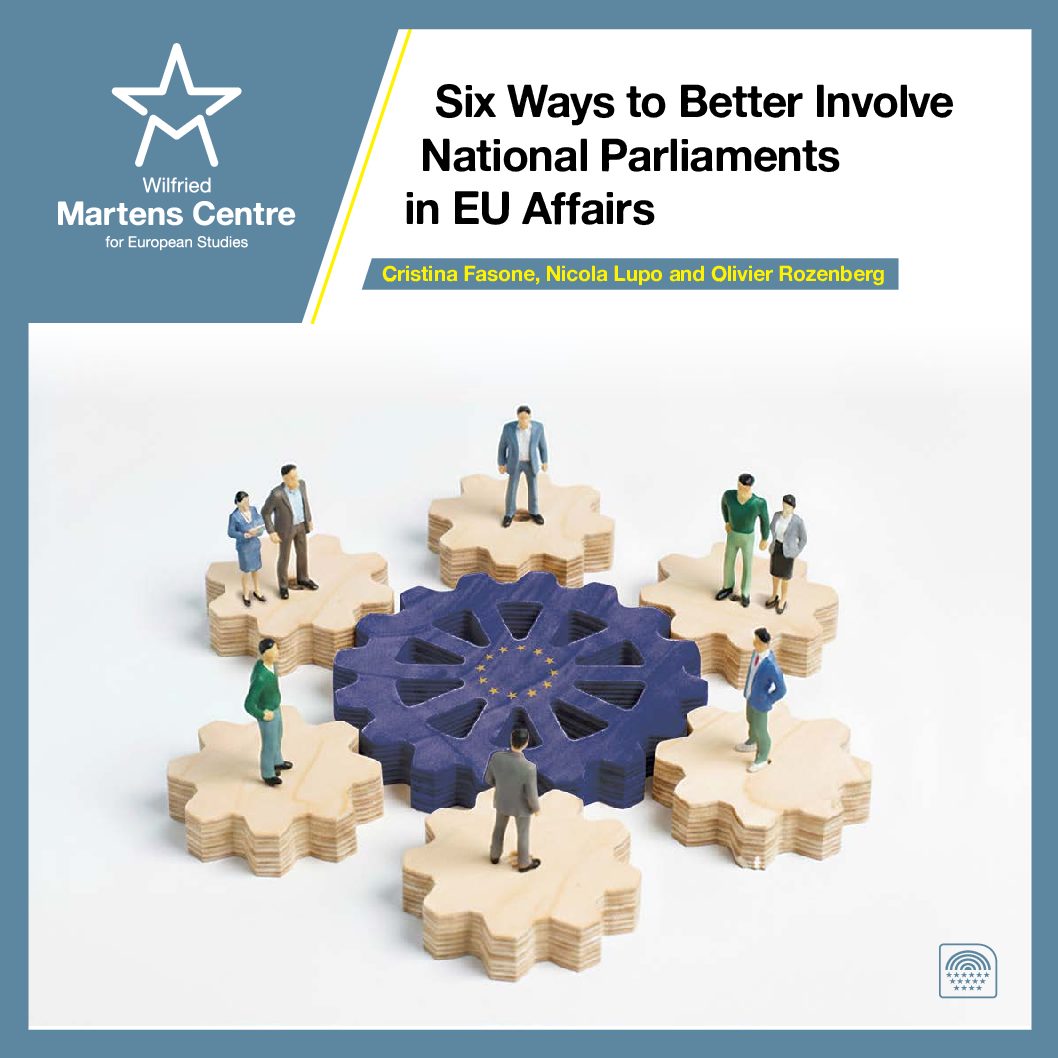
• This research paper argues that there is no single preferred way to involve national parliaments in EU democracy, but rather several. The diversity of experiences in the 27 member states makes it possible to identify certain best practices that go beyond a purely passive role of approving treaty changes and validating European secondary legislation. The paper highlights them by presenting a number of case studies that are emblematic in both their legal and political dimensions. The six cases focus on the drivers of successful parliamentary oversight procedures on the Executive on EU affairs; the direct and systematic involvement of national parliaments’ officials at the EU level; the ‘right’ of national legislatures to access information on EU dossiers and decision-making processes; the regular scrutiny of the European Council’s activities in domestic parliaments; the permanent involvement of Members of the European Parliament in the relevant EU activities carried out by the legislature of their country of election; the setting up of effective mechanisms of interparliamentary cooperation, drawing on the example of Europol. The study covers a variety of parliaments: in particular, the Danish, the Finnish, the German, the Hungarian, the Italian, the Spanish, and the Swedish Parliaments, while considering, of course, also the European Parliament into the picture. Each practice identified has been associated with one or two specific parliamentary assemblies to better understand their rationales and procedures.

    EU Institutions EU Member States European Parliament

    Six Ways to Better Involve National Parliaments in EU Affairs

    Research Papers

    09 Mar 2026

  • The European Parliament, with its predecessor being the Common Assembly of the European Coal and Steel Community, has a long history. It is one of the oldest community institutions, together with the High Authority, now known as the Commission; the Council of Ministers; and the European Court of Justice. From the very beginning, Christian Democrats, conservatives, socialists, Social Democrats and liberals from the founding member states advocated establishing a European parliamentary system with its own budget and specific procedures.

    Over the course of time, a range of efforts and numerous initiatives by various parliamentary groups have forced the heads of state and government to grant the EP ever more rights. Even before the first direct elections in 1979, the representatives had already achieved respectable successes. The close cooperation of the groups across the political and ideological divides has been decisive, with there always having been a fundamental pro-European consensus among the Members of the European Parliament on the need for Europe’s unification. Both in the context of crises and in the course of the enlargements from 6 to 27 members, a growing number of tasks and challenges have not been able to be solved on a purely national level.

    As a result, there has been a continual need to further legitimise decision-making through the introduction of increasingly democratic parliamentary processes; this has enabled the EP to acquire more and more opportunities for co-decision. During this process, European Christian Democrats, in particular, have played a major role. In the face of the recent onslaught from EU opponents and populists, the European People’s Party has held the European flag high, while also defending and strengthening the EP, the development of which represents one of the greatest achievements of European unification.

    This paper attempts to periodise this evolution of the Parliament.

    EU Institutions European Parliament

    From Mandated to Representative Democracy: European Parliamentarism From 1952 to 2024

    Research Papers

    28 Nov 2025

  • In 1999, the European People’s Party (EPP) emerged as the largest political group in the European Parliament, maintaining its dominance for more than 25 years and influencing the direction of the EU through five consecutive Presidencies of the European Commission.

    This book presents memories from Prime Ministers, Presidents of EU institutions, Party Presidents and EPP officials. The book traces the pivotal moments in EU politics, from the EPP’s expansion to include conservative, liberal, and like-minded parties, particularly in Central and Eastern Europe, to the actual management of the new enlarged party.

    This book sheds light on the EPP’s evolution, successes, and controversies through firsthand accounts, offering a comprehensive view of its impact on the European Union over the past quarter-century.

    If you are interested in purchasing a physical copy of the book, you can do so by clicking here.

    Democracy European Parliament European People's Party Leadership

    The EPP’s Way to Number 1

    Other

    20 Nov 2025