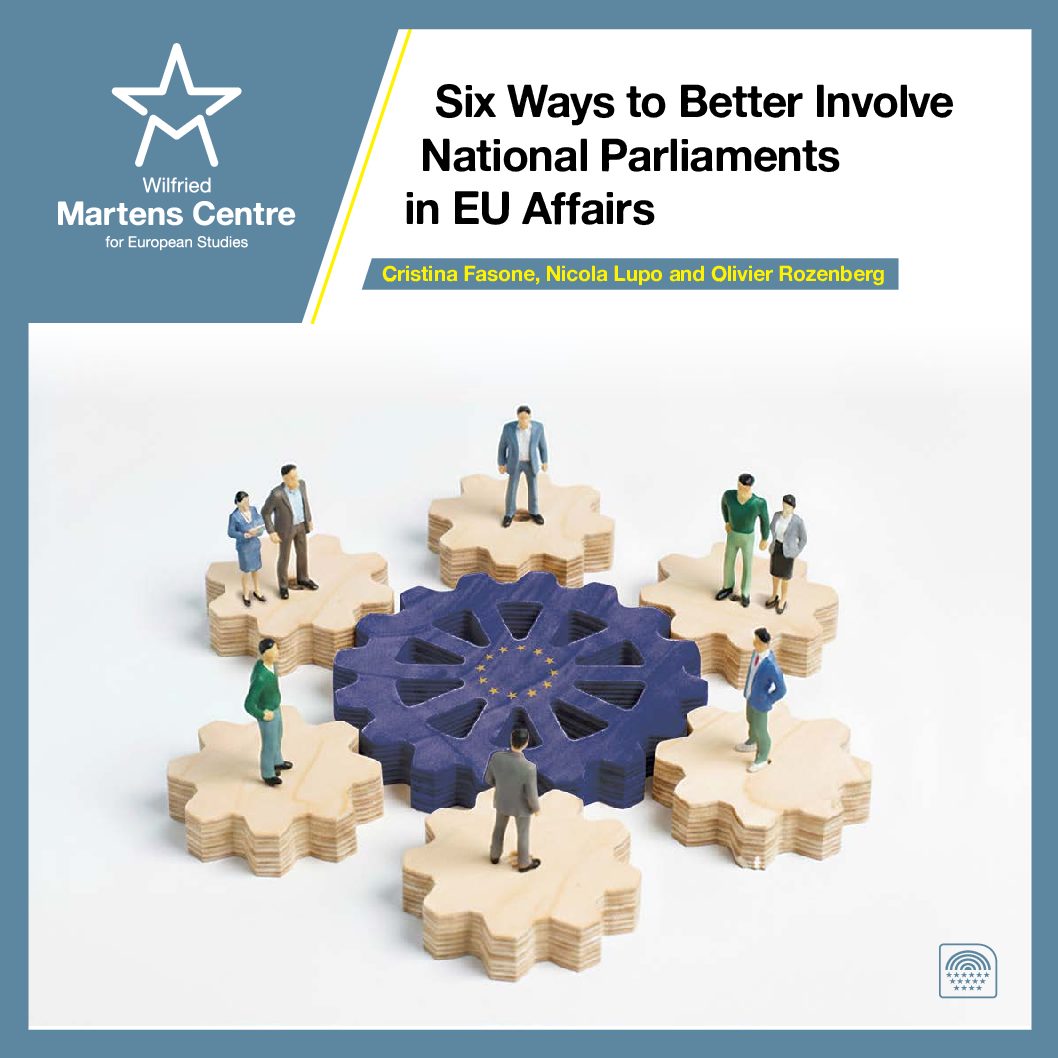

Six Ways to Better Involve National Parliaments in EU Affairs
09 March 2026
This research paper argues that there is no single preferred way to involve national parliaments in EU democracy, but rather several. The diversity of experiences in the 27 member states makes it possible to identify certain best practices that go beyond a purely passive role of approving treaty changes and validating European secondary legislation. The paper highlights them by presenting a number of case studies that are emblematic in both their legal and political dimensions. The six cases focus on the drivers of successful parliamentary oversight procedures on the Executive on EU affairs; the direct and systematic involvement of national parliaments’ officials at the EU level; the ‘right’ of national legislatures to access information on EU dossiers and decision-making processes; the regular scrutiny of the European Council’s activities in domestic parliaments; the permanent involvement of Members of the European Parliament in the relevant EU activities carried out by the legislature of their country of election; the setting up of effective mechanisms of interparliamentary cooperation, drawing on the example of Europol. The study covers a variety of parliaments: in particular, the Danish, the Finnish, the German, the Hungarian, the Italian, the Spanish, and the Swedish Parliaments, while considering, of course, also the European Parliament into the picture. Each practice identified has been associated with one or two specific parliamentary assemblies to better understand their rationales and procedures.
ENJOYING THIS CONTENT?
Stay up to date by joining our database !