Research Associates
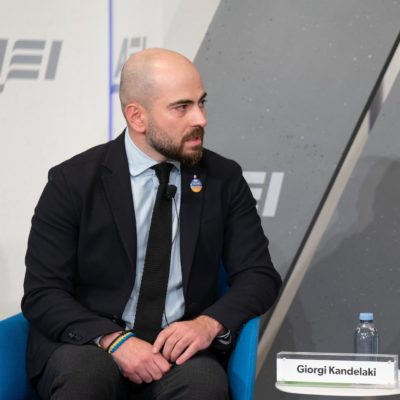
Giorgi Kandelaki
Giorgi Kandelaki served as a member of the Georgian Parliament from 2008 to 2020, where he specialised in foreign affairs and chaired, among other bodies, the Georgian delegation to the NATO Parliamentary Assembly. Active across various international fora, he was among the earliest to warn against Russian efforts to reverse the outcome of the Cold War. He also championed historical memory: on his initiative, the Georgian Parliament designated 25 February as the Day of Soviet Occupation of Georgia and 23 August, the anniversary of the Molotov–Ribbentrop Pact, as the Day of Remembrance of Victims of Totalitarianism; in 2012 he worked to transform the Stalin Museum in Gori into a Museum of Stalinism, a project halted by the Georgian Dream government in 2013; and in 2018 he introduced legislation to open the Soviet archives in full, rejected by the current Georgian government. Beyond foreign affairs, he contributed to the liberalisation of Georgia’s aviation market and proposed developing Kutaisi Airport into a hub for budget airlines, for which he received the Presidential Order of Excellence in 2013. Earlier still, he was a leading figure in the 1999 anti-corruption student campaign and co-founded the youth movement Kmara (“Enough”), which played a pivotal role in the 2003 Rose Revolution.
A historian by training, Kandelaki is today a project manager at the Soviet Past Research Laboratory (SovLab), a leading Georgian think tank dedicated to investigating Georgia’s Soviet totalitarian past and countering its weaponisation by Russian disinformation. He writes on the contemporary implications of that past and is regularly quoted on Georgian affairs in the national and international media. Most recently, he co-authored Abkhazia 1917–1921: Reconstruction of Memory, a scholarly volume challenging the ethnic paradigm through which Abkhazia’s history is understood, and he previously edited Georgia vs Joseph Stalin. His work is often cited in the international press; his recent research on Iranian influence in Georgia has been quoted by publications including the Washington Post and the Washington Examiner, and he was featured in the Netflix documentary series Turning Point: The Bomb and the Cold War (2024).