

Will Enlargement Make the EU More Competitive?
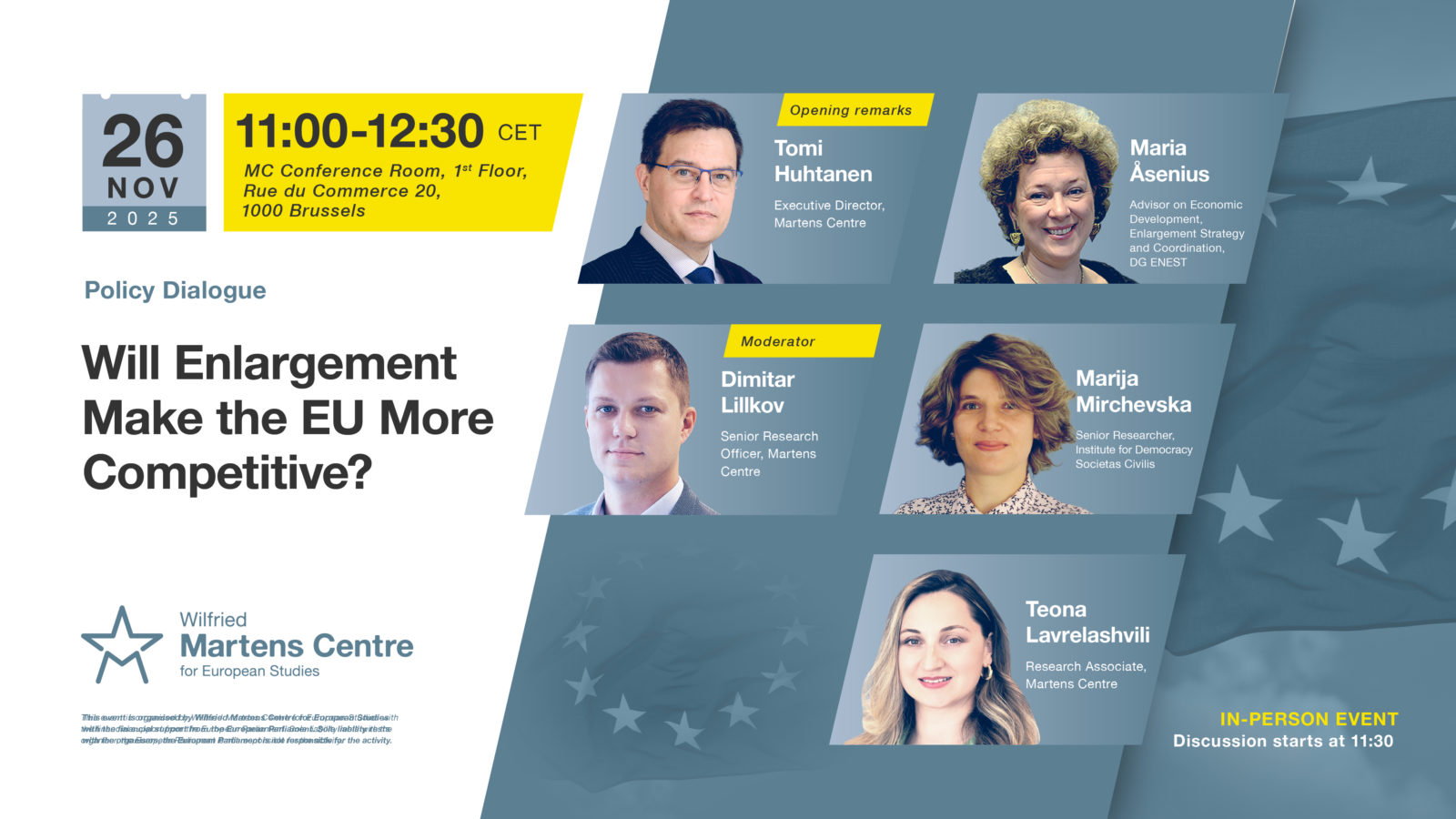
The debate on Europe’s competitiveness has taken on new urgency. With the 2025 update of the Draghi Report warning of persistent productivity gaps, skills shortages, and weak innovation, the EU faces a strategic dilemma: can enlargement help address these challenges – or will it create new economic and fiscal strains?
The next wave of enlargement, encompassing the Western Balkans, Ukraine, Moldova, and potentially Georgia, could reshape the Union’s economic geography. Integrating these economies would expand the Single Market by more than 60 million consumers, diversify supply chains, and potentially contribute to the renewal of Europe’s human capital through labour mobility and upskilling.
Yet important questions remain. The inclusion of less-developed economies could temporarily reduce the EU’s average GDP per capita and increase cohesion policy spending by an estimated 0.4–0.7% of EU GDP under the next Multiannual Financial Framework.
This policy dialogue will explore whether and under what conditions enlargement can become a net contributor to Europe’s competitiveness and will assess the potential gains and trade-offs of integrating new member states. We will discuss how to design enlargement so that it strengthens, rather than dilutes, Europe’s long-term economic resilience.
26 November 2025
Martens Centre HQ, Rue du Commerce 20, 1000 Brussels 11:00-12:30