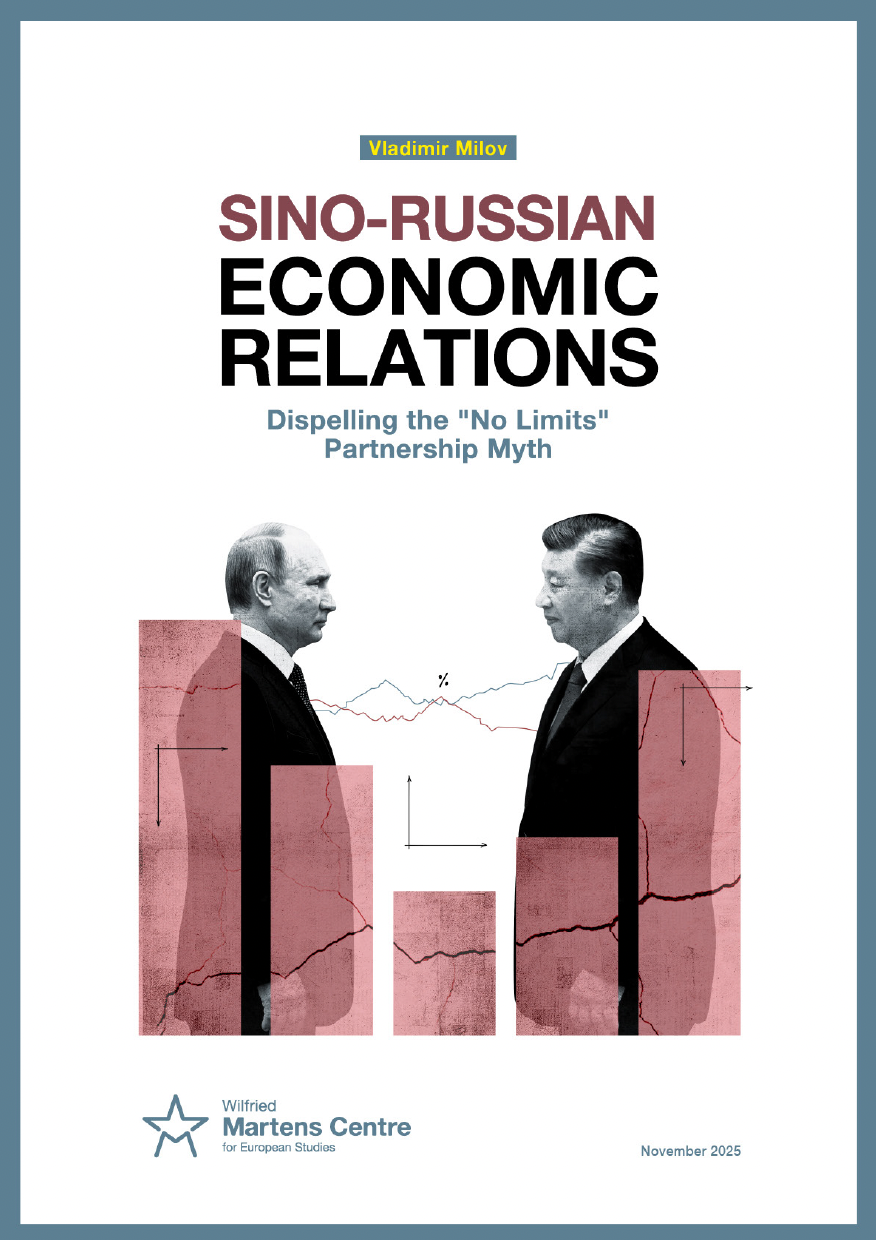

Sino-Russian Economic Relations: Dispelling the “No Limits” Partnership Myth
26 November 2025
For Vladimir Putin, China became the major economic lifeline since the beginning of Russia’s full- scale aggression against Ukraine in 2022. Chinese goods and technologies replaced lost access to Western technology imports, whereas Russian commodities banned by Western democracies flooded the Chinese market, providing Russia with much-needed export revenue. Both countries hold regular high-level summits, never missing an opportunity to stress the essentiality of their partnership to building a new, post-Western and post-democratic world.
However, underneath the PR surface of pompous summits and aggressive public promotion of a “no limits” partnership, clear constraints to a full-scale economic partnership emerge. China doesn’t seem to be interested in investing in Russia, in bailing the country out from its current economic woes, in sharing technology, and, more generally, in supporting Russia’s emergence as a competitor in the manufactured products markets. Russian producers also complain about competition with Chinese goods at the domestic Russian market, which has recently led to introduction of tough tariff barriers like a recycling fee for cars. Vital Russian commodities like coal or wheat face import tariffs or outright import bans in China. China doesn’t provide Russia with loans much needed to solve Russia’s budget and investment crises. Most of the major mutual projects, for which implementation was announced in the recent years, have been scrapped or are not really moving forward, with only a few exceptions.
To what extent are these problems complicating and limiting the development of Sino-Russian economic partnership? The current study considers these issues in more detail.
If you wish to watch our Thinking Talks interview with Vladimir Milov, discussing this paper and more, click here.
ENJOYING THIS CONTENT?
Stay up to date by joining our database !