
From Crisis to Transition: Why Venezuela Matters for Europe
17 December 2025


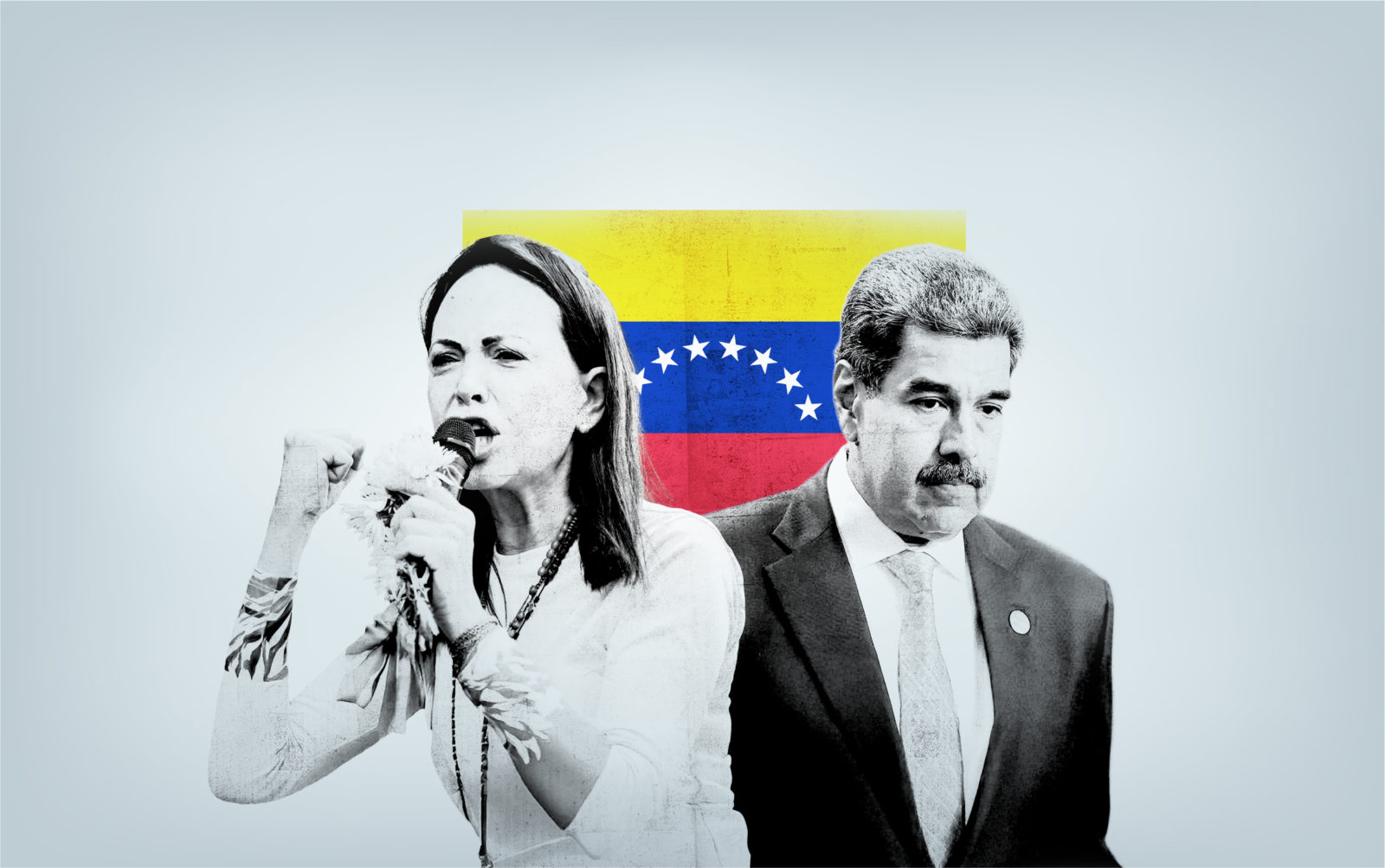
Venezuela’s crisis shows what happens when institutional safeguards erode and power concentrates unchecked in the executive. Hugo Chávez reshaped patronage networks and weakened competitive politics, while Nicolás Maduro inherited a collapsing oil sector and entrenched military interests that pushed the country further into authoritarianism. Venezuela is among the least free countries in the world, with more than 800 political prisoners and a diaspora of over seven million people. The economic collapse led to an 80% GDP contraction between 2013 and 2020 and left over 70% of the population in poverty. These conditions now converge with a escalation in tensions with the United States. Since early September 2025, Washington has reinforced its military presence in the Caribbean and launched over twenty strikes on suspected narcotics-trafficking vessels in the Caribbean and eastern Pacific, resulting in at least eighty-seven deaths.
Why does Venezuela matter for Europe? The answer lies in the strategic risks posed by the regime’s alliances. Venezuela has become a platform for authoritarian powers seeking to expand their influence in the Western Hemisphere. Its alignment with Russia and China gives both countries a foothold in a region traditionally linked to the Euro-Atlantic community. Moscow has supported the regime through loans, while Beijing has supplied water cannons, tear gas and surveillance equipment used to repress street protesters. Amid rising tensions with Washington, Caracas has also sought additional military support from both capitals, including aircraft, missiles and radar systems. Equally troubling are the regime’s ties with Iran, built on defence cooperation, regular presidential meetings and economic alliances that allow both countries to circumvent Western sanctions.
The Venezuelan regime also plays a role in transnational organised crime, with direct and indirect consequences for Europe. Criminal networks empowered or tolerated by the regime facilitate cocaine shipments that move through West Africa and into European markets. Recent investigations show how Venezuelan actors cooperate with African jihadist organisations to secure trafficking routes, creating a convergence between organised crime and terrorism that threatens European security. A further, though more indirect, concern is the expansion of the Tren de Aragua across Latin America. Originating in the Tocorón prison, it has expanded into countries such as Peru and Chile, engaging in migrant smuggling, human trafficking, extortion and murder. Its operations deepen insecurity, erode public trust and fuel xenophobic discourse that undermines openness and pluralism, principles that are essential to democratic stability.
Taken together, these dynamics show that the Venezuelan regime is embedded in an ecosystem of authoritarian powers, transnational criminal organisations and terrorist groups. Its persistence strengthens actors whose interests clash with Europe’s commitment to democracy, stability and a rules-based international order. This strategic reality highlights Europe’s stake in supporting a transition towards a more democratic, accountable and predictable Venezuelan state.
Europe’s engagement will be most effective if grounded in credible leadership within the Venezuelan opposition. The 2025 Nobel Peace Prize awarded to María Corina Machado strengthens the international standing of those seeking an orderly transition. The opposition’s programme commits to democracy, diplomacy and international law, and places priority on deepening ties with partners across Latin America, the United States and the European Union. This provides a solid foundation for sustained European engagement as Venezuela seeks to rejoin the international community as a democratic and reliable actor.
Building on this, Europe could take several concrete steps. First, it can prioritise strengthening the rule of law and accountability in ways that align with the opposition’s transition proposals. This includes technical cooperation to restore judicial independence, dismantle impunity networks and reform policing standards, drawing on the expertise of EU institutions and member states with strong judicial systems. Support could focus on judicial vetting, prosecutorial reform and modern investigative capacities. In parallel, Europe could support Venezuela’s reintegration into international human rights frameworks by backing plans to rejoin the Inter-American Human Rights System and recognise the jurisdiction of the International Criminal Court, thereby helping to consolidate the foundations of transitional justice.
Second, Europe could support the opposition’s strategy of “expansive stabilisation”, which links macroeconomic recovery with social reforms. The plan prioritises restoring monetary and fiscal stability while accelerating growth, formal employment and private investment through transparent privatisations and expanded enterprise activity. It also calls for major improvements in health, education, social protection and labour productivity to rebuild human capital and expand opportunities for upward mobility. The EU could draw on instruments such as Global Gateway to strengthen infrastructure in energy, water systems, digital governance, health and education, helping to rebuild public services and create the conditions for sustained growth.
Third, Europe could continue to engage with Venezuelan civil society and the diaspora. Strengthening freedom of expression, fostering innovation and protecting the right to associate are essential to rebuilding a resilient civic sphere. Venezuelan NGOs, independent journalists and human rights defenders have upheld these principles throughout the country’s institutional breakdown. The Sakharov Prize awarded to María Corina Machado and Edmundo González signalled Europe’s commitment, but sustained capacity-building and secure, long-term support could further enhance their work. The diaspora will also play a decisive role, involving both future returnees and those building their lives abroad. Supporting conditions that allow Venezuelans to live safely and lawfully in Europe, while remaining civically engaged, can strengthen democratic vigilance at home and abroad and ensure that their experience contributes constructively to public life.
In sum, Venezuela shows what is at stake when institutions collapse and what can be regained when they are rebuilt. For Europe, supporting its democratic transition is both a strategic choice and a reaffirmation of the principles it seeks to uphold on the international stage.
ENJOYING THIS CONTENT