

Iceland’s No, and the Membership It Was Never Offered
16 September 2026


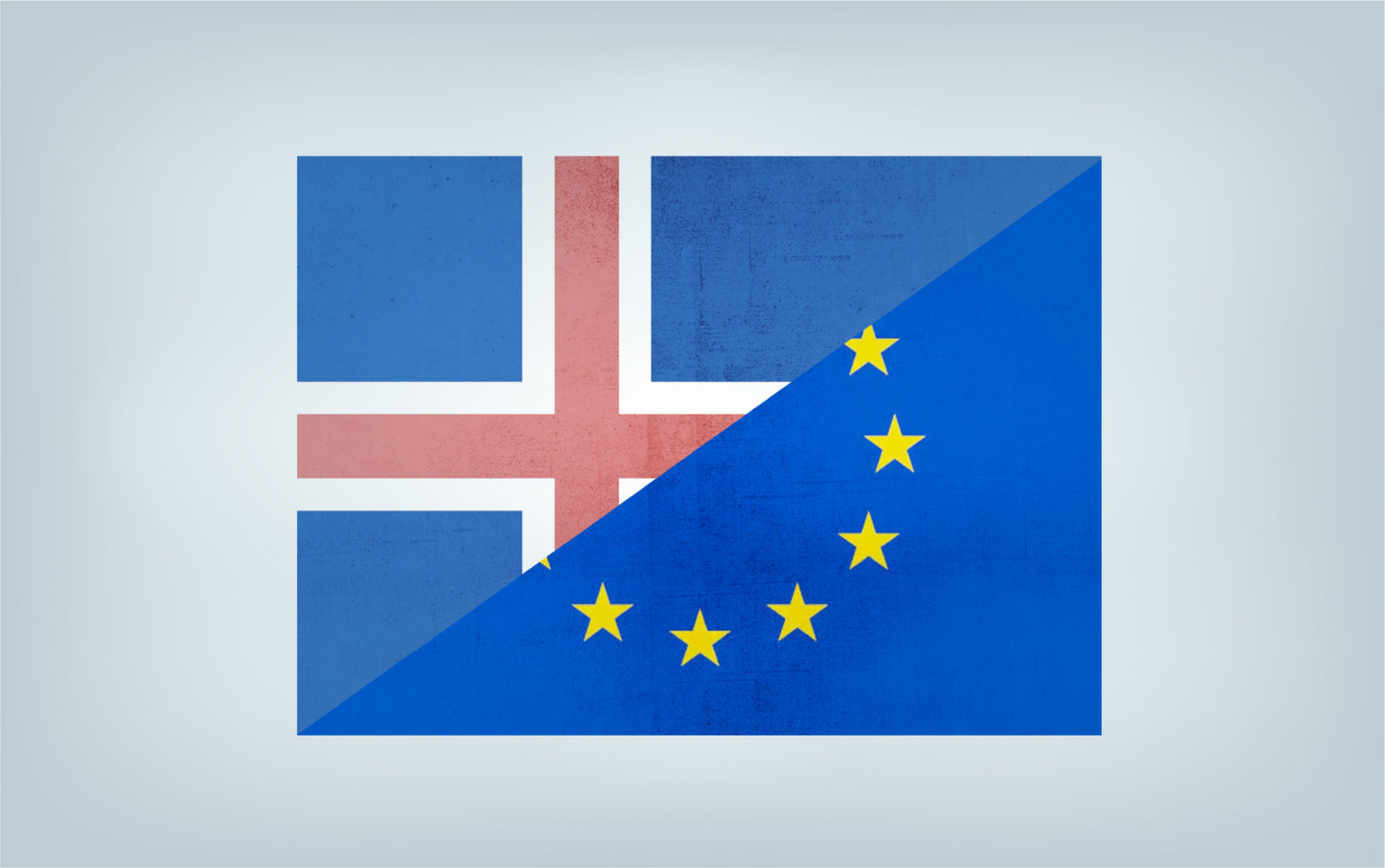
On Saturday 29 August 2026, Icelandic voters were asked a narrow question: should Iceland resume the EU accession talks it shelved in 2013? They said no, 52.84 to 47.16 per cent. It settled nothing about EEA membership, Schengen, or the practical cooperation that continues regardless. But it was only the latest in a now five-decades-old story: a small, wealthy, resource-dependent North Atlantic state, offered formal accession, once again declined even the first procedural step. Strip away the campaign noise, and what the No vote expressed was a judgment about sovereignty — not hostility to Europe, but an unwillingness to trade control over specific levers of national decision-making for a seat inside a Union that offers no way to keep them.
Iceland is not an exception. Norway rejected membership twice by referendum, in 1972 and 1994, and as recently as March 2026 the Storting voted down a proposal to investigate EU membership. Britain left in 2020 after the 2016 referendum. Switzerland rejected EEA membership outright in 1992, walked away from an institutional framework agreement with Brussels in 2021, and has only recently landed on a new arrangement built around arbitration rather than direct submission to the European Court of Justice. Four countries, four routes, one destination: close economic integration, formal political distance, and sovereignty kept, rather than traded for a seat.
The causes seem too alike to be purely coincidental, with sovereignty being the key element. In all cases, the current middle-ground instruments, the EEA and the web of bilateral agreements, along with NATO for security, have remained strong enough to ease the pressure for a speedy resolution.
This demonstrates a major problem with the Union that has never been fixed. The candidates for membership in the Union today are the ones who fall far behind in economic and security terms: the Western Balkans, Ukraine, and Moldova. For them, joining means access to funds, a legal mechanism, and a security guarantee that NATO can’t currently offer. That sounds logical, but it doesn’t really apply to Iceland, Norway, Switzerland, and Britain. Three of those countries in particular already get a NATO security guarantee before any EU security guarantee. An accession process focused on those funds, common agricultural and fisheries policies, and direct ECJ involvement is great for boosting a struggling state. But it won’t help a country who already has a strong economy, in exchange for what they value most.
The deepening of the Union since the 1950s was the technique, but not the goal of such an operation. If one step went deep, it does not necessarily follow that all other members had to be as deep for the same reasons. Flexibility should be seen not only as a technical fix for reluctant states. Flexibility is rather a legitimacy policy itself: a Union, which enables people to ask for deepening after certain benefits are achieved, will earn the consent that could never be gained in the case of top-down harmonisation. The European Political Community, established in 2022, is considered a sign of the emergence of a new level of European integration. Yet the EPC is better understood as an expression of shared interests than as an institution capable of satisfying them, since it lacks legislative power, budget, and mechanisms of conflict resolution. Andrew Duff’s earlier proposal for a formal “associate membership,” written into the treaties, points in the right direction precisely because it is a membership category.
There is also an argument beyond institutional design; Iceland, Norway, Switzerland, and Britain are, in all but legal terms, totally European. No Union feels whole without them. A person from Reykjavík or Zurich should not be seen as less deserving of European citizenship than someone from Lisbon, just because their country won’t give up control of its fisheries, courts, or currency to Brussels. That choice is not turning away from Europe; it is just a tougher standard for what it means to belong in the Union.
Membership respecting Iceland’s accession will afford these countries full membership in a Union which will provide actual voting rights on dossiers selected for inclusion in the process, provide permanent rather than temporary exemptions on resource questions, and rely on Swiss-style arbitration rather than judicial activism via the ECJ. These are three approaches to addressing the same question of sovereignty, with the emphasis on resources, the right to vote, and the court, respectively. It is membership, but with an alternative approach. The analogy holds even when expanded to include Canada. This will not help the Balkan states and Ukraine, who have their own legitimate idea of convergence.
This will require a reversal of who carries the burden of proof. The Union’s present offer still amounts to explaining what it has built, and offers membership in exchange for adopting it all as it stands. A Union that actively wants these states would say the opposite. It would offer them membership, the four freedoms, EU citizenship, and the seat at the table. It would not provide these new members with a veto over how much further the willing choose to integrate without them, while welcoming to join that deeper layer later if they choose. Nothing in the treaties forbids that architecture. What is missing is the will to build it, and the honesty to admit that depth was never the same thing as belonging.
ENJOYING THIS CONTENT