
Trade Policy is not a Game!
26 August 2025



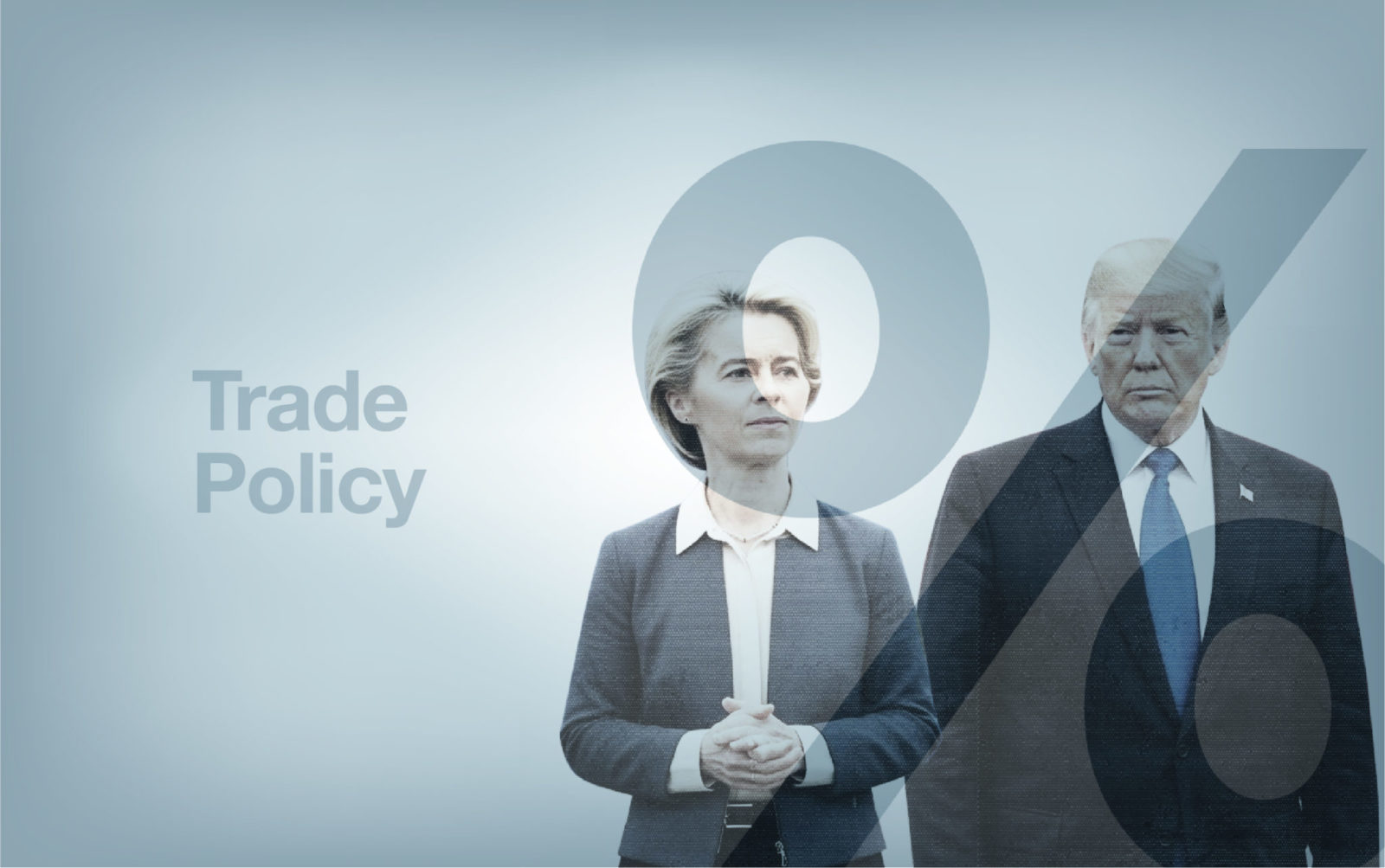
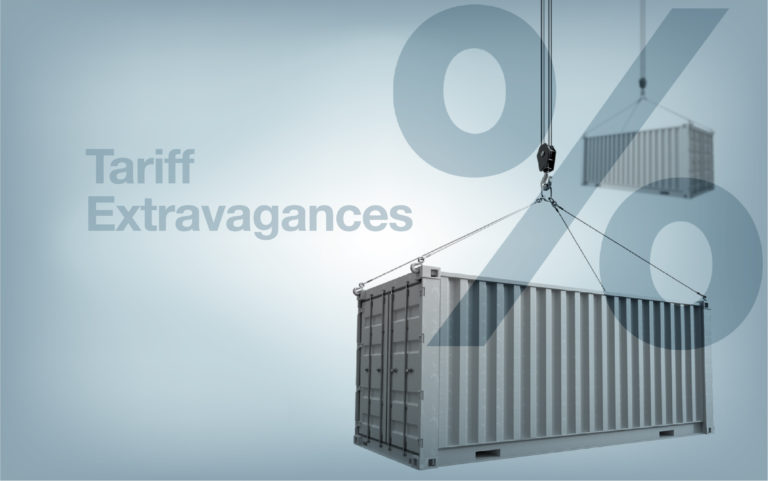
“I think it’s great we made a deal today instead of playing games,” proclaimed Donald Trump after concluding negotiations with European Commission President Ursula von der Leyen and her trade team in Scotland in late July 2025. As a result of the meeting, the United States agreed to cap tariffs on most EU goods at 15%, while the EU pledged reciprocal market access for American products. The agreement was reached after a turbulent period of tariff increases and possible retaliatory measures. Therefore, Trump’s words prompt us to consider this agreement in terms of game theory, in which countries act as players, making decisions within the constraints of their own power and the reactions of the other side.
One of the early examples used in game theory, dear to Europeans, was developed by French philosopher Jean-Jacques Rouseau describing the situation of hunters who can only catch significant prey when acting jointly. However, when they do not cooperate with each other, they have to settle for much less. This so-called “Stag Hunt“praises cooperation that relies on trust. If one country doubts that others will uphold their end of the bargain (here, trade commitments), it may choose the safer, unilateral strategy, thereby undermining the potential collective gains. Without trust and reliable institutions, countries “hunt hares” rather than “stags”, accepting lower gains to avoid the risk of betrayal.
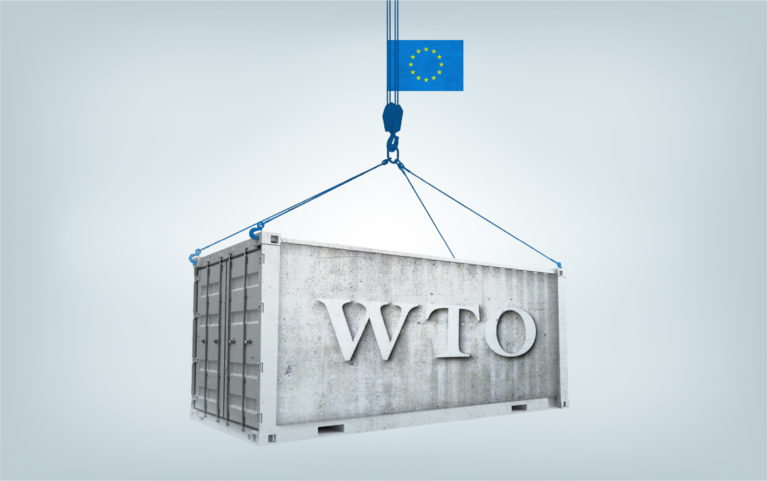
The most referenced model in game theory is the Prisoner’s Dilemma, which captures the tension between individual rationality and collective benefit. In international trade it is about the choices of countries resorting to tariffs or trade barriers. Under the cooperative regime of the WTO, countries reduce tariffs reciprocally, which benefits all through increased trade and economic efficiency. However, by ignoring WTO rules, the USA threaten to impose high tariffs, while forcing others to maintain open markets. If all countries decide to reciprocate, the outcome would be a collective loss, akin to the worst-case scenario in the “Prisoner’s Dilemma”, when both prisoners betray each other.
The game most comparable to what the American President is playing, is referred to as the Game of Chicken. It is rooted in brutal entertainment of gang members, testing courage and cowardice when speeding towards a head-on collision. This game, which applies to trade wars, encapsulates brinkmanship, a strategy involving threats and escalation. In this model, one entity imposes sanctions or tariffs, hoping that the others will yield. The key to winning in a game of Chicken is credibility of action and reputation of steadfastness. In the case of EU-US trade tensions, this theoretical model has to be adjusted. In the original game, gang members drive into head-on collisions in similar cars. Here, however, we are dealing with a huge asymmetry. It is as if a military SUV and a small passenger car were facing each other. For the US, exports and imports are of much less economic importance, while Europe is much more dependent on foreign trade. This asymmetry extends much further: Europe is not energy self-sufficient, lacks substantial digital platforms, has a brutal war raging on its doorstep, is dependent on the US for military supplies, and needs American help to feel secure. Therefore, the strategy leading to victory is not only based on behaving recklessly. The winner is known in advance because it has greater strength, greater resilience to external shocks, and therefore an evident ability to survive a potential collision.
This asymmetry of power explains the ease with which the US president announces new tariffs and fixes deadlines for their introduction, only to change them and postpone their implementation. This is part of the game, having already its own acronym: TACO – Trump Always Chickens Out. But for external partners in this game, it creates highly disrupting uncertainty. The asymmetry of power means that Trump is not taking any risks, as his partners consider it too risky to enter a collision course. Only countries with sufficient retaliatory capacity, such as China, can withstand pressures.
Game theory allows us to take a step back and look at the background and “logic” of the EU’s recent compromise with President Trump. The EU would have a better chance if it had simultaneously stronger retaliatory power, greater unity and solid determination. Perhaps it would have been better not to rush into finalising the agreement and to try to secure slightly better terms, but the overall framework was not conducive to this. Moreover, it is not only the potential high tariffs, but even the instability of trading conditions caused by repeated threats to impose tariffs and then withdraw them that is damaging to EU businesses. As a result, this compromise yielded mixed reactions, ranging from outward criticism to cautious approval.
However, it is worth remembering that international trade is not a one-shot game, it consists of infinitely repeated interactions. What happens today affects expectations and behaviour tomorrow. What is expected tomorrow affects decisions taken today. One should not ignore the impact of the “shadow of the future” on transatlantic relations. Robert Axelrod in his seminal work on the evolution of cooperation emphasises that tit-for-tat strategies, reputation building, and reciprocity mechanisms can only after a number of rounds lead towards cooperative outcomes. Even these require a minimum level of institutional stability and respect to rules of the game, all of which are under strain in current international trade relations. When there are no rules, power starts to count. Sadly, in an asymmetrical world, using might for one’s own benefit can be tempting indeed.
ENJOYING THIS CONTENT